Lisbon Summer Bucket List: Aesthetic Travel Inspiration
The summer season transforms Lisbon into a sun-drenched capital ideal for photography, coastal exploration, and cultural immersion. Planning a trip between June and August requires a strategic approach to balance sightseeing with rising seasonal crowds. This guide offers an objective, fact-based blueprint to navigating the city during its brightest months.
Fulfilling the ideal summer itinerary means understanding local transit systems, peak operating hours, and microclimates. Visitors can maximize their time by syncing their daily schedules with specific neighborhood patterns. The following data table provides an immediate logistical baseline for the upcoming summer months.
| Metric | June | July | August |
|---|---|---|---|
| Average High Temp | 26°C (79°F) | 28°C (82°F) | 29°C (84°F) |
| Daylight Hours | 15 hours | 14.5 hours | 13.5 hours |
| Peak Crowd Window | 11:00 – 16:00 | 10:30 – 17:00 | 10:00 – 18:00 |
| Primary Transit Risk | Tram 28 Overcrowding | Tuk-Tuk Traffic Delays | Beach Train Capacity |
Lisbon summer weather in June, July, and August brings consistent sunshine and minimal rainfall across the municipality. However, Atlantic breezes heavily influence the evening temperatures, causing sudden drops after sunset. Understanding these daily weather shifts ensures smooth transitions between daytime beach trips and nighttime open-air dining.
The Ultimate Aesthetic Miradouro (Viewpoint) Circuit
Lisbon is built across steep hills, creating natural terraces known as miradouros that offer panoramic city vistas. Tracking down the best viewpoint to watch the sunset in Lisbon requires analyzing elevation, capacity, and angle relative to the Tagus River. Navigating this circuit efficiently during the summer heat demands a specific walking or transit sequence to minimize physical exhaustion.
The highest vantage point in the city is the Miradouro da Senhora do Monte, located in the Graça neighborhood. To reach this spot without climbing the steepest inclines, travelers can take the Metro Green Line to the Martim Moniz station and board the local 734 bus directly up the hill. The platform provides an unobstructed 250-degree view of the São Jorge Castle, the downtown Baixa district, and the 25 de Abril Bridge.
Martim Moniz
Senhora do Monte
For optimal photography conditions with soft, natural lighting, visitors should arrive at least 45 minutes before the scheduled sunset. The terrace features a small chapel and pine trees that frame structural landmarks cleanly for high-quality architectural shots. Because this location lacks extensive commercial infrastructure, bringing water and sun protection is highly recommended during July and August.
Walking downhill for ten minutes along Rua Damasceno Monteiro leads directly to the Miradouro da Graça. This terrace features a large open-air kiosk serving cold drinks and light Portuguese snacks underneath a canopy of pine trees. The view focuses heavily on the old quarters and the riverfront, making it a highly popular gathering spot for evening observers.
Further down the hillside sits the Miradouro de Santa Luzia, famous for its romantic architecture, manicured garden beds, and classic blue-and-white ceramic tiles (azulejos). The viewing platform overlooks the tightly packed, terracotta roofs of the Alfama district stretching down to the cruise ship terminal. This specific terrace experiences extreme foot traffic between 10:00 and 18:00 due to tour group stops, so early morning visits before 09:30 offer the clearest photography windows.
A comprehensive miradouros Lisbon map reveals several free alternative viewing decks if the main terraces become overly crowded. The Miradouro de Santo Estêvão, tucked deep within the alleyways of Alfama, provides a quieter, low-elevation alternative with fewer tourists. Additionally, the Miradouro do Recolhimento, located near the castle gates, offers a peaceful park setting with excellent views of the monastery of São Vicente de Fora.
Summer Beach Escapes: Routes, Trains, and Logistics
Reaching the coastline from the city center requires utilizing distinct railway and bus networks depending on the geographic destination. The most straightforward coastal transit route uses the Lisbon beach train departing from the Cais do Sodré transport hub. This dedicated suburban rail line runs parallel to the river and ocean, providing direct access to the clear waters of the Estoril coast.
Trains operate daily at 20-minute intervals during the peak summer months, with ticket prices starting at €2.40 for a one-way journey. Travelers should purchase and top up a reusable Navegante travel card at the station kiosks to bypass long ticket lines before boarding. The transit time to major sandy stretches ranges between 20 and 40 minutes, making early morning departures ideal to secure space on the sand.
Praia de Carcavelos is the largest and most popular beach on this specific rail line, accessible via a 10-minute walk from the Carcavelos station. The beach features a wide shoreline, consistent waves for surfing, and multiple beachfront cafes with public restroom facilities. For calmer waters and a more compact setting, passengers can stay on the train until the Moitas stop to access Praia das Moitas, which connects directly to the Cascais pedestrian promenade.
To reach an alternative coastline, travelers must navigate how to get to Costa da Caparica from Lisbon, which sits south of the Tagus River. The most efficient public route involves taking the Fertagus train from Entrecampos station across the bridge to Pragal, then transferring to Carris Metropolitana bus 3024. Alternatively, direct express buses, such as line 3710, depart regularly from the Sete Rios bus terminal and arrive near the Caparica waterfront in approximately 45 minutes.
The Costa da Caparica coastline spans over 15 kilometers of continuous sandy beaches backed by natural acacia forests and dunes. A small seasonal tourist train coordinates transport along the different beach sectors, allowing visitors to access quieter, less crowded northern and southern areas easily. Ticket prices for the regional bus lines average around €2.60 per zone, and these routes operate with high frequency from June until late August.
Al Fresco Dining & Food Market Strategy
Dining outdoors during the summer months requires a clear understanding of peak local eating hours and venue capacities. Portuguese dinner service typically peaks between 20:30 and 22:00, causing popular outdoor terraces to fill quickly. Navigating major food hubs with precise timing ensures high-quality meals without extensive waiting times.
The Time Out Market Lisbon inside the historic Mercado da Ribeira remains a central focal point for culinary exploration. To secure seating and avoid dense crowds, visitors should plan visits during off-peak hours, specifically between 11:30 and 12:30 or between 15:00 and 17:30. The market gathers dozens of high-profile chefs and specialized food stalls under one roof, providing an organized look at regional cuisine.
When reviewing the Time Out Market Lisbon best food stalls, prioritizing traditional items offers the most authentic experience. Visitors can purchase a classic Bifana, a thinly sliced, garlic-marinated pork sandwich served on a traditional roll, from stalls like O Prego da Peixaria. For dessert, ordering a warm Pastel de Nata from the Manteigaria counter allows diners to see the traditional pastry-rolling process through glass windows.
- 🌳 Atmosphere: Shaded Park Setting
- 🍺 Specialty: Imperial (Cold Draft Beer)
- 🏡 Atmosphere: Quiet Residential Square
- 🍽️ Specialty: Traditional Small Plates (Petiscos)
For a more relaxed and budget-friendly al fresco experience, the public kiosks known as Quiosques de Refresco are located in squares throughout the city. The kiosk at Jardim do Príncipe Real sits under a massive, shaded cedar tree and serves cold Imperiais (small draft beers) alongside traditional iced teas. Another excellent location is the kiosk at Praça das Flores, which offers a quiet, residential atmosphere for enjoying light afternoon snacks (petiscos).
Beating the Crowds: Historic Neighborhood Logistics
The historic centers of Alfama, Baixa, and Bairro Alto experience extreme congestion from midday tour groups during the summer season. Successfully photographing and exploring these narrow stone corridors requires strict time management and alternative transit paths. Shifting your exploration schedule to the early morning hours provides the only reliable method for avoiding high-season crowds.
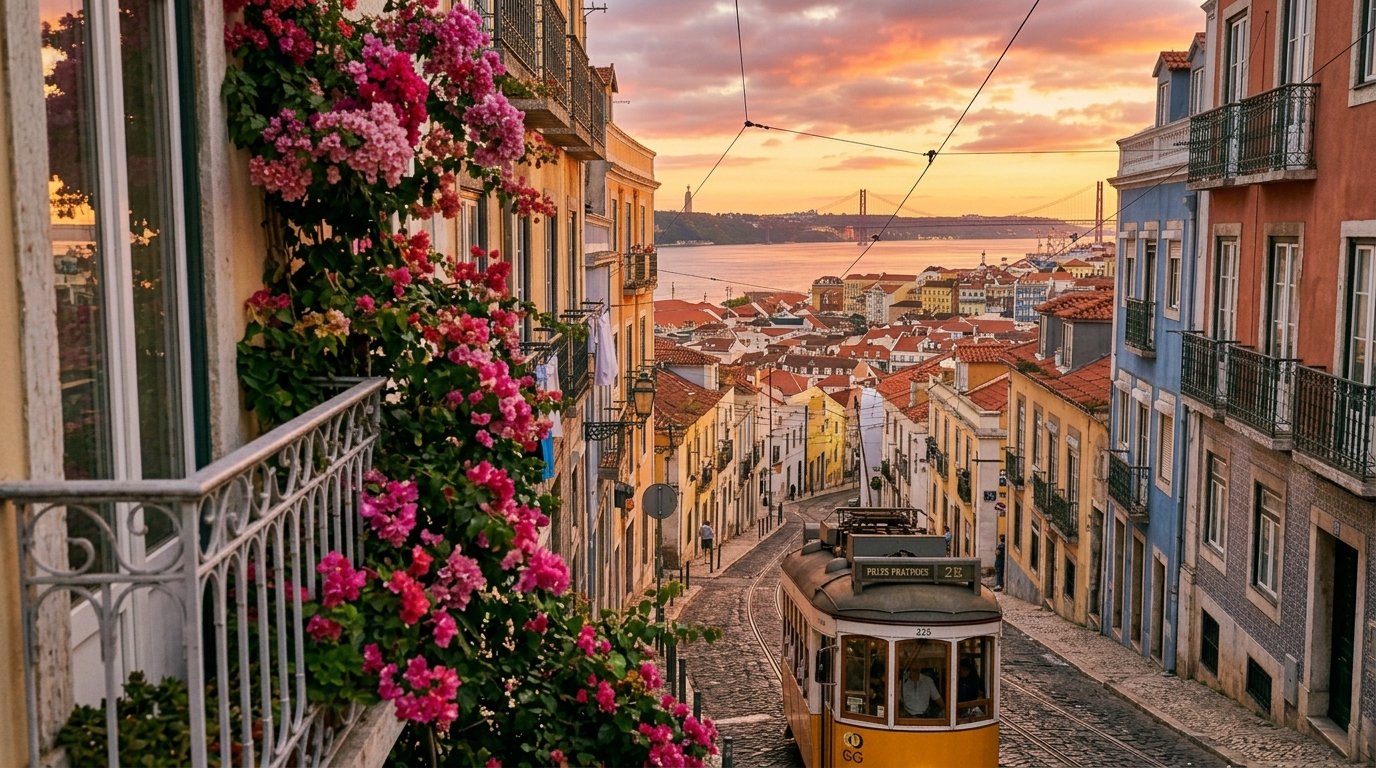
The standard Tram 28 route is highly popular but frequently faces massive boarding queues at major squares like Martim Moniz. To experience the traditional yellow vintage streetcars without the long wait times, a practical alternative is taking the Tram 12 route. This specific line operates on a shorter, circular loop departing from Praça da Figueira or Martim Moniz and travels up through the core hills of Alfama. A single ticket purchased directly onboard costs €3.30, while using a pre-loaded Navegante card reduces the cost significantly.
- ❌ Massive boarding lines at terminal
- ❌ High crowd density inside cars
- ✅ Short, efficient circular loop
- ✅ Significantly shorter wait times
Capturing clean architectural photography in the Alfama district requires arriving between 07:30 and 09:30. During this morning window, the regular residential routines, like hanging laundry across iron balconies, occur before souvenir shops open their doors. Walking uphill from the Baixa district along the wide sidewalks of Rua da Conceição provides a direct path to the Lisbon Cathedral without relying on crowded vehicles.
Rua da Conceição
(Sé de Lisboa)
When navigating the historic core, using specialized tuk-tuks or private tour cars can be costly and contributes to street blockages in narrow lanes. Relying on your own footing along the marked walking routes ensures steady progress through steep shortcuts where cars cannot physically enter. Keeping a detailed digital map downloaded offline prevents navigation confusion when cellular signals drop between tall, tightly packed stone buildings.
Day Trips Executed Correctly: Sintra and Cascais
Executing a summer day trip outside the city borders requires exact scheduling to counter the heavy influx of regional maritime and cultural tourism. The most popular excursion is the Sintra day trip itinerary from Rossio station, which links central Lisbon directly to the UNESCO hillsides. Suburban trains depart from the historic Rossio terminal every 30 minutes, costing approximately €2.30 for a one-way adult ticket. The rail journey takes exactly 40 minutes to reach the terminal station, bypassing all regional highway traffic.
The primary logistical hurdle in Sintra centers around visiting the iconic Park and National Palace of Pena. The monument operates under a strict, mandatory advanced-ticket reservation system with designated 15-minute entry slots. Visitors must purchase these passes online days in advance, as same-day tickets at the physical gate are regularly sold out during July and August. It is critical to note that the timed ticket indicates entry to the interior palace structure, not the main park gates.
The physical journey from the outer park gate up to the actual palace building requires a steep, uphill walk of approximately 30 minutes through the wooded gardens. Missing the assigned slot results in immediate ticket cancellation without the option for a refund or dynamic rescheduling. To avoid transport delays up the mountain, travelers should ride the specialized tourist bus 434 from the train station or use licensed local rideshare applications. Private rental cars are legally prohibited from driving on the access roads leading up to the historic mountain monuments.
For a contrasting coastal day trip, travelers can take the commuter train from Cais do Sodré directly to the seaside town of Cascais. This route provides immediate access to scenic coastal boardwalks, public bicycle rental stations, and local seafood dining options. Exploring the dramatic cliff formations at the Boca do Inferno requires a flat, 20-minute walk west from the Cascais marina along a dedicated pedestrian path. Returning to Lisbon via the train after 18:00 helps avoid the peak beach-exit crowds that pack the train platforms earlier in the afternoon.
Essential Summer Packing & Practical Troubleshooting
What to pack for Lisbon summer packing list priorities must focus heavily on the city’s unique architectural landscape and coastal weather patterns. The street layout consists largely of Calçada Portuguesa, which are traditional, polished limestone cobblestones that become highly slippery under heavy foot traffic. Leaving high heels or thin plastic sandals out of the luggage payload prevents slips and balance issues on steep municipal inclines. Thick, rubber-soled walking shoes or specialized travel sneakers provide the structural grip needed to navigate the city hills safely.
Sun protection remains a non-negotiable health requirement due to high UV index ratings across Portugal from June to August. Standard packing setups must include broad-spectrum SPF 50 sunscreen, polarized sunglasses, and a wide-brimmed hat to counter direct exposure during mid-day transit. Because daytime coastal breezes can mask intense solar heat, applying skin protection every two hours prevents unexpected sunburns. Packing a lightweight, refillable aluminum water bottle helps travelers utilize the free public drinking fountains found across historic neighborhoods.
Polished Calçada Portuguesa stones become treacherous on steep hills.
Atlantic coastal winds drop evening microclimates abruptly after sunset.
Peak summer demands cause backup lines at automated station kiosks.
A common travel frustration involves managing sudden microclimate shifts when traveling from central Lisbon to the coastal beaches. While the city center experiences concentrated valley heat, the Atlantic edge faces cool evening winds that drop temperatures rapidly after 18:00. Carrying a compact denim jacket or a light linen scarf inside your daypack ensures immediate comfort when transit lines transition between regions. For public transport logistics, keeping a contactless debit card or a loaded physical Navegante card handy cuts down on delays at ticket barriers.