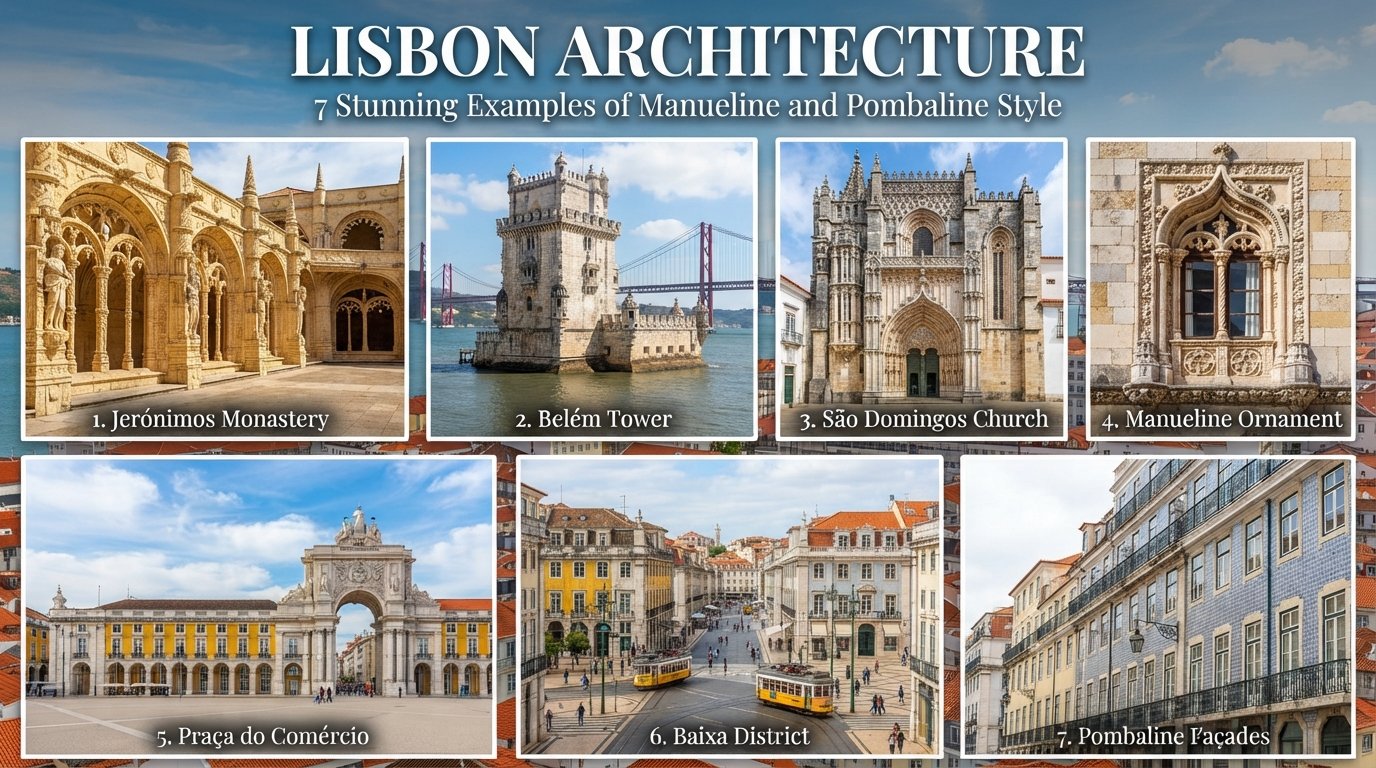
Lisbon Architecture: 7 Stunning Examples of Manueline and Pombaline Style
Lisbon architecture tells two powerful stories carved into stone. One celebrates ships, royal power, and Portugal’s Age of Discovery; another shows how a ruined city rebuilt itself with safer buildings, straight roads, and careful planning.
Manueline architecture came first, during the late 15th and early 16th centuries. Its detailed carvings mix Gothic forms with Renaissance and Moorish influences, often using ropes, plants, crosses, shields, and symbols linked to sea travel. Jerónimos Monastery and Belém Tower remain Lisbon’s best-known examples.
Pombaline architecture appeared after Lisbon’s 1755 earthquake destroyed much of the older downtown. Under the Marquis of Pombal, Baixa returned with wide streets, matching façades, planned public squares, and building methods designed to improve safety during future earthquakes.
Seven locations in this guide show how both styles changed Lisbon. Some require paid entry, while others can be studied during a free walk through Belém, Baixa, and nearby riverfront streets.
Manueline vs Pombaline Architecture: Quick Comparison
Manueline and Pombaline buildings can look worlds apart. One draws attention through carved detail; another creates beauty through balance, order, and repeated shapes.
Manueline vs Pombaline Architecture
Use this quick comparison to recognise Lisbon’s ornate maritime style and its practical post-earthquake architecture.
| Feature | Manueline Architecture Ornate and maritime | Pombaline Architecture Orderly and practical |
|---|---|---|
| Main period | Late 15th to early 16th century | Mid-to-late 18th century |
| Historical setting | Reign of King Manuel I and Portugal’s maritime expansion | Reconstruction following the 1755 Lisbon earthquake |
| Main purpose | Display faith, royal power, and wealth gained through seafaring | Rebuild Lisbon with safer, more organised streets and buildings |
| Common details | Stone ropes, plants, shells, shields, crosses, and armillary spheres | Matching windows, plain façades, balconies, arcades, and straight streets |
| Building style | Rich decoration layered over Gothic forms | Practical design, controlled height, symmetry, and repeated plans |
| Best Lisbon area | Belém | Baixa Pombalina |
| Famous examples | Jerónimos Monastery and Belém Tower | Praça do Comércio and Rua Augusta |
Manueline architecture celebrates Portugal’s Age of Discovery, while Pombaline architecture reflects Lisbon’s organised rebuilding after the 1755 earthquake.
Manueline architecture rewards a close look. Doorways, windows, columns, and cloisters often carry carvings connected with voyages, Christianity, royal identity, and nature. Lisbon’s main surviving examples stand in Belém beside the Tagus River.
Pombaline architecture works on a larger scale. Instead of focusing only on one decorated building, it shapes whole streets through uniform heights, straight lines, open squares, and repeated façades.
Many Pombaline buildings also used a timber frame called a gaiola pombalina, meaning “Pombaline cage.” Wooden braces formed a flexible inner structure intended to handle sideways movement during an earthquake, while masonry filled spaces around it.
A simple rule helps visitors tell both styles apart: Manueline architecture tells stories through decoration, while Pombaline architecture solves problems through planning. Belém offers carved stone and maritime symbols; Baixa shows how architecture helped Lisbon rise again.
How to Recognize Manueline Architecture in Lisbon
Manueline architecture often looks like stone shaped by sailors. Built mainly during King Manuel I’s reign, it joined late Gothic structure with Renaissance ideas, Moorish influence, royal emblems, and symbols linked to Portugal’s sea voyages.
Start by studying doors, windows, columns, and arches. Look for twisted ropes, thick knots, anchors, shells, leaves, coral-like forms, and carved plants winding around stone frames.
Two symbols appear again and again. An armillary sphere looks like several rings crossing around a globe and represented Portuguese navigation, while a Cross of the Order of Christ has wide outer ends and a smaller cross-shaped opening inside.
Manueline buildings rarely rely on only one decorative feature. Royal shields may sit beside maritime ropes, religious crosses, human figures, animals, and detailed plant carvings. Belém Tower, for example, carries stone ropes, armillary spheres, crosses, and natural forms across its exterior.
For a closer look, stand several steps away before moving toward individual carvings. Large shapes become clearer from a distance, while small symbols around portals and windows need close viewing. Jerónimos Monastery offers Lisbon’s richest collection, especially around its church portals and cloisters.
How to Recognize Pombaline Architecture in Lisbon
Pombaline architecture works differently. Rather than covering buildings with complex decoration, it uses straight roads, matching façades, repeated windows, controlled building heights, and carefully planned blocks.
Its story began after the 1755 Lisbon earthquake damaged much of downtown. Reconstruction followed an organised plan based on order, standard building designs, improved sanitation, fire protection, and stronger structural systems.
Walk through Baixa and notice how one building flows into the next. Upper floors often follow a repeated window pattern, while shops occupy street level beneath simple balconies and pale stone frames.
Behind many façades sat a wooden bracing system called gaiola pombalina, or “Pombaline cage.” Timber pieces crossed inside masonry walls, creating a more flexible structure that could better handle sideways movement during earthquakes. Firewalls also helped limit flames spreading between buildings.
Praça do Comércio, Rua Augusta, and nearby Baixa streets reveal the style best. Look beyond single façades and study the whole setting—street width, building height, arcades, squares, and repeated lines all form part of Pombaline design.
1. Jerónimos Monastery
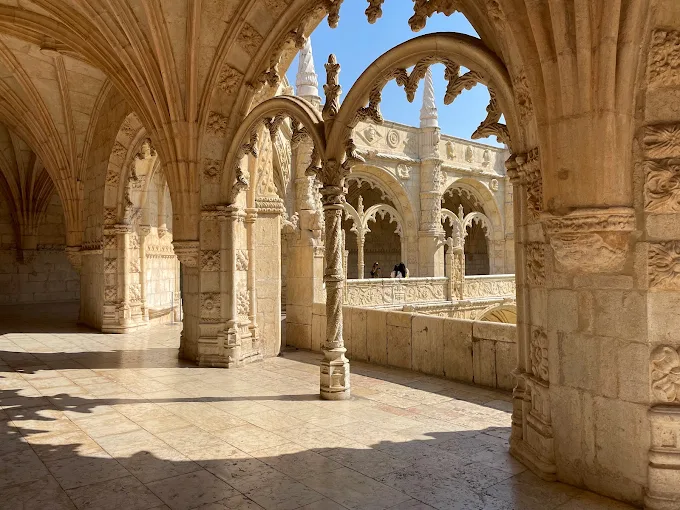
Jerónimos Monastery offers Lisbon’s clearest lesson in Manueline architecture. King Manuel I commissioned the royal monastery, while its church, two-level cloister, former refectory, and old library preserve major parts of the 16th-century complex.
Begin outside at the church’s south portal. Look for saints, royal symbols, carved leaves, small figures, and stonework rising in narrow layers around the doorway. Inside, slender columns spread upward like palm trees, creating a high stone ceiling without heavy rows of walls.
The paid cloister deserves most attention from architecture lovers. Its arches, columns, balustrades, and corner details carry plants, shields, religious symbols, and maritime forms, yet no two sections look exactly alike.
Planning a Visit
The cloister opens Tuesday to Sunday from 9:30 a.m. to 5:30 p.m., with final admission at 5:00 p.m. A regular ticket currently costs €18, while the church follows separate hours: 10:30 a.m. to 5:00 p.m. from Tuesday to Saturday and 2:00 p.m. to 5:00 p.m. on Sundays and religious holidays.
Arrive near opening time because queues build quickly. Allow 60–90 minutes for the church and cloister, or about 20 minutes for an exterior-only visit.
Tram 15E serves the Mosteiro Jerónimos stop from central Lisbon. Access improvements have included ramps and support elements, but travelers with limited mobility should confirm the available route before visiting.
For a clean façade photograph, stand across Praça do Império. Pastéis de Belém, the Maritime Museum, and Belém Tower fit easily into the same half-day route.
2. Belém Tower
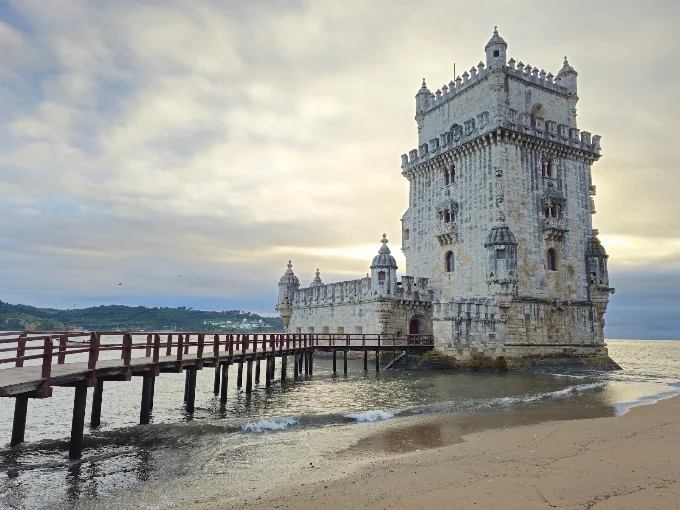
Belém Tower combines Manueline decoration with practical military design. Architect Francisco de Arruda built it between 1514 and 1519 to help defend Lisbon’s port and the entrance to the Tagus River.
Walk around the river-facing exterior before entering. Stone ropes wrap around parts of the building, while shields, balconies, battlements, armillary spheres, and repeated Crosses of the Order of Christ connect the fortress with Portugal’s maritime age.
Small watchtowers project from its corners and carry ribbed domes influenced by Islamic architecture. These details become easier to see from the riverside path rather than directly beneath the tower.
Is Belém Tower Worth Entering?
Interior rooms feel narrow, and movement between floors depends on tight stairs. Enter for the defensive layout and elevated river views; choose an exterior visit when mobility, waiting time, or crowded spaces create problems.
Belém Tower reopened in May 2026 after conservation work and now uses timed entry slots to manage visitor numbers. It currently opens Tuesday to Sunday from 9:00 a.m. to 5:30 p.m., and a regular ticket costs €15.
Allow around 30–45 minutes inside or 15–20 minutes outside. Late afternoon gives softer light across the limestone, though early morning brings fewer people along the waterfront.
Tram 15E reaches central Belém, followed by a riverside walk toward the tower. Because prices, slots, and access rules can change, check the official monument page before leaving for Belém.
3. Church of Nossa Senhora da Conceição Velha
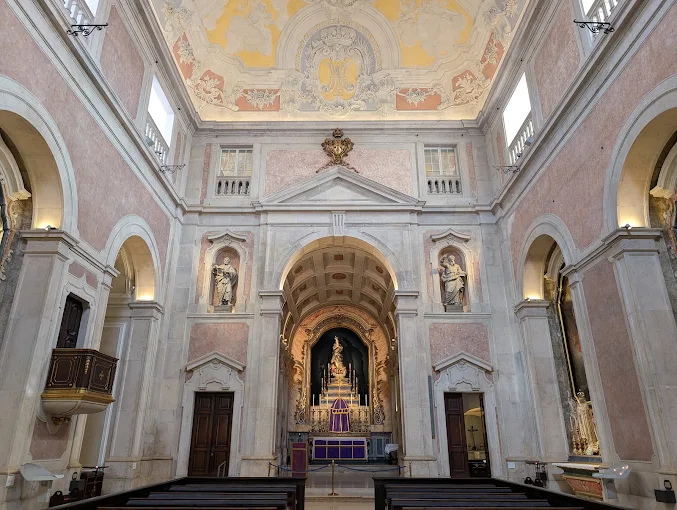
Walk past too quickly, and one of central Lisbon’s finest Manueline doorways can slip through the cracks. The Church of Nossa Senhora da Conceição Velha stands on Rua da Alfândega, between Praça do Comércio and Casa dos Bicos.
Much of today’s church dates from rebuilding after the 1755 earthquake. However, part of the earlier Church of Misericórdia survived, including its 16th-century south façade and richly carved Manueline portal.
Study the entrance before stepping inside. Carved plants, imaginary animals, angels, lace-like stonework, armillary spheres, and the Cross of the Order of Christ surround two small doors, while the scene above shows the Virgin Mary sheltering members of society beneath her cloak.
The interior belongs mainly to a later period, so do not mistake every feature for Manueline design. Its painted stucco ceiling, marble details, and altarpieces came from rebuilding and later decoration.
No standard tourist ticket is normally required, but church access can depend on religious services. Check the parish schedule before visiting, then allow 15–20 minutes for the façade and interior.
The closest metro station is Terreiro do Paço on the Blue Line. Combine the stop with Praça do Comércio, Lisbon Cathedral, and Casa dos Bicos during one easy central-Lisbon walk.
4. Casa dos Bicos
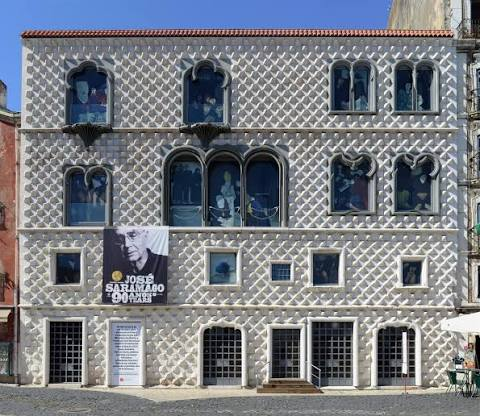
Casa dos Bicos proves Lisbon architecture rarely fits into one neat box. Built for Brás de Albuquerque around 1523, the house mixes an Italian Renaissance-style diamond façade with windows shaped by Manueline design.
Its name means House of Beaks, referring to rows of pointed stones covering the front. The uneven placement of doors and Manueline windows breaks the pattern, giving the façade a lively, almost puzzle-like appearance.
For the clearest view, stand across Rua dos Bacalhoeiros or near Campo das Cebolas. Morning or late-afternoon light makes the stone points easier to photograph without losing their shape in hard shadows.
Casa dos Bicos now houses the José Saramago Foundation and an archaeological area containing traces from earlier periods of Lisbon’s history. The literary exhibition suits readers interested in Portugal’s Nobel Prize-winning author, while the exterior alone remains worthwhile for architecture-focused visitors.
The foundation currently opens Monday to Saturday, 10:00 a.m. to 6:00 p.m., with final entry at 5:30 p.m. A regular ticket costs €4, though prices and holiday closures should be checked before visiting.
Allow 30–45 minutes for the exhibition or about 10 minutes for the exterior. Terreiro do Paço Metro station offers the easiest approach, and the mostly level riverfront route works well before continuing toward Alfama.
5. Praça do Comércio
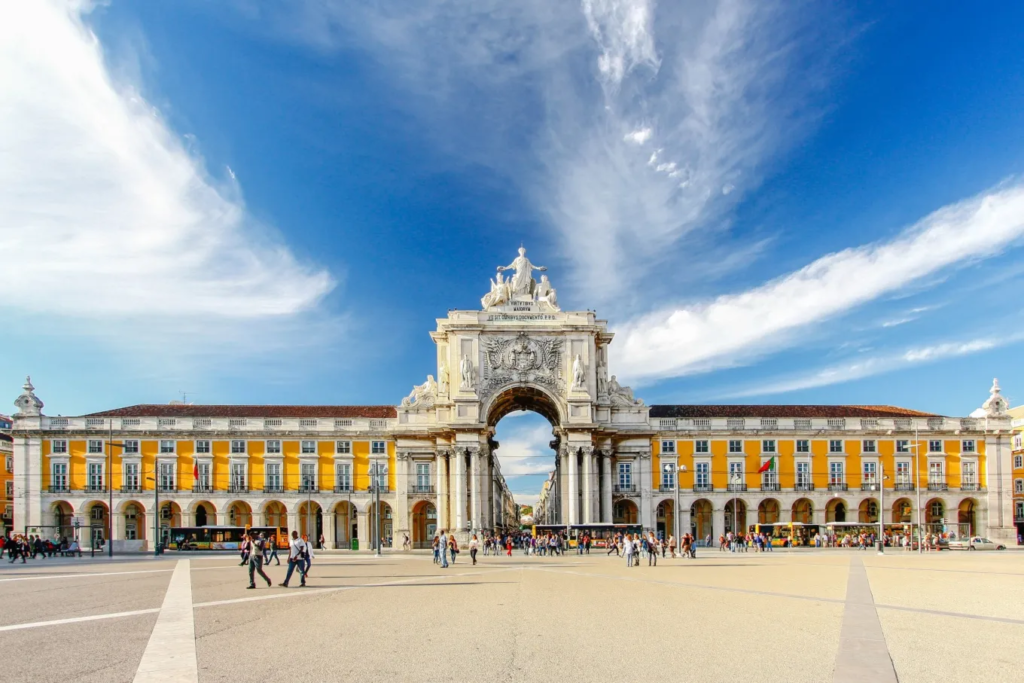
Praça do Comércio shows how Pombaline architecture shaped an entire public space, not just one building. After the 1755 earthquake, planners rebuilt the former royal palace area as a wide riverside square surrounded by balanced façades and long stone arcades.
Stand near the centre and look toward each side. Matching building heights, repeated windows, iron balconies, pale stone frames, and ground-floor arches create one controlled design around the open square.
Rua Augusta Arch forms the grand northern entrance, while Cais das Colunas opens toward the Tagus River. The arch belongs to Lisbon’s wider reconstruction story, but its present triumphal form was completed much later than the original Pombaline buildings.
Visiting the square costs nothing, and 20–30 minutes gives enough time to study its layout. Early morning works best for clear photographs, while late afternoon adds softer light across the arcades and riverfront.
Terreiro do Paço Metro station on the Blue Line provides direct access. The station has lifts, and most of the square remains level, although patterned stone paving may feel uneven under wheelchairs or walking aids.
6. Rua Augusta and Baixa Pombalina
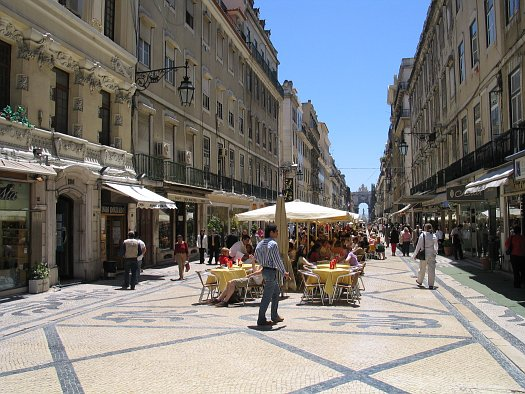
Rua Augusta runs from Praça do Comércio to Rossio, forming the main pedestrian route through Pombaline downtown. It has remained closed to normal road traffic since the late 1980s, making its upper façades easier to examine while walking.
Start beneath Rua Augusta Arch and walk north. Notice straight sightlines, repeated window rows, simple balconies, similar building heights, and shops placed along ground floors.
Nearby streets follow a grid of roads crossing at right angles. Wider main routes and narrower side streets formed part of a planned system approved during Lisbon’s reconstruction after the earthquake.
Look above modern signs because many useful architectural details sit on second and third floors. Rua da Prata, Rua dos Correeiros, and Rua dos Sapateiros offer quieter views of Pombaline façades without Rua Augusta’s busiest crowds.
The walk from Praça do Comércio to Rossio takes around 10 minutes, but allow 30–45 minutes for architecture stops. Morning gives cleaner street views, while evening suits visitors who prefer lively shops and street activity.
Rua Augusta Arch has an optional viewpoint overlooking the square, river, and Baixa grid. It currently opens daily from 10:00 a.m. to 7:00 p.m., with final entry at 6:30 p.m.; confirm hours before visiting because schedules may change.
7. Rossio and the Pombaline Downtown Area
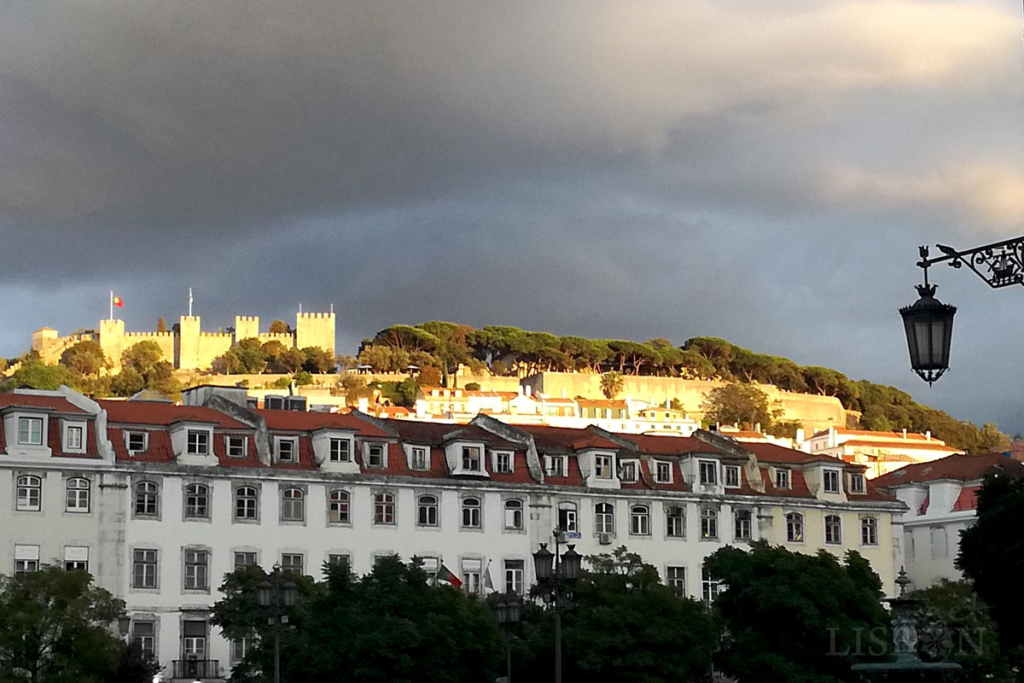
Rossio, officially Praça Dom Pedro IV, marks the northern edge of Baixa Pombalina. Buildings around its eastern and western sides continue the ordered rhythm found across downtown, with repeated windows, balanced heights, simple balconies, and ground-floor businesses.
Walk around the square’s edges and look upward, where original proportions remain easier to see above shop signs. Nearby Rua dos Sapateiros and Rua dos Correeiros offer clearer views with fewer crowds than central Rua Augusta.
Not every landmark around Rossio belongs to the Pombaline period. Dona Maria II National Theatre has a Neoclassical façade, while Rossio Railway Station carries a late-19th-century Neo-Manueline design. Lisbon’s wave-pattern pavement also came later, so it should not be mistaken for an original part of the 18th-century rebuilding.
Rossio costs nothing to visit and needs around 20–30 minutes for a careful architecture walk. Early morning brings lighter crowds, while nearby Rossio Metro station on the Green Line provides easy access from other parts of Lisbon.
Most areas around the square have flat surfaces and lowered crossings. Portuguese stone paving can still feel uneven or slippery, especially after rain, so shoes with a firm grip help.
Suggested Lisbon Architecture Walking Route
Lisbon’s main Manueline and Pombaline landmarks sit in two separate areas. Explore Belém and Baixa as two half-day routes rather than trying to walk between them.
Belém Manueline Route
Start at Jerónimos Monastery and study its south portal, church columns, and cloister carvings. Continue through Praça do Império, then follow the riverfront path west toward Belém Tower.
Jerónimos Monastery & Belém Tower Time Guide
Use this simple itinerary to plan enough time for Lisbon’s two most famous UNESCO landmarks.
| Route | Approximate Time |
|---|---|
| 1 Jerónimos Monastery visit | 60–90 minutes |
| 2 Walk to Belém Tower | 20 minutes |
| 3 Belém Tower exterior or interior | 20–45 minutes |
| Suggested Total Visit | 2–3 hours |
Tram 15E stops at Mosteiro Jerónimos and connects Belém with central Lisbon. The Cascais Line train from Cais do Sodré to Belém offers another option, followed by a walk to the monastery.
Baixa and Alfama Architecture Route
Begin at Rossio, then walk south through Rua Augusta to Praça do Comércio. Turn east along Rua da Alfândega for the Church of Nossa Senhora da Conceição Velha, then finish at Casa dos Bicos near Campo das Cebolas.
Baixa Architecture Walking Stops
Follow this short self-guided walk to discover Lisbon’s architectural highlights, from elegant Pombaline streets to rare Manueline landmarks.
| Stop | Main Detail to Notice |
|---|---|
| 1 Rossio | Pombaline façades surrounding the square |
| 2 Rua Augusta | Straight street grid and repeating window patterns |
| 3 Praça do Comércio | Grand arcades, perfect symmetry, and planned urban scale |
| 4 Conceição Velha | Beautiful surviving Manueline stone portal |
| 5 Casa dos Bicos | Diamond-point façade and Manueline windows |
Start early in the morning for softer light along Rua Augusta and fewer crowds around Praça do Comércio and Casa dos Bicos.
The route covers roughly 2 kilometres and takes around 30 minutes without stops. Allow two to three hours for photographs, church access, and a Casa dos Bicos visit.
Most of Baixa remains level and easy to walk, but stone paving requires care. Starting at Rossio avoids backtracking and ends near Lisbon Cathedral and the lower streets of Alfama.
Practical Tips for Exploring Lisbon Architecture
Small planning choices can save time, especially around Belém. Monument hours, timed-entry rules, ticket prices, and Tram 15E operations may change, so check official pages one day before visiting.
- Wear comfortable shoes with firm grip because Lisbon’s patterned stone paving can feel smooth and uneven.
- Visit Jerónimos Monastery near opening time to avoid the busiest queues.
- Book Belém Tower entry before arrival when timed tickets are available.
- Use Tram 15E or the Cascais Line train between central Lisbon and Belém rather than walking.
- Stand across the street when photographing façades, then move closer to study carvings.
- Look above shop signs in Baixa because many original windows, balconies, and stone frames remain on upper floors.
- Carry water and sun protection during warm weather, especially along Belém’s open riverfront.
- Confirm step-free routes before buying tickets because historic interiors may include narrow stairs or uneven surfaces.
Portuguese pavement deserves attention too. Baixa’s black-and-white stone patterns form part of Lisbon’s street character, although visitors should pause away from walking paths when taking photographs.
Final Thoughts on Lisbon’s Manueline and Pombaline Architecture
Lisbon’s architecture becomes easier to understand once both styles have clear identities. Manueline design turns stone into ropes, plants, crosses, royal emblems, and maritime symbols, while Pombaline design uses straight streets, repeated façades, balanced squares, and safer construction.
Choose Jerónimos Monastery for detailed Manueline carving and Baixa for the strongest Pombaline city plan. Praça do Comércio and Rua Augusta offer excellent free viewing, while the walk from Rossio to Casa dos Bicos gives the best short introduction to both styles.
Belém suits close study and architectural photography. Central Lisbon works better for travelers with limited time because several important buildings sit along one walkable route.
FAQs
What is Manueline architecture?
Manueline architecture developed in Portugal during the reign of King Manuel I, mainly in the late 15th and early 16th centuries. It combines late Gothic structure with carved ropes, plants, armillary spheres, royal shields, religious crosses, and symbols connected with Portugal’s maritime expansion.
What is Pombaline architecture?
Pombaline architecture developed during Lisbon’s reconstruction after the 1755 earthquake. It uses planned street grids, controlled building heights, repeated windows, simple façades, fire-separating walls, and internal timber frames designed to improve structural safety.
What is the difference between Manueline and Pombaline architecture?
Manueline architecture focuses on detailed decoration and symbols linked with religion, royalty, navigation, and nature. Pombaline architecture focuses more on practical urban planning, uniform streets, balanced façades, fire control, and earthquake-resistant building methods
Where can visitors see Manueline architecture in Lisbon?
Jerónimos Monastery and Belém Tower provide Lisbon’s strongest Manueline examples. The Church of Nossa Senhora da Conceição Velha preserves an important Manueline portal, while Casa dos Bicos combines Manueline windows with an Italian Renaissance-inspired façade.
Where can visitors see Pombaline architecture in Lisbon?
Baixa Pombalina offers the clearest examples. Start at Rossio, walk through Rua Augusta, explore nearby grid streets, and finish at Praça do Comércio to understand how the rebuilding plan shaped whole blocks rather than one monument.
Can Jerónimos Monastery and Belém Tower be visited on the same day?
Yes. Both landmarks stand in Belém and sit about a 20-minute walk apart, making them easy to combine during one half-day route. Allow extra time for security checks, queues, timed admission, and a slower riverside walk.
Is Lisbon architecture easy to explore on foot?
Baixa’s main architecture route remains compact, mostly level, and easy to follow from Rossio to Praça do Comércio. Belém also has a walkable riverfront route, but public transport works best for traveling between Belém and central Lisbon.