A Night of Fado: Where to Find Authentic Soulful Music (and Avoid Tourist Traps)
To step into a Fado house in Lisbon is to participate in a ritual that has defined the Portuguese identity for nearly two centuries. Often described as the “soul of Portugal,” Fado is much more than a musical genre; it is an emotional landscape. In 2011, UNESCO recognized Fado as part of the Intangible Cultural Heritage of Humanity, cementing its status as a vital global treasure that transcends language barriers through the sheer power of vocal expression and the haunting resonance of the stringed instruments that accompany it.
Planning your Lisbon transit?
Don’t get stuck in the crowds! Pair your Fado night with our ultimate Tram 28 Survival Guide to navigate the hills like a pro.
Read the Survival Guide →The Anatomy of the Sound
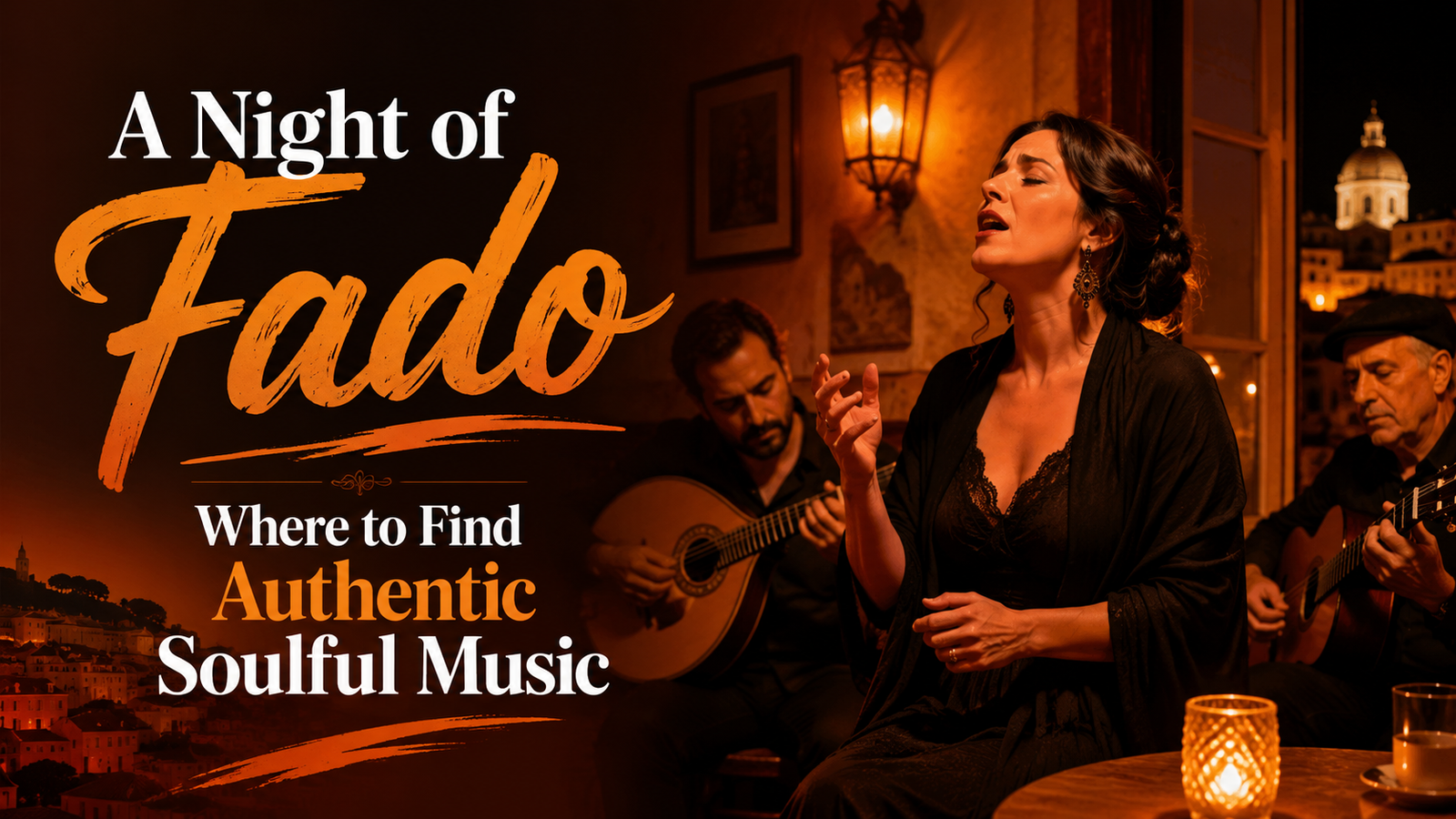
At its core, Fado is characterized by the concept of Saudade. While there is no direct English translation, it is best understood as a profound state of longing—a bittersweet yearning for something or someone lost, or perhaps for something that never was. This emotion is carried by the Fadista (the singer), traditionally accompanied by two musicians: one playing the viola de fado (a classical acoustic guitar) and another playing the iconic Guitarra Portuguesa.
The Portuguese guitar is the heartbeat of the performance. Unlike the Spanish guitar, it features twelve wire strings and a pear-shaped body, producing a bright, metallic, and piercingly clear sound that weaves through the singer’s melody. The interplay between the deep, rhythmic pulse of the viola and the weeping trills of the Portuguese guitar creates the tension and release that defines the genre.
Lisbon vs. Coimbra: A Geographic Distinction
While travelers may encounter Fado throughout the country, it is important to distinguish between the two primary styles:
- Lisbon Fado: This is the style found in the capital’s taverns and restaurants. It is traditionally more raw and diverse, sung by both men and women. It historically emerged from the working-class districts and docks, reflecting the struggles, loves, and daily lives of common people.
- Coimbra Fado: Strictly performed by men, often students at the historic University of Coimbra. This style is more academic and polished, usually performed in the streets or squares by singers wearing traditional black academic capes.
The Transformation of a Night
A night of Fado in Lisbon is not a concert in the traditional sense; it is a collaborative experience between the performers, the staff, and the audience. The evening typically begins with the serving of wine and traditional petiscos (small plates), but the atmosphere shifts the moment the lights dim.
Authentic Fado is performed in “sets.” A singer will perform three or four songs, followed by an interval where food is served and conversation resumes. This rhythmic pacing allows the emotion to build throughout the night. For the visitor, understanding this ebb and flow is the first step toward an authentic experience. It is not merely a background soundtrack to a meal; it is a performance that demands—and earns—the absolute stillness of the room.
The Geography of Sound: Best Neighborhoods for Fado
To find the most authentic Fado in Lisbon, one must understand the city’s topography. The music is deeply rooted in specific historic quarters, each offering a distinct atmosphere. While Fado has spread across the city, three neighborhoods remain the primary custodians of the tradition.
Alfama: The Birthplace
Alfama is the oldest district in Lisbon and the undisputed heart of Fado. Its labyrinthine alleys, hidden courtyards, and steep staircases have echoed with these melancholic melodies since the early 19th century. Originally a neighborhood for sailors and the urban poor, the narrowness of the streets meant that music played in one tavern would drift into the next, creating a communal acoustic experience.
In Alfama, Fado feels personal. Many of the venues here are tiny, family-run establishments where the singer stands only inches away from the tables. This proximity is essential for Fado Vadio (amateur Fado), where locals might spontaneously stand up to sing a verse. For a traveler seeking historical resonance, Alfama is the primary destination.
Mouraria: The Moorish Legacy
Often overlooked by those following the standard tourist routes, Mouraria is perhaps the most culturally authentic Fado neighborhood. Historically, this was the Moorish quarter, and it is widely believed that the mournful, melismatic scales of Fado were influenced by the Moorish songs of the Middle Ages.
Mouraria was the home of Maria Severa Onofriana, the legendary 19th-century singer who is considered the first Fado “superstar.” Today, the neighborhood maintains a gritty, multicultural vibe. The Fado here is less commercialized than in other areas, and the taverns often cater more to long-time residents than to international visitors, making it an ideal spot for those seeking a “local” experience.
Bairro Alto: The Bohemian Hub
Located on one of Lisbon’s seven hills, Bairro Alto is the center of the city’s nightlife. By day, it is a quiet grid of old buildings; by night, it transforms into a bustling social scene. The Fado houses in Bairro Alto tend to be more established and formal than the tiny “tascas” of Alfama.
Many of the most famous Casas de Fado (Fado Houses) are located here. These venues often require reservations and offer a full dinner service alongside professional performances. While Bairro Alto is more high-traffic, it provides a high standard of musical quality, featuring some of the most technically proficient guitarists and vocalists in the country.
Explore Lisbon’s Landmarks
Many top Fado houses are just steps away from the Lisbon Cathedral. Discover the history of this iconic fortress-church before your evening set.
Visit the Cathedral →Identifying the “Tourist Trap” vs. The Authentic Tavern
As Fado’s popularity has grown, so too has the number of venues designed solely to capture tourist dollars. Distinguishing between a commercialized “show” and a genuine cultural experience requires a discerning eye.
Red Flags: What to Avoid
- The Street Touts: Genuine Fado houses rarely need to employ people to stand on the sidewalk and aggressively usher patrons inside. If a venue uses high-pressure sales tactics or offers “free sangria” to lure guests, the music is likely secondary to the profit.
- The “All-Inclusive” Bus Tours: Large venues that cater to tour buses often provide a sanitized version of Fado. The performances are timed to the minute, and the food is frequently mass-produced. These environments lack the intimacy and “Saudade” essential to the genre.
- Visual Menus: Authentic Portuguese taverns generally feature simple, text-based menus. A menu filled with brightly colored photos of food is a common sign of a venue targeting transient tourists rather than repeat local customers.
Green Flags: Signs of Authenticity
- Strict Silence: The most reliable sign of an authentic house is the treatment of the music. In a real Fado house, the lights are dimmed, and all service—including the pouring of wine and the clearing of plates—stops completely when the music begins.
- Local Patrons: Look at the audience. If the room is filled entirely with people holding cameras and guidebooks, it may be a “staged” experience. If you see locals enjoying a meal and engaging with the singer, you have found a reputable spot.
- Late Start Times: While tourist-heavy shows may start at 7:00 PM to accommodate early diners, authentic Fado often doesn’t reach its peak until after 10:00 PM. The best atmosphere is usually found in the late-night hours when the crowd has settled and the performers are most inspired.
The Best Authentic Fado Houses in Lisbon: A Curated Shortlist
Navigating the hundreds of venues in Lisbon can be overwhelming. To ensure a high-quality experience, it is helpful to categorize venues by the type of experience they offer. Whether seeking a formal dinner with world-class professionals or a rugged, spontaneous evening in a neighborhood tavern, these establishments are recognized for their commitment to the craft.
Traditional Fado Houses (Dining & Performance)
These venues are professional establishments where the meal and the music are treated with equal reverence. Reservations are almost always mandatory.
- O Faia (Bairro Alto): Founded in 1947, O Faia is an institution. It has hosted some of the greatest names in Fado history, including Lucília do Carmo. The atmosphere is sophisticated, and the acoustics are designed to carry the unamplified voice to every corner of the room. It is a premier choice for those who want a high-end culinary experience alongside top-tier musical talent.
- Clube de Fado (Alfama): Located near the Lisbon Cathedral, this venue is famous for its vaulted ceilings and stone columns, which provide a dramatic, cathedral-like resonance. The guitarists here are often among the best in the city, frequently performing intricate instrumental solos between vocal sets.
- Casa de Linhares (Alfama): Set in the ruins of a noble palace that survived the 1755 earthquake, this venue offers a sense of history that few others can match. The high ceilings and rustic décor complement a style of Fado that leans toward the classical and deeply emotional.
Fado Vadio (Amateur & Informal Fado)
Fado Vadio translates to “vagrant Fado.” It refers to a tradition where the performers are not necessarily under contract; they are locals—cooks, taxi drivers, or retirees—who sing for the love of the art.
- Tasca do Chico (Bairro Alto & Alfama): Perhaps the most famous spot for informal Fado. It is a crowded, no-frills tavern with walls covered in photographs of famous fadistas. On Monday and Wednesday nights, anyone can step up to sing. The energy is raw, the wine is inexpensive, and the experience is undeniably authentic.
- A Baiuca (Alfama): This is a tiny “hole-in-the-wall” establishment where the singers often stand right next to the kitchen door. There is no stage; the performance happens in the middle of the dining room. It is a family-style environment where the line between performer and audience often blurs.
The “Etiquette of Silence”: A Visitor’s Protocol
Fado is a communal experience, but it is governed by strict, unwritten rules. For a visitor, respecting these rules is the difference between being a guest and being an intrusion.
The Golden Rule: Silêncio
The most famous phrase in a Fado house is “Silêncio, que se vai cantar o Fado” (Silence, for Fado is about to be sung). In many traditional houses, if a table continues to whisper or clink silverware during a song, the singer may stop performing, or the owner will politely but firmly ask the guests to remain quiet.
- Timing Your Meal: Eat and drink during the intervals between sets. Once the fadista takes their place and the guitarists begin the introductory chords, place your fork down.
- Photography and Lighting: Flash photography is strictly prohibited as it distracts the performers and ruins the intimate atmosphere. If you must take a photo, do so quickly and without a flash during the break between songs.
- Applause: In Lisbon Fado, it is customary to applaud at the end of a song. However, unlike at a rock concert, the applause should be respectful and not involve shouting or whistling, which can disrupt the somber mood of the room.
Practical Logistics for the Perfect Evening
To ensure the evening goes smoothly, visitors should plan for the unique logistical challenges of Lisbon’s historic districts.
Reservations and Timing
Most reputable Fado houses have limited seating—sometimes fewer than 20 tables. For the popular houses in Bairro Alto or Alfama, booking at least two to three days in advance is highly recommended.
- The Best Time to Go: While dinner usually starts at 8:00 PM, the “soul” of the evening often doesn’t emerge until the second or third set, typically around 10:30 PM or 11:00 PM.
Transportation and Accessibility
Alfama and Mouraria are notoriously difficult to navigate by car. The streets are too narrow for standard taxis or Ubers to reach the front door of many Fado houses.
- The Strategy: Have a taxi drop you at a major landmark, such as the Largo do Chafariz de Dentro in Alfama or the Praça da Figueira for Mouraria, and walk the remaining distance. Wear comfortable, non-slip shoes, as the limestone “calçada” sidewalks can be very slippery at night.
Understanding the Bill
In many traditional Casas de Fado, there may be a “cover charge” or a minimum spend requirement. This fee goes directly toward supporting the musicians, who are often paid per night rather than through a percentage of food sales. It is standard practice and should be viewed as a ticket price for a live performance.
Fado Beyond the Restaurants: Immersive Cultural Centers
While the tavern or Casa de Fado is the traditional setting, Lisbon offers several high-utility resources for those who want to understand the technical and historical layers of the music without the distraction of a dinner service.
The Museu do Fado (Fado Museum)
Located at the foot of the Alfama district, the Museu do Fado is an essential stop for any traveler seeking a deeper context. The museum avoids the superficial and instead provides a scholarly yet engaging look at the evolution of the Portuguese guitar and the social history of the performers.
- What to See: The museum houses a vast collection of scores, instruments, and personal belongings of legendary fadistas. One of the most significant exhibits is the iconic painting “O Fado” by José Malhoa, which captures the raw, bohemian roots of the genre.
- The Audio Guide: Utilizing the museum’s interactive audio guide is highly recommended. It allows visitors to hear rare recordings of early 20th-century Fado, illustrating how the vocal styles have transitioned from the streets to the global stage.
Outdoor and Community Fado
During the summer months, particularly in June during the Festas de Lisboa (Feast of St. Anthony), Fado moves from the dimly lit rooms into the public squares.
- Fado na Rua: Keep an eye on local listings for “Fado na Rua” (Fado on the Street). These are free, government-sponsored performances held in open-air plazas like the Largo de São Miguel.
- The Mouraria Walk: In the Mouraria district, the “Rua do Capelão” serves as a permanent open-air tribute to Fado history. The walls are adorned with portraits of singers, and the pavement is inscribed with the names of famous lyrics.
Glossary of Fado Terms: Speaking the Language of the Soul
To truly navigate a night of Fado like an expert, it is helpful to recognize the terminology used by performers and locals.
| Term | Definition |
| Saudade | The foundational emotion of Fado; a complex state of longing or nostalgia. |
| Fadista | A professional Fado singer. |
| Guitarra Portuguesa | A 12-stringed, pear-shaped instrument central to the Fado sound. |
| Viola de Fado | A classical acoustic guitar that provides the rhythmic and bass accompaniment. |
| Fado Vadio | “Vagrant” or amateur Fado; spontaneous singing by non-professionals. |
| Casa de Fado | A dedicated Fado house that usually combines dinner with a professional show. |
| Petiscos | Traditional Portuguese small plates or snacks often served during Fado sets. |
Conclusion: Crafting a Respectful and Moving Experience
A night of Fado is one of the most rewarding cultural experiences Lisbon has to offer, provided it is approached with the right expectations. By avoiding the flashy “tourist traps” of the main thoroughfares and seeking out the quieter, more dedicated houses in Alfama and Mouraria, visitors can witness a living tradition that remains remarkably unchanged by the modern world.
Final Checklist for Your Fado Evening:
- Book Ahead: Use a telephone or website to secure a table at a reputable Casa de Fado.
- Arrive Late: The best performances often happen well after the first dinner seating.
- Respect the Silence: Remember that the music is the priority; the food and wine are secondary during a performance set.
- Embrace the Emotion: Even if the lyrics are in Portuguese, the emotional resonance of the Saudade is universal.
Lisbon Wanderlust encourages travelers to view Fado not as a checklist item to be photographed, but as a moment of stillness in a fast-paced city. By following this guide, one ensures that their evening in Lisbon is spent supporting the authentic artists who keep the soulful heart of Portugal beating.
Expanding the Experience: Perfect Pairings for a Fado Evening
To maximize the impact of a Fado performance, the surrounding activities should complement the mood. An authority guide doesn’t just suggest a destination; it suggests a sequence.
Sunset at a Miradouro
Before heading into the dim, intimate quarters of a Fado house, visitors should witness the sunset from one of Lisbon’s famous miradouros (viewpoints).
- Miradouro das Portas do Sol: Located on the edge of Alfama, this viewpoint offers a panoramic look over the very rooftops where Fado was born. Watching the light fade over the Tagus River provides the visual “Saudade” that prepares the mind for the music to come.
- Miradouro da Graça: A slightly higher vantage point that offers a view of the São Jorge Castle. It is a more tranquil spot, ideal for a quiet drink before descending into the labyrinth of the Fado districts.
The Pre-Fado Walk
Walking is an essential part of the Lisbon experience. For those visiting a house in Mouraria, a stroll through the “Beco das Farinhas” allows one to see the portraits of Fado legends painted onto the walls of the houses. This physical connection to the neighborhood’s history makes the subsequent performance feel like a continuation of a story rather than an isolated show.
The Economics of Authenticity: Understanding Costs
A truthful guide must address the financial aspect of the evening to prevent “bill shock” and ensure the traveler understands where their money is going.
Pricing Tiers
- The Budget Experience (Tascas): In informal spots like Tasca do Chico, there is often no cover charge, but guests are expected to buy drinks and snacks. Expect to spend €15–€25 per person for wine and petiscos.
- The Mid-Range Experience: Smaller restaurants with a mix of amateur and professional singers. These often have a “Fado fee” of €10–€15 added to the food bill. Expect a total of €40–€60 per person.
- The Premium Experience (Casas de Fado): These are the high-end venues in Bairro Alto or Alfama. They often require a fixed-price menu or have a high minimum spend (typically €70–€100+). This price includes world-class musicians and a multi-course gourmet meal.
Tipping Protocol
In Portugal, tipping is not mandatory but appreciated for exceptional service. In a Fado house, if the service was attentive and the music moved you, a tip of 5–10% of the total bill is appropriate. Note that tips are for the waitstaff; the musicians are supported by the cover charges and CD sales, which are often available for purchase during the breaks.
Final Insights for the Modern Traveler
While Fado is an old tradition, the way we engage with it in the 2020s has changed. Information is the best tool for a seamless night.
Digital Resources
While this guide provides the foundation, real-time updates are useful:
- Official Social Media: Many smaller Fado houses in Alfama don’t have websites but post their nightly “lineups” (the list of singers) on Instagram or Facebook.
- Google Maps Reviews: Use these specifically to check the most recent “noise level” reviews. If recent patrons complain about loud tourists talking during the set, it may be a sign the venue is losing its authentic “etiquette of silence.”
When Fado Isn’t Fado
Occasionally, hotels or large restaurants in the downtown (Baixa) area will advertise “Fado Dinners.” Be aware that these are often background music setups where the singer performs while people talk and eat loudly. To experience the “Authentic Soulful Music” mentioned in the title of this guide, one must seek out the venues where the music is the protagonist, not the background noise.
Summary Table: Night of Fado at a Glance
| Factor | What to Look For | What to Avoid |
| Location | Alfama, Mouraria, Bairro Alto | Baixa (Downtown) or near cruise terminals |
| Signage | Simple, historic, or no signage at all | Large neon signs and photos of food |
| Sound | Absolute silence during songs | Clinking plates and loud chatter |
| Time | 10:00 PM onwards is the “sweet spot” | 7:00 PM “early bird” tourist specials |
| Interaction | Locals nodding or humming along | People filming the entire set on phones |
The Instruments: Beyond the Acoustic Guitar
To truly appreciate a night of Fado, a visitor should understand the technical mastery happening on stage. The dialogue between the two guitars is what creates the “haunting” quality of the music.
The Portuguese Guitar (Guitarra Portuguesa)
This is not merely a different shape of guitar; it is a different instrument entirely. It features six pairs of strings (12 total) and is tuned in a way that allows for rapid, weeping glissandos.
- The Tuning: It uses a unique “Lisbon tuning” ($C-G-A-C-E-G$) which produces its signature bright, melancholic tone.
- The Technique: Players use “unhas” (false nails) made of tortoiseshell or plastic to pluck the strings, allowing for the lightning-fast ornamentation you hear during the instrumental introductions.
The Bass (Baixo)
In more contemporary or “Grand” Fado houses, you may see a third musician playing a Baixo. This is an acoustic bass guitar that adds a deeper, more rhythmic “thump” to the performance. While purists prefer the two-guitar setup, the addition of the bass provides a rich, cinematic layer that many modern listeners enjoy.
Seasonal Considerations: When to Experience Fado
The “soul” of Fado changes with the seasons of Lisbon. Depending on when you visit, your experience will differ:
- Winter (November – March): This is arguably the best time for authentic Fado. The crowds are thinner, the air is crisp, and the “longing” of the music matches the misty Lisbon evenings. The houses feel cozier, and you are more likely to find yourself sharing a room with locals rather than tour groups.
- Spring (April – May): The city begins to wake up. This is a great time for Mouraria, as the outdoor terraces start to open, and you can often hear the guitars practicing through open windows during your afternoon walk.
- June (The Month of Fado): During the Santos Populares festivals, Fado is everywhere. However, be warned: this is the loudest and most chaotic time. While exciting, the “Etiquette of Silence” is harder to find amidst the smell of grilled sardines and street parties.
- Summer (July – September): Expect the popular houses to be booked weeks in advance. If visiting during this time, prioritize the smaller Tascas in Alfama to avoid the “commercialized” summer shows.
FAQs
Is Fado appropriate for children?
Generally, no. Because the venues are small, dimly lit, and require absolute silence for 20-minute intervals, young children often find the environment restrictive. Most traditional houses do not have a “children’s menu,” and the performances usually go late into the night.
What if I don’t speak Portuguese?
Fado is an emotional language. You do not need to understand the lyrics to feel the Saudade. The tone of the voice and the melody of the guitars tell the story. However, reading a brief translation of a few famous songs (like “Uma Casa Portuguesa” or “Povo que Lavas no Rio”) before you go can enhance the experience.
Do I have to eat a full dinner?
In many Casas de Fado, yes, a meal is expected. However, if you want “Music Only,” look for venues that allow “Drink Only” seating at the bar, or head to Tasca do Chico where you can simply order a glass of wine.
Is it okay to leave during a performance?
Never leave while a singer is performing. If you must exit or use the restroom, wait for the applause between songs or for the longer interval between sets.
Final Thoughts for Lisbon Wanderlust Readers
Lisbon is a city of layers—of history, of hills, and of harmony. Fado is the thread that pulls these layers together. Whether you find yourself in a palace in Bairro Alto or a stone cellar in Alfama, the music offers a rare opportunity to disconnect from the digital world and reconnect with a raw, human emotion.
When the lights go down and the first chord of the Portuguese guitar rings out, you aren’t just a tourist watching a show; you are a witness to the living history of Lisbon. Listen closely, stay silent, and let the Saudade settle in.