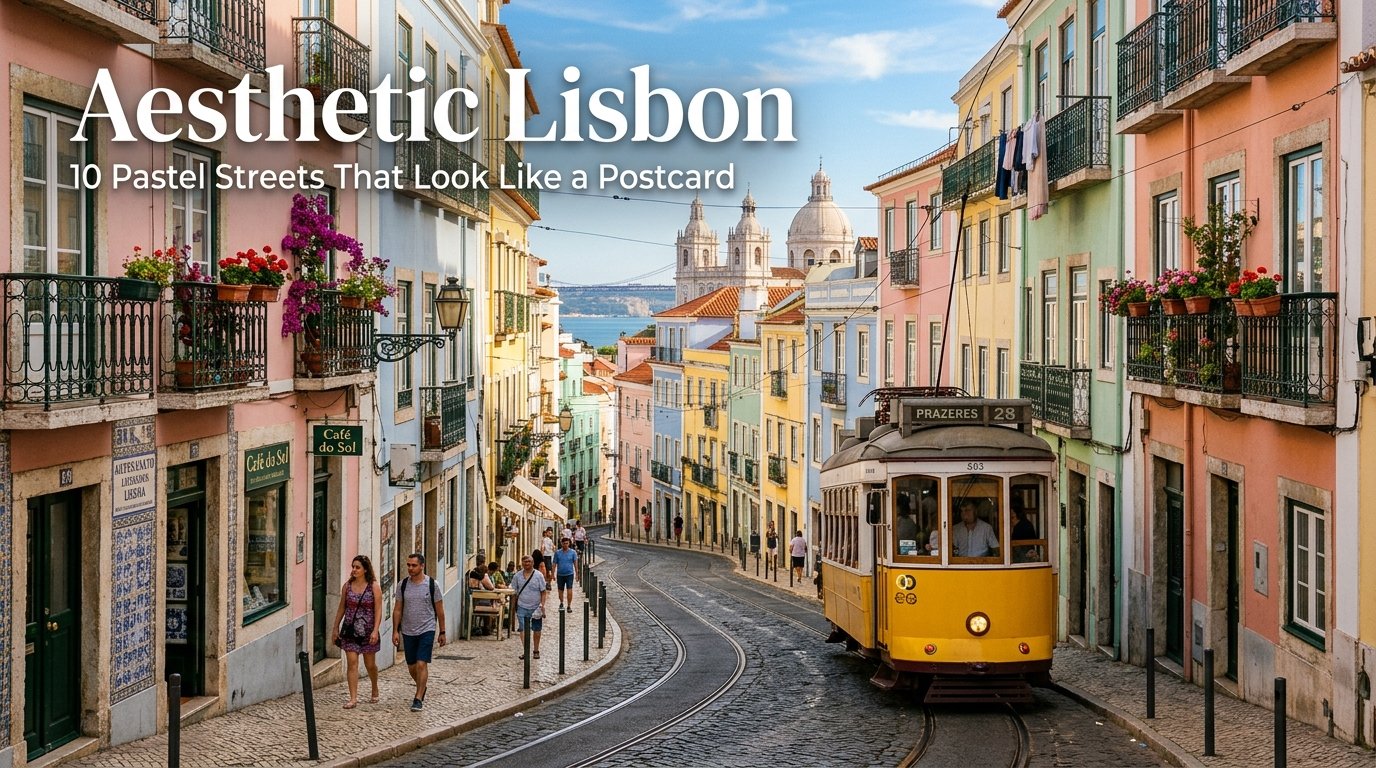
Aesthetic Lisbon: 10 Pastel Streets That Look Like a Postcard
Lisbon features some of the most visually distinct roadways in Europe, characterized by rows of historic buildings painted in soft shades of pink, yellow, lavender, and blue. This guide provides the exact locations, transport routes, and photography logistics for the ten most scenic pastel streets in the city. Readers will find precise details to help navigate these areas efficiently while avoiding heavy crowds.
The widespread use of pastel colors across the city dates back to the reconstruction period following the massive 1755 earthquake. Builders traditionally mixed lime wash with natural pigments like ochre, iron oxide, and copper to protect building exteriors from moisture and heat. These specific mineral bases naturally created the muted pinks, soft yellows, and pale blues that define the municipal landscape today.
Best Colorful Streets in Lisbon for Photography
Discover Lisbon’s most photogenic pastel-colored streets, along with the best neighborhood and ideal time to capture beautiful natural light.
| Street Name | Neighborhood (Bairro) | Primary Pastel Color | Best Photography Time |
|---|---|---|---|
| Rua Nova do Carvalho | Cais do Sodré | Bright Pink | 08:00 AM – 10:00 AM |
| Rua da Bica de Duarte Belo | Bica / Misericórdia | Pale Yellow & Ochre | 08:30 AM – 10:30 AM |
| Rua de São João da Praça | Alfama | Terracotta & Pastel Pink | 09:00 AM – 11:00 AM |
| Rua da Escola Politécnica | Príncipe Real | Lavender & Soft Rose | 02:00 PM – 04:00 PM |
| Largo do Carmo | Chiado | Mustard Yellow & White | 03:00 PM – 05:00 PM |
| Calçada do Duque | Chiado / Rossio | Mixed Pastel Facades | 10:00 AM – 12:00 PM |
| Rua dos Remédios | Alfama | Faded Blue & Pink | 08:00 AM – 10:00 AM |
| Rua Silva Carvalho | Campo de Ourique | Salmon Pink & Mint | 01:00 PM – 03:00 PM |
| Calçada de Santo André | Graça | Pale Yellow | 04:00 PM – 06:00 PM |
| Rua de San Marçal | Príncipe Real | Soft Teal & Rose | 11:00 AM – 01:00 PM |
To capture these colorful Lisbon streets without harsh shadows, timing is critical. The high coastal sun can wash out the soft pastel tones between midday and early afternoon. Planning visits according to the specific light conditions of each neighborhood ensures optimal clarity and accurate color representation in photographs.
The 10 Pastel Streets (Deep-Dive Guides)
1. Rua Nova do Carvalho (The Pink Street – Cais do Sodré)
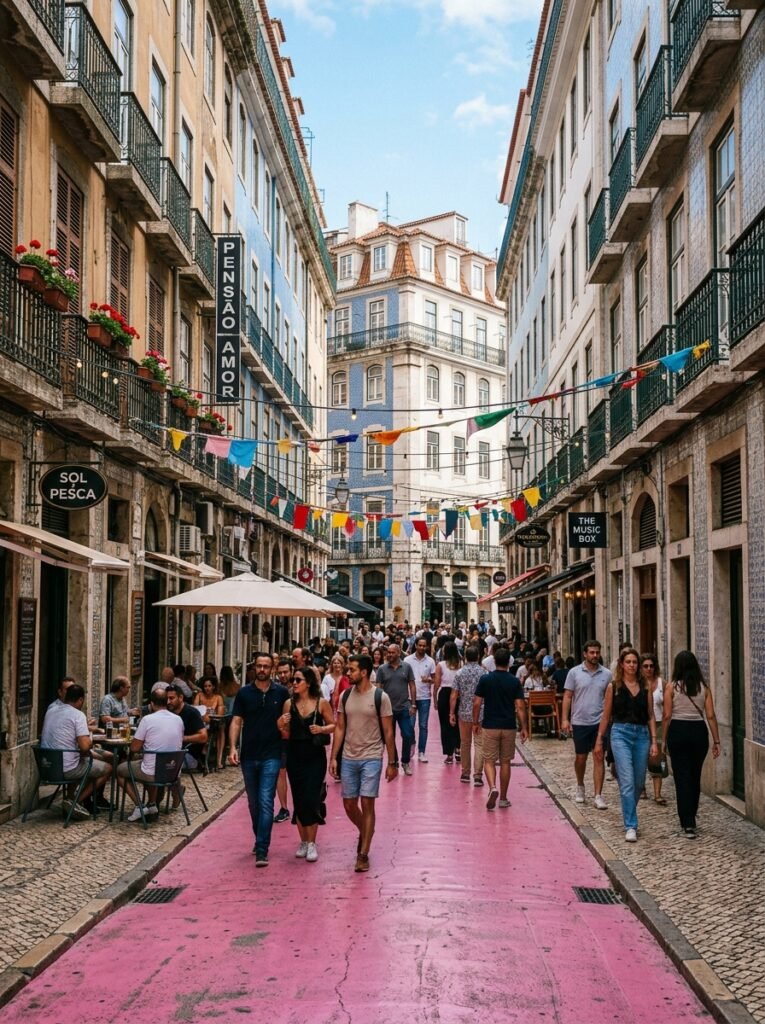
Rua Nova do Carvalho is located in the riverside district of Cais do Sodré, positioned just north of the main train terminal. The entire surface of this pedestrian street is painted a bright, saturated pink, which creates a sharp contrast against the surrounding pale blue and yellow buildings. An overhead iron bridge adds a distinct architectural frame to the western end of the corridor.
To reach the location, take the Metropolitano de Lisboa Green Line directly to the Cais do Sodré terminus station. Exit the station toward the main square, cross the street at Avenida da Ribeira das Naus, and walk one block north along Rua do Alecrim before turning right. Multiple city buses operated by Carris, including lines 728 and 736, also stop at the adjacent transport hub.
Getting There
The best time of day to photograph Lisbon’s Pink Street uncrowded is between 08:00 AM and 10:00 AM. Because this area serves as a primary nightlife district, municipal cleaning crews wash the street early in the morning, leaving the pavement clean and free of delivery trucks. The sun clears the high buildings by mid-morning, providing even lighting across the pink asphalt without creating dark diagonal shadows.
The pink painted surface can become exceptionally slick when wet, requiring careful footing after morning cleanings or rain showers. Visitors should note that bars open along this strip after 8:00 PM, which introduces heavy crowds and outdoor seating barriers that block clear sightlines. Keep personal belongings secure, as the high concentration of visitors makes the area a known point for pickpocket activity.
2. Rua da Bica de Duarte Belo (The Funicular Street – Misericórdia)
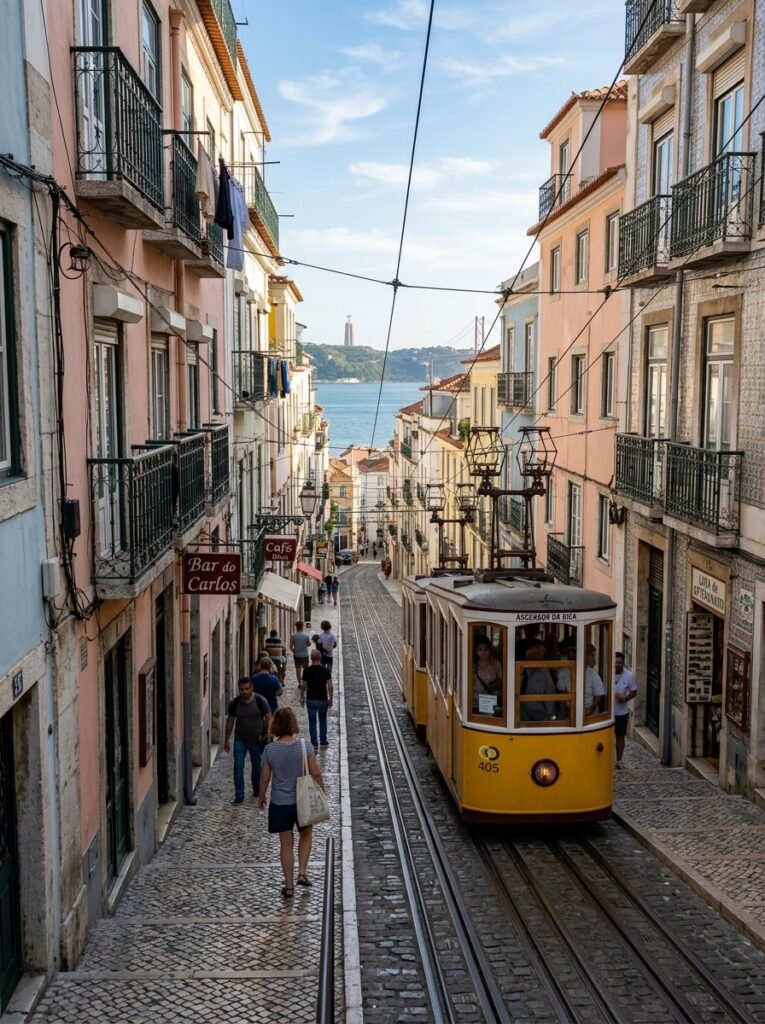
Rua da Bica de Duarte Belo is a steep, narrow corridor that drops down toward the Tagus River, famous for the yellow Ascensor da Bica funicular that runs along its tracks. The street is lined with tightly packed seventeenth-century apartments painted in pale ochre and fading canary yellow. Iron balconies dressed with drying laundry frame the tracks, creating a highly traditional residential scene.
Visitors can access the top of the street by taking the Metro Blue or Green lines to Baixa-Chiado station, then walking west for ten minutes along Rua do Loreto. Alternatively, tram number 28 stops directly at the upper entrance near Largo do Calhariz. The lower entrance can be accessed from the Cais do Sodré riverside flatlands by walking up the steep Calçada de São Francisco.
The optimal photography window occurs between 08:30 AM and 10:30 AM when the morning sun illuminates the river at the bottom of the hill. During these hours, the light hits the upper facades without casting the lower tracks into deep shadow. The funicular starts operations at 7:00 AM on weekdays and 9:00 AM on Sundays, running every 10 to 15 minutes.
The incline on this street exceeds an eleven percent grade, which puts significant strain on the knees and ankles during descents. The limestone cobblestones are highly polished from decades of foot traffic and offer very little traction. Pedestrians must remain clear of the central tracks at all times, as the funicular operates on a fixed cable system and cannot steer away from hazards.
3. Rua de São João da Praça (Alfama)
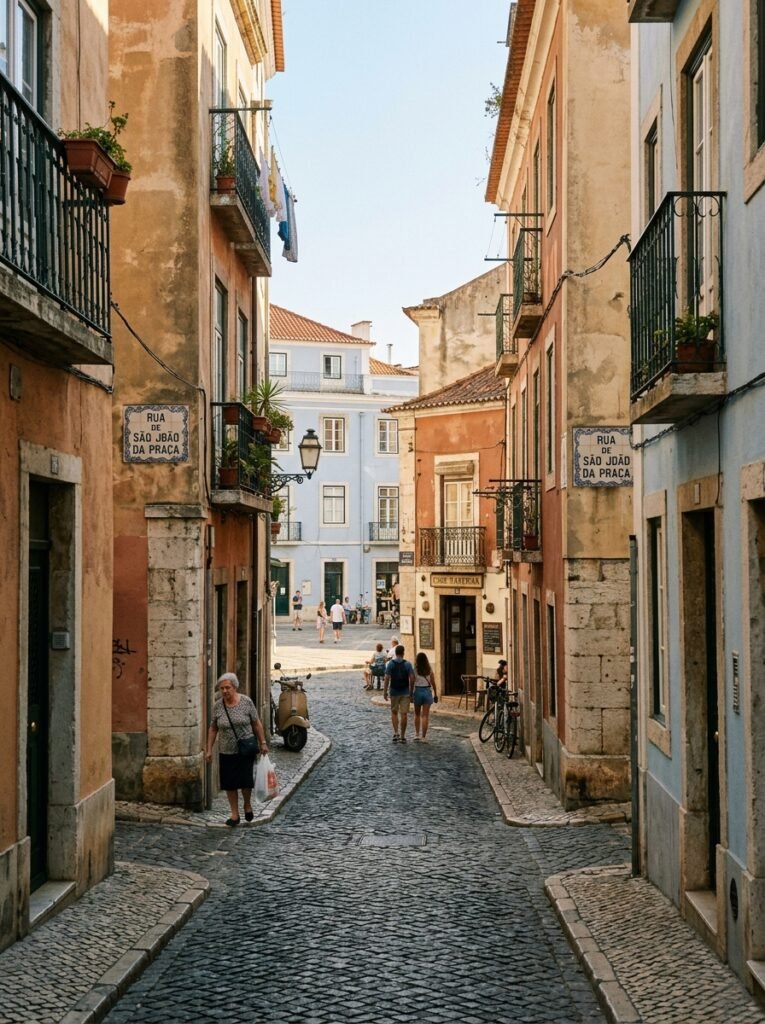
Rua de São João da Praça serves as a main artery through the lower Alfama district, connecting the Lisbon Cathedral to the church of São Vicente de Fora. The street features a winding sequence of traditional Pombaline-style buildings finished in faded terracotta, soft rose, and cream-colored plaster. Many of these structures retain their original eighteenth-century stone door frames and ornamental tile accents.
The easiest way to reach this street is on foot from the Santa Apolónia train and metro station, walking ten minutes southwest up the gentle incline. Visitors can also take historic Tram 28 or bus 737 from Praça da Figueira, getting off at the Sé (Cathedral) stop and following the tracks eastward for two minutes.
Getting There
The best light for capturing these specific Alfama pastel streets occurs between 09:00 AM and 11:00 AM. The eastward orientation of the street allows the morning sun to light up the pink and cream plaster facades directly. This time slot also avoids the midday glare that reflects harshly off the white limestone pavements.
While this street is flatter than most paths in Alfama, the sidewalks are incredibly narrow, often measuring less than two feet wide. Pedestrians must frequently step into the main roadway to allow oncoming traffic or the historic tram to pass safely. Watch for loose or missing cobblestones, and stay close to the building walls when you hear the tram bell approaching.
4. Rua da Escola Politécnica (Príncipe Real)
Rua da Escola Politécnica is a wide, elegant boulevard running through the upscale Príncipe Real neighborhood. It is lined with grand, nineteenth-century palacetes (mini-palaces) painted in soft lavender, rose pink, and pale sage green. The architectural styles here feature large arched windows, ornamental wrought-iron balconies, and beautiful neoclassical stonework.
To reach this street, take the Metropolitano de Lisboa Yellow Line to Rato station. Exit the station and walk southeast uphill along Rua da Escola Politécnica for approximately five minutes. Visitors can also take Carris bus lines 758 or 773, which run directly along the boulevard and stop at the Jardim do Príncipe Real park.
Getting There
The ideal time for photography on this boulevard is between 02:00 PM and 04:00 PM. Because the street runs from northwest to southeast, the afternoon sun strikes the lavender and pink northern facades directly. This lighting angle highlights the architectural textures of the buildings without creating dark shadows from the mature trees lining the road.
The sidewalks here are wider and flatter than those in the older historic quarters, making it a comfortable route for walking. However, the pavement still consists of traditional limestone blocks, which become very slippery during rare rain showers or early morning cleanings. Be mindful of city buses and taxis passing close to the curbs when stepping back to frame a photo.
5. Largo do Carmo (Chiado)
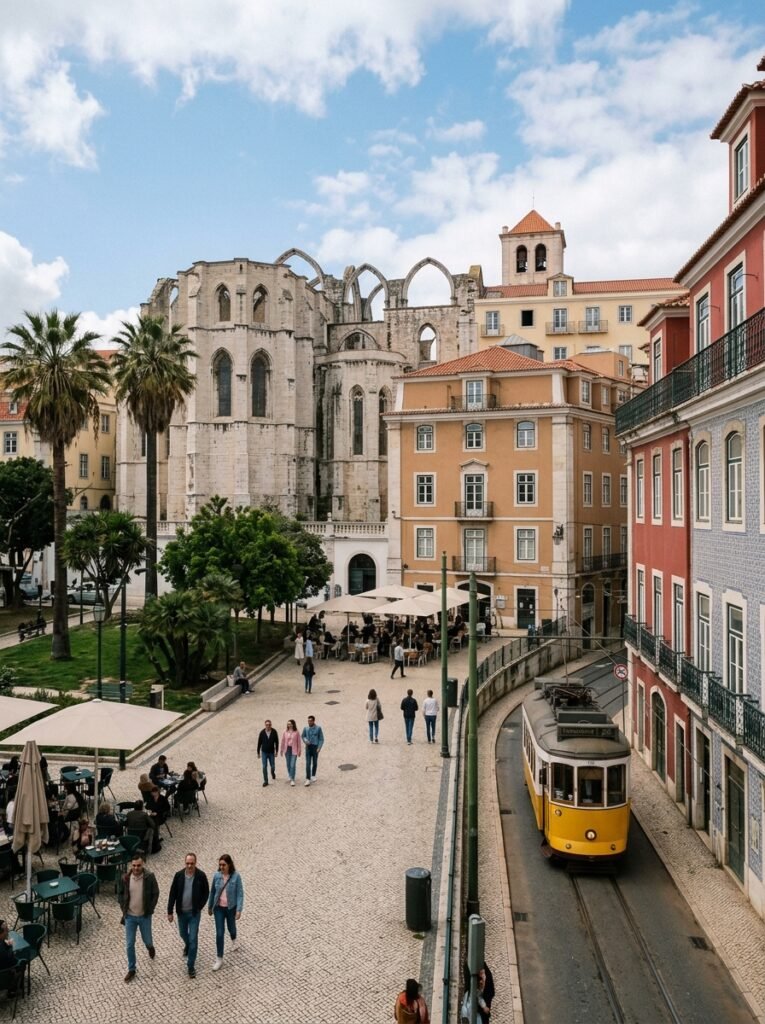
Largo do Carmo is a tranquil, historic square centered around the Carmo Fountain and shaded by mature jacaranda trees. The square is enclosed by magnificent old buildings dressed in shades of rich mustard yellow, pastel cream, and crisp white plaster. The skeletal arches of the ruined Carmo Convent provide a dramatic historical backdrop to the eastern side of the plaza.
The square is easily accessible from the Baixa-Chiado metro station (Blue and Green lines). Take the long escalators inside the station toward the Chiado exit, step onto Rua do Carmo, and make an immediate left turn onto Calçada do Sacramento to reach the top. Visitors can also use the Santa Justa Lift, which terminates directly on the walkway leading into the square.
The best time of day to photograph Largo do Carmo is from 03:00 PM to 05:00 PM. During these hours, the afternoon sun casts a warm, soft glow across the yellow facades and the central fountain. If visiting during late May or June, the purple blooms of the jacaranda trees create a beautiful color contrast against the mustard-yellow structures.
The square is completely pedestrianized, meaning visitors do not have to worry about vehicular traffic while capturing images. The central area features several outdoor café tables that can obstruct clean landscape shots later in the day. Keep an eye on personal items, as the outdoor dining areas and street musicians often attract large crowds where pickpockets operate.
6. Calçada do Duque (Chiado/Rossio)
Calçada do Duque is a long, winding pedestrian staircase that links the high Chiado district with the low-lying Rossio square. The stairwell is tightly bordered by traditional apartment buildings painted in an eclectic mix of faded salmon, ochre, and pale blue. Looking down the steps provides an iconic postcard view of the Rossio train station and the distant São Jorge Castle across the valley.
The top of the staircase begins right next to the Largo do Carmo square, while the bottom empties out near the Rossio train station (Metro Green Line). To walk down the steps, exit Rossio station, head toward the Church of São Domingos, and look for the stone stairs ascending the hill to the west.
Getting There
The optimal time to photograph this scenic stairway is between 10:00 AM and 12:00 PM. During the late morning, the sun rises high enough to pierce the narrow gap between the buildings, illuminating the colorful stair risers and the valley below. This timing prevents the castle in the background from becoming a dark silhouette against a blown-out sky.
This path consists entirely of steep stone stairs, which presents a significant physical challenge if walking upward. There are no handrails along the central path, and the steps are unevenly spaced due to the age of the structure. Several traditional restaurants place tables directly on the wider landings, meaning pedestrians must watch their step to navigate around servers and diners.
7. Rua dos Remédios (Alfama)
Rua dos Remédios is a long, historic merchant street that cuts horizontally through the heart of the deep Alfama neighborhood. The narrow lane is characterized by traditional four-story homes covered in faded pastel blue paint, light pink plaster, and historic geometric tiles. Local residents still hang laundry from the windows, adding to the authentic, time-capsule atmosphere of the area.
The street begins just a short walk away from the Santa Apolónia transport terminal (Metro Blue Line). Exit the station, cross the main avenue (Avenida Infante Dom Henrique), and walk up the gentle incline of Rua do Paraíso until it intersects with the start of Rua dos Remédios.
The best time for capturing images here is from 08:00 AM to 10:00 AM when the neighborhood is quietest. The low morning sun illuminates the upper portions of the pale blue and pink buildings, creating a soft, even light throughout the corridor. Early morning is also when local shops open their wooden doors before day-trippers arrive.
This is a narrow, active residential street, meaning delivery carts, motor scooters, and local residents use the path constantly. The sidewalk is practically non-existent in certain stretches, forcing pedestrians to walk single-file down the center of the stone road. Always pull over to the side near a doorway to allow local residents and delivery workers to pass by without interruption.
8. Rua Silva Carvalho (Campo de Ourique)
Rua Silva Carvalho is a long, straight avenue located in the residential Campo de Ourique neighborhood, known for its late nineteenth-century architecture. The street features large apartment blocks and townhouses finished in pale salmon pink, mint green, and light cream colors. These buildings display geometric plaster work and stone window lintels characteristic of the Art Nouveau influence in Lisbon.
To reach this location, take Carris Tram 28 westward to its final terminal loop at Praça de Campo de Ourique. From the terminal park, walk two blocks north along Rua Saraiva de Carvalho, then turn right onto Rua Silva Carvalho. Alternatively, take the Metro Blue Line to São Sebastião station and transfer to bus 742, which stops directly on the avenue.
Getting There
The best time of day to photograph these specific salmon and mint facades is between 01:00 PM and 03:00 PM. The wide layout of the avenue allows the midday sun to illuminate both sides of the street evenly without being blocked by roofs. The light at this hour brings out the subtle differences between the soft pink and green paint tones.
This neighborhood is a flat plateau, making the walking conditions much easier than the steep central hills of Chiado or Alfama. However, because Campo de Ourique is a busy commercial and residential zone, delivery vans frequently park on the curbs during the day. Pedestrians should watch for heavy traffic at intersections and use designated crosswalks, as cars travel faster on these long, straight stretches.
9. Calçada de Santo André (Graça)
Calçada de Santo André is a historic, curving roadway that climbs steeply from the Mouraria valley up to the hilltop neighborhood of Graça. The street is bordered by traditional multi-story residential buildings covered in uniform coatings of pale yellow and soft ochre plaster. Tram tracks curve sharply along the path, mirroring the bend of the historic stone walls.
The easiest transport route is to take historic Tram 28 directly up the hill from Praça da Figueira and exit at the Calçada de Santo André stop. For those who prefer to walk, take the Metro Green Line to Martim Moniz station and follow the tram tracks uphill toward the northeast.
The optimal window for photography is from 04:00 PM to 06:00 PM. The street curves toward the west, allowing the late afternoon sun to wash over the pale yellow walls with warm, golden light. This timing also coordinates well with the afternoon tram schedules, allowing photographers to capture the yellow vehicle moving past matching yellow buildings.
The incline on this roadway is severe, and the sidewalks are incredibly narrow, often measuring less than eighteen inches wide. The historic tram passes within inches of the buildings, leaving no room on the pavement when it moves around curves. Pedestrians must step directly into recessed doorways or shops whenever they hear the tram approaching up or down the hill.
10. Rua de San Marçal (Príncipe Real)
Rua de San Marçal runs along the western slope of the Príncipe Real district, descending toward the São Bento neighborhood. The narrow, quiet street features mid-nineteenth-century residential homes painted in soft teal, pale rose, and dusty lavender. Many of these structures retain their original wooden shutters and decorative iron window guards.
Visitors can access the top of the street by taking the Metro Yellow Line to Rato station, walking south down Rua da Escola Politécnica, and turning right onto Rua de San Marçal. From the historic center, take Carris bus 758 from Cais do Sodré and exit at the Plaza de Príncipe Real stop, which sits just one block east of the street.
Getting There
The best time to photograph this uncrowded Lisbon photography spot is between 11:00 AM and 01:00 PM. During the late morning, the sun shines directly down the axis of the street, illuminating the soft teal and rose facades before they fall into the shadow of the hill later in the afternoon.
This is a highly quiet, residential street with very low vehicle traffic, providing a peaceful environment for photography. The sidewalk tiles are older and uneven, requiring careful attention to prevent tripping. Visitors must respect the privacy of the neighborhood by keeping noise levels low and avoiding framing residents inside their ground-floor windows.
Essential Logistics & Gear Guide
Walking through Lisbon to photograph these specific pastel streets requires clear preparation regarding physical infrastructure and local etiquette. The city built its roadways using a traditional paving style known as Calçada Portuguesa (Portuguese pavement). This involves small, hand-cut cubes of limestone and basalt laid closely together in decorative geometric patterns across almost every walkway and incline.
The physical nature of this limestone creates a specific hazard for pedestrians. Decades of foot traffic, combined with exposure to coastal humidity, polish the flat stone surfaces until they become exceptionally smooth. When the stones are dry, they offer low traction; when wet from rain, humidity, or morning cleaning crews, they become as slick as ice.
Why Lisbon’s Streets Can Be Slippery
Limestone
Cobblestones
Heavy Foot Traffic
& Humidity
Polished,
High-Slip Surface
Wear shoes with good grip, especially after rain or during humid mornings when Lisbon’s famous limestone pavements become noticeably slippery.
Selecting correct footwear is the most important factor for staying safe while exploring these paths. Standard running shoes with flat, hard plastic soles or smooth-bottomed sandals fail to grip the polished limestone and cause frequent slips. Travelers should wear walking shoes equipped with thick, flexible rubber outsoles featuring deep tread patterns to maximize surface friction.
Best Footwear for Lisbon’s Slippery Streets
Lisbon’s polished limestone pavements and steep hills make supportive, grippy shoes essential for comfortable sightseeing.
| Footwear Trait | Recommended Type | Why It Is Necessary |
|---|---|---|
| Sole Material | Soft, vulcanized rubber | Grips polished limestone much better than hard plastic or leather |
| Tread Design | Deep channels or lug patterns | Dispels water and moisture to prevent slipping on wet stones |
| Structure | Low-heeled, wide-base sneakers | Keeps the ankle stable on uneven, shifting cobblestone surfaces |
| Insole | Shock-absorbing foam or gel | Reduces impact stress on knees during steep downhill walks |
Because the ten pastel corridors featured in this guide are located within active residential zones, visitors must practice strict photography etiquette. Local residents utilize these narrow walkways daily to access their homes, hang laundry, and carry groceries. Blocking historic doorways, setting up large tripods on narrow two-foot sidewalks, or sitting on private entry steps disrupts the daily routines of the community.
Photographers must always look around before positioning themselves for a photograph to ensure they are not blocking pedestrian traffic or garage exits. Avoid pointing camera lenses directly into low, ground-floor windows where residents are cooking or resting inside their private spaces. If a local resident is entering or exiting a building, lower the camera completely and wait for them to pass out of frame.
Public Transport & Ticket Logistics
Navigating Lisbon to visit these pastel streets requires using the municipal transit network managed by the city operators, Metropolitano de Lisboa (metro) and Carris (buses, trams, and funiculars). To use this network, every passenger must first purchase a reusable transit card called the Navegante Occasional card. This card costs €0.50, is valid for one year, and can be bought at automated ticket machines inside any metro station.
Using the Navegante Card
Purchasing tickets directly onboard vehicles from the driver is the most expensive method of travel. For example, a single tram ride bought onboard costs €3.30 in cash, and a ride on a historic funicular costs €4.30. In contrast, loading a standard single fare onto a Navegante card reduces the cost to €1.90 for an hour of travel across both the metro and Carris networks.
Travelers can optimize transit spending by utilizing the “Zapping” system or a 24-hour travel pass. Zapping allows passengers to load a monetary balance (such as €3, €5, or €10) onto the card, which automatically deducts a reduced rate of €1.72 per ride across different transport modes. For days involving heavy transit use, the Carris/Metro 24-hour ticket costs €7.25 and allows unlimited rides on all buses, metro lines, historic trams, and vertical funiculars.
Lisbon Public Transport Ticket Prices (2026)
Compare the most common Lisbon transport tickets to choose the best value for your sightseeing itinerary.
| Ticket Type | 2026 Retail Cost | Best Used For |
|---|---|---|
| Onboard Tram Fare | €3.30 | One-off emergency rides when no ticket machine is nearby. |
| Onboard Funicular Fare | €4.30 | Single tourist rides up steep hills without a pre-loaded card. |
| Standard Single Ticket | €1.90 | Out-and-back trips requiring single transfers within 60 minutes. |
| Zapping Fare (Pre-loaded) | €1.72 ⭐ | Flexible, low-frequency travel days with 1–3 rides. |
| Carris / Metro 24-Hour Pass | €7.25 🚋 | Best for intensive sightseeing with 4+ transit rides. |
Official ticket machines accept cash, coins, and standard international debit or credit cards. Remember that each traveler must possess their own individual Navegante card, as the system does not allow multiple passengers to tap into a station or vehicle using a single card. Keep the paper receipt provided at the machine, as it serves as proof of purchase if a card malfunctioning error occurs at the turnstiles.