Lisbon’s Best Miradouros: A Ranked List of Every Viewpoint in the City
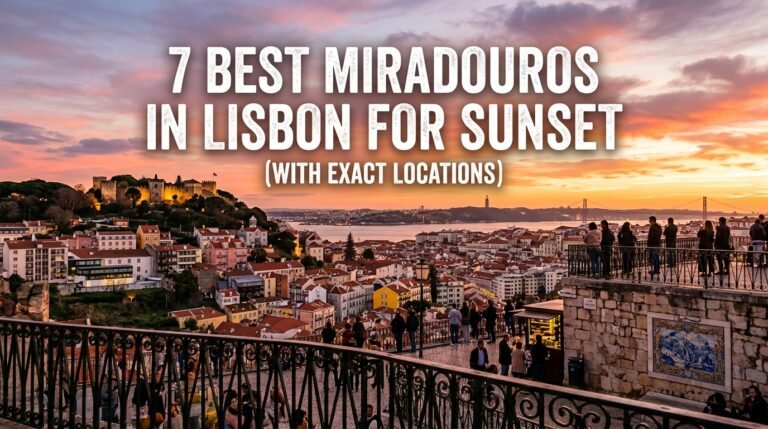
Lisbon is defined by its verticality. Built across seven primary hills, the city’s topography creates a natural amphitheater facing the Tagus River (Tejo). The miradouros—the official public terraces—serve as essential urban infrastructure for navigating and understanding the city’s complex layout. Rather than mere photo opportunities, these sites are strategic navigational hubs that connect the historic districts of Alfama, Graça, and Bairro Alto.
The Lisbon Viewpoint Shortlist
Miradouro da Senhora do Monte: The highest natural point. Offers a 270° view covering the Castle, Bridge, and River.
Miradouro das Portas do Sol: Entirely flat sidewalk access. Ideal for wheelchairs, strollers, or those avoiding stairs.
Miradouro de Santa Catarina: Known for its vibrant sunset atmosphere, live music, and river-level proximity.
Jardim do Torel: Rarely crowded, features a “beach” in summer, and offers unique views of Avenida da Liberdade.
The Ranking Methodology
To provide an objective assessment for travelers, this guide ranks Lisbon’s viewpoints based on four quantitative and qualitative metrics:
- Field of Vision (FOV): Measured in degrees of unobstructed vista (e.g., 180° vs. 360°).
- Logistical Accessibility: Evaluated by the steepness of the approach and proximity to the Carris transport network (trams, buses, and funiculars).
- Infrastructure: The presence of dedicated facilities such as “Quiosques” (kiosks), seating, and shaded areas.
- Photographic Utility: The orientation of the viewpoint relative to the sun for optimal morning or evening light.
Top-Tier Categorization
For travelers with limited time, the following miradouros represent the peak of the city’s offerings based on specific intent:
- Highest Elevation: Miradouro da Senhora do Monte.
- Best Historic Proximity: Miradouro de Santa Luzia (Alfama).
- Best Sunset Orientation: Miradouro de Santa Catarina (Adamastor).
- Best Infrastructure: Miradouro de São Pedro de Alcântara.
🗺️ Instant Viewpoint Finder
Select your priority to find your ideal Lisbon vista:
Use this guide’s detailed sections below to plan your logistical route for each selection.
Understanding Lisbon’s “Calçada” Logistics
Accessing these viewpoints requires a technical understanding of the local terrain. Most miradouros are located at the terminus of steep inclines paved with calçada portuguesa (traditional limestone pavement). These surfaces offer low traction when wet and can be physically demanding.
Pro-Tip for Information Gain: To minimize physical exertion, utilize the Elevador da Baixa (located inside the Pingo Doce supermarket on Rua de Angola) to ascend from the Baixa district toward the Castle and Alfama viewpoints for free, bypassing significant stair-climbs. Alternatively, the 737 Bus is the only public transport vehicle small enough to navigate the narrow alleys directly to the Castelo gates, saving travelers an 18% gradient hike.
The “Grand Tier” – Lisbon’s Top 5 Iconic Viewpoints
The “Grand Tier” consists of viewpoints that offer the most expansive fields of vision and the highest density of historical landmarks. These locations are the primary targets for photography and urban orientation.
1. Miradouro da Senhora do Monte (The Summit)
Located in the Graça district, this is the highest natural point in the city. It offers a 270-degree panorama that includes the Castelo de São Jorge, the Tagus River, the 25 de Abril Bridge, and the Monsanto Forest Park.
- Logistics: The climb from the Graça tram stop is a steep 5-minute incline (approx. 12% grade).
- Transport: Tram 28 or Bus 734 to “Graça.”
- Infrastructure: Limited. Usually features a single mobile kiosk and the small Chapel of Nossa Senhora do Monte. There are no public restrooms on-site.
- Best Time: Golden Hour. The elevation allows for an unobstructed view of the sun dipping behind the western hills.
2. Miradouro de São Pedro de Alcântara
This landscaped terrace in Bairro Alto acts as a dual-level garden. It provides a “face-to-face” view of the Castle and the Mouraria district.
- Logistics: Level ground if approaching from Príncipe Real; extremely steep if coming from Baixa.
- Transport: Ascensor da Glória (funicular) from Restauradores drops passengers directly at the entrance. Tram 24 also stops here.
- Infrastructure: High. Includes a central fountain, permanent kiosks with seating, and a detailed tile map (azulejos) identifying the landmarks in view.
- Best Time: Morning for front-lit photos of the Castle, or late evening for the illuminated city lights.
3. Miradouro de Santa Luzia
Widely considered the most “post-card perfect” spot, this viewpoint is famous for its bougainvillea-covered trellis and blue-and-white tile panels depicting the 1755 earthquake and the siege of Lisbon.
- Logistics: Located in the heart of Alfama. The terrace is narrow and often congested with tour groups.
- Transport: Tram 28 or Bus 737 to “Santa Luzia.”
- Infrastructure: Moderate. Includes a small pond and a cafe/restaurant nearby. Public restrooms are available at the adjacent Portas do Sol.
- View: Direct oversight of the Alfama rooftops and the National Pantheon.
4. Miradouro das Portas do Sol
Situated just meters above Santa Luzia, this viewpoint offers a wider, more balcony-like perspective of the Tagus estuary.
- Logistics: Completely flat access from the road. It is highly accessible for those with limited mobility.
- Transport: Tram 28 or Bus 737.
- Infrastructure: High. Large open plaza with several high-capacity kiosks and nearby subterranean public toilets.
- Photographic Note: This is the premier spot for sunrise photography in Lisbon.
5. Miradouro da Graça (Sophia de Mello Breyner Andresen)
A favorite for locals, this terrace sits under the shadow of the Graça Convent. It offers a slightly lower, more intimate perspective than Senhora do Monte.
- Logistics: Moderate incline from the main Graça square.
- Transport: Tram 28 or Bus 734.
- Infrastructure: Excellent. Features one of the city’s most popular “Quiosque” cafes with ample shaded seating.
- Best Time: Sunset. The pine trees provide natural framing for photos of the bridge.
Critical Connectivity: The Tram 28 Trap
Travelers should note that while Tram 28 connects four of these five viewpoints, it is frequently at maximum capacity. For those aiming to reach the Graça or Alfama viewpoints during peak hours (10:00 AM – 6:00 PM), utilizing the Bus 737 (from Praça da Figueira) or the 734 is a more reliable logistical choice. These buses follow similar routes but do not suffer from the same “tourist saturation” delays as the historic yellow trams.
The Historic Core – Viewpoints of Alfama and Graça
The historic districts of Alfama and Graça contain the highest density of miradouros per square kilometer. Navigating this area requires a logistical plan, as the narrow, labyrinthine streets (becos) and steep staircases can lead to significant physical fatigue.
Miradouro de Santa Luzia & Portas do Sol
These two viewpoints function as the primary entrance to the Alfama district for those arriving from the Baixa area.
- Logistics: The most direct route is via Tram 28 or Bus 737, stopping at “Largo de Santa Luzia.”
- Know-Before-You-Go: Santa Luzia is a two-level structure. The lower level often houses local artists selling hand-painted tiles. Access to the lower garden is frequently restricted after 9:00 PM for security reasons, while the upper terrace remains open 24/7.
- Crowd Strategy: To photograph the sunrise without significant tourist interference, arrive before 7:30 AM. By 10:00 AM, this location typically reaches maximum capacity due to organized walking tours.
Miradouro da Graça (Sophia de Mello Breyner Andresen)
Named after the Portuguese poet who frequented the spot, this viewpoint is an essential hub for travelers moving between Alfama and the higher Senhora do Monte.
- Infrastructure Detail: The Quiosque da Graça is a permanent fixture. It provides standard pricing for espresso (approximately €1.00–€1.50) and beverages, unlike the premium “tourist” prices found in Baixa.
- Hidden Access: To reach this spot without the Tram 28 queue, take the Elevador da Graça (a modern funicular/inclined lift) that connects the Rua da Palma/Martim Moniz area directly to the Graça district.
Miradouro do Recolhimento: The Secret Garden
Often overlooked because it is hidden behind the Castle walls, this viewpoint is located within a small park and playground.
- Logistics & Hours: Access is through a gate on Rua do Recolhimento. Crucial Note: Unlike most viewpoints, this one has strict operating hours. It is generally open daily from 10:00 AM to 1:00 PM and 2:00 PM to 7:00 PM.
- View Profile: Offers a high-angle, peaceful view of the National Pantheon and the Church of São Vicente de Fora without the noise levels of Portas do Sol.
Neighborhood Advisory: Alfama Accessibility
When navigating between the viewpoints of Section 3, travelers should prioritize “descent” routes. Start at Miradouro da Senhora do Monte (highest) and walk down through Graça toward Alfama. The gradient of the streets in this district can exceed 15%, making “uphill” travel between viewpoints physically taxing for those not utilizing the tram or bus systems. Ensure footwear has adequate grip, as the limestone pavement (calçada) is polished and exceptionally slippery in both dry and damp conditions.
The Western Heights and Hidden Estrela Perspectives
While the eastern hills of Alfama and Graça are characterized by their medieval density, the western hills—spanning Bairro Alto, Príncipe Real, and Estrela—offer broader boulevards and a more structured urban layout. The viewpoints in this sector provide a distinct profile of the city, focusing on the 25 de Abril Bridge and the massive Monsanto Forest Park.
Miradouro de Santa Catarina (Adamastor)
Often referred to by locals as “Adamastor” due to the large stone statue of the mythical sea monster from Os Lusíadas, this viewpoint is the city’s primary social hub for sunset.
- Logistics: Reachable via a 5-minute walk from the upper terminus of the Bica Funicular. It is largely flat once you reach the top of the Calçada do Combro.
- Transport: Bus 727 or Tram 28 to “Calhariz (Bica).”
- Atmosphere: This site is less “monumental” and more cultural. It features a lively kiosk and frequently hosts live acoustic music.
- View Profile: Exceptional views of the Port of Lisbon, the Christ the King (Cristo Rei) monument, and the industrial shipyards across the Tagus.
Miradouro do Jardim do Torel
Tucked away on one of Lisbon’s “other” hills, Torel is a hidden gem that remains largely undiscovered by the average tourist. It is a 19th-century garden offering a view of the Avenida da Liberdade valley.
- Logistics: Access is easiest via the Ascensor do Lavra, Lisbon’s oldest funicular (opened in 1884).
- Unique Feature: During the summer months, the lower level of the garden is often converted into an artificial “beach” or public swimming area.
- View Profile: A unique western perspective looking toward the Arroios district and the back of the São Pedro de Alcântara viewpoint.
Miradouro da Rocha Conde de Óbidos
Located further west toward the Lapa district and the National Museum of Ancient Art, this viewpoint offers a “water-level” perspective compared to the others.
- Logistics: Accessible via Bus 713 or 727. It involves fewer steep climbs than the Alfama viewpoints.
- Infrastructure: A very high-quality kiosk with a large deck. It is a professional setting often used by local workers for “after-work” drinks.
- View Profile: Unmatched proximity to the Tagus River and the 25 de Abril Bridge. It is the best spot for observing the large cruise ships docking at the Alcantara terminal.
Technical Guide: Utilizing the Western Funiculars
To access these viewpoints without extreme physical exertion, the three historic funiculars (Ascensores) are critical pieces of infrastructure.
- Ascensor da Glória: Connects Restauradores to São Pedro de Alcântara.
- Ascensor da Bica: Connects the riverside (Rua de São Paulo) to Santa Catarina/Bairro Alto.
- Ascensor do Lavra: Connects Largo da Anunciada to Jardim do Torel.
Operational Data: All funiculars cost approximately €4.10 for a return trip if purchased on board, but are included for free with the 24-hour Carris transport pass (€6.80) or the Lisboa Card. Using these services saves an average of 45 vertical meters of climbing per trip.
Modern and Paid Perspectives – Lisbon from Above
While the traditional miradouros are public terraces carved into the city’s hills, a new tier of viewpoints has emerged that utilizes modern engineering and vertical architecture. These locations often require an entry fee but provide a “birds-eye” perspective that natural topography cannot replicate.
Amoreiras 360° Panoramic View
Situated at the top of the Amoreiras Shopping Center (one of the highest points in the city), this is the only spot in Lisbon that offers a true 360-degree unobstructed vista.
- Logistics: Visitors must take a dedicated elevator from inside the shopping mall to the 18th floor.
- Transport: Bus 711, 723, or 753. The nearest Metro station is Rato (Yellow Line), followed by a 10-minute walk.
- Value Proposition: From here, one can see the “spine” of the city, including the Águas Livres Aqueduct, the Monsanto forest, and the entirety of the historic center trailing down to the river.
- Cost: Approximately €5.00 (Standard adult entry).
Pilar 7 Bridge Experience
This viewpoint offers a technical and industrial perspective, located literally inside one of the main pillars of the 25 de Abril Bridge in the Alcântara district.
- The View: A glass-floored platform suspended 80 meters above the ground, level with the bridge’s traffic deck.
- Logistics: Accessible via Tram 15E or several buses to “Alcântara-Mar.” The experience includes an elevator and a multimedia museum about the bridge’s construction.
- Safety Note: This is not recommended for those with severe vertigo due to the transparent flooring and the vibration caused by passing vehicles and trains.
The Santa Justa Lift (Upper Platform)
While many tourists wait in long queues to ride the Neo-Gothic elevator, the true “viewpoint” is the narrow spiral staircase leading to the very top platform.
- Logistical Hack: One does not need to wait for the elevator to access the view. Travelers can walk behind the Carmo Convent (Largo do Carmo) and cross the connecting footbridge to reach the upper platform for a significantly lower fee (or free with certain transport passes).
- Infrastructure: Very limited space. The platform is narrow and can feel claustrophobic during peak hours.
Arco da Rua Augusta: The Maritime Gateway
Rising above the Praça do Comércio, the triumphal arch offers a unique symmetrical view of the Baixa “grid” and the river.
- Logistics: Access is via a small elevator followed by two flights of narrow stairs.
- Strategy: This is the best location for capturing the geometry of the Marquês de Pombal’s post-1755 city planning. Because the elevator has a low capacity, it is best visited immediately upon opening at 10:00 AM.
- Transport: Metro “Terreiro do Paço” (Blue Line) or “Baixa-Chiado” (Green/Blue Lines).
Practical Traveler’s Directory – Logistics and Strategy
Navigating Lisbon’s viewpoints requires more than a map; it requires a technical understanding of the city’s unique urban constraints. This section serves as a directory for the logistical “know-before-you-go” details that impact the feasibility of a multi-viewpoint itinerary.
Terrain and Topography Management
The city’s inclines are notoriously steep, with gradients in the Alfama and Graça districts often exceeding 15% to 18%.
- Surface Safety: The calçada portuguesa (limestone pavement) is aesthetically significant but practically hazardous. In dry weather, the stones are polished and slippery; in rain, they offer nearly zero traction. It is recommended to use footwear with rubberized, high-grip outsoles.
- Vertical Shortcuts: Always prioritize the “Elevador” network. The Elevador de Santa Justa, Elevador da Glória, Elevador da Bica, and Elevador do Lavra are not just tourist attractions; they are functional transit links designed to bridge the city’s vertical gaps.
The 2026 “Viewpoint Loop” Walking Route
For travelers seeking maximum efficiency, the following 2.5-kilometer route connects four major viewpoints with minimal uphill exertion:
- Start: Take Bus 734 or Tram 28 to the “Graça” stop.
- Point A: Walk 5 minutes (uphill) to Miradouro da Senhora do Monte (The highest point).
- Point B: Walk 8 minutes (downhill) to Miradouro da Graça.
- Point C: Continue the descent through the narrow alleys of the Vila Berta area to reach Miradouro de Santo Estêvão (Alfama).
- Finish: Conclude at Miradouro das Portas do Sol for easy access back to the Baixa district via the 737 Bus.
Connectivity and Digital Access
In 2026, Lisbon’s public transport and kiosk infrastructure have largely moved toward a cashless model.
- Payments: While most kiosks (Quiosques) at viewpoints accept physical Euros, contactless (NFC) payment is preferred. Small change (50c and €1 coins) is still useful for public restroom access in some areas.
- Wi-Fi Availability: Most major miradouros, including São Pedro de Alcântara and Portas do Sol, are covered by the “Lisboa Free Wi-Fi” municipal network, though speeds are often insufficient for high-definition video uploads.
Comprehensive Viewpoint Reference Table
This table summarizes the technical data for all primary locations discussed in this guide.
| Miradouro | Best Time | Nearest Transport | Effort (Scale 1-5) | Best View Of |
| Senhora do Monte | Sunset | Tram 28 / Bus 734 | 5 (High) | Full Panorama |
| Santa Luzia | Sunrise | Bus 737 / Tram 28 | 3 (Moderate) | Alfama/Pantheon |
| Santa Catarina | Late Afternoon | Bica Funicular | 2 (Low) | River/Bridge |
| Torel | Mid-Day | Lavra Funicular | 2 (Low) | Liberdade Valley |
| Amoreiras 360 | Any (Paid) | Bus 711 | 1 (Elevator) | Entire City |
| Portas do Sol | Sunrise | Tram 28 / Bus 737 | 1 (Flat) | Tagus Estuary |
Conclusion and Essential Frequently Asked Questions
The miradouros of Lisbon are more than static viewing platforms; they are the architectural and social lungs of the city. Understanding the logistical nuances—from the timing of the Atlantic light to the specific tram lines that bypass the steepest inclines—is the difference between a standard tourist visit and a high-utility travel experience.
By prioritizing viewpoints based on their technical attributes—elevation, accessibility, and infrastructure—travelers can strategically map out their exploration of the city’s seven hills. Whether utilizing the historic funiculars of the western heights or navigating the medieval alleys of the eastern core, the viewpoints remain the definitive way to comprehend the scale and history of the Portuguese capital.
Frequently Asked Questions (FAQs)
Which miradouro is the absolute highest in Lisbon?
The Miradouro da Senhora do Monte in the Graça district holds the highest elevation of all natural public viewpoints. For an even higher perspective, the Amoreiras 360° Panoramic View (a paid rooftop) offers the highest man-made vantage point in the city center.
Are Lisbon’s viewpoints free to enter?
The vast majority of Lisbon’s miradouros are public terraces and are 100% free of charge. Exceptions include the Santa Justa Lift platform, the Arco da Rua Augusta, Pilar 7, and the Amoreiras 360°, all of which require a ticket or a Lisboa Card for access.
What is the best way to avoid crowds at popular spots like Santa Luzia?
The “Golden Window” for Santa Luzia and Portas do Sol is between 07:00 and 08:30. Most organized cruise ship tours and walking groups do not arrive in the Alfama district until after 09:30. Sunset is the peak period for crowd density.
Is there a viewpoint accessible for those with limited mobility?
Yes. Miradouro das Portas do Sol and Miradouro de São Pedro de Alcântara (upper level) are largely flat and accessible from the main road. Additionally, the Amoreiras 360° is fully accessible via a modern elevator system inside the shopping mall.
Do the kiosks (quiosques) at viewpoints serve food?
Most kiosks serve light refreshments, including coffee, beer, wine, and traditional snacks like empadas or toasta mista. For full meals, travelers should look for “Esplanadas” (terraced restaurants) located immediately adjacent to the viewpoints, though these typically carry a premium “view tax” in their pricing.
Can I reach the viewpoints via the Metro?
Generally, no. The Lisbon Metro remains deep underground at the base of the hills. The most efficient way to reach the viewpoints is via Carris Buses (737, 734, 727) or the historic Trams (28E, 12E, 24E) and Funiculars, which are designed specifically to tackle the city’s vertical inclines.