
The Ultimate 3-Day Lisbon Itinerary: A Factual, Hour-by-Hour Route
The travel landscape of Lisbon requires careful preparation regarding transport systems and steep layouts. A successful visit depends on selecting the proper transit tickets and packing correct gear for the local terrain. This section delivers foundational logistical data to establish a smooth three-day route across the city.
Direct Transit Options from Lisbon Airport (LIS)
The Humberto Delgado Airport sits seven kilometers north of the historic center. The cheapest transport method is the Lisbon Metro Red Line, which departs directly from the arrival terminal every six to nine minutes.
A single journey costs €1.90, plus a one-time fee of €0.50 for the paper Navegante card. The transit time from the airport to the central Saldanha or Alameda transfer stations takes approximately 15 to 20 minutes.
Alternatively, ride-sharing vehicles operate from a dedicated zone located at the departures terminal car park. Standard ride-share fares to central neighborhoods like Baixa or Chiado range from €8.00 to €15.00 depending on traffic demands.
Official airport taxis queue outside the arrivals hall terminal. Taxis utilize metered rates that typically total €12.00 to €20.00, with an extra flat fee of €1.60 applied for luggage stored in the trunk.
Financial Breakdown: Lisbon Public Transport Pass vs Lisboa Card Price
Navigating Lisbon requires choosing between standard transit cards or a tourist utility pass. The reusable Navegante card costs €0.50 and can be loaded with standard fares or a 24-hour unlimited network ticket for €7.25. Travelers can also choose the “Zapping” system on this card, which reduces single metro fares to €1.72 and tram fares to €1.35.
The all-inclusive Lisboa Card offers a different financial structure by combining unlimited transit with free museum entries. For adults, the 2026 price tiers sit at €31.00 for 24 hours, €51.00 for 48 hours, and €62.00 for 72 hours. This card pays for itself if the itinerary includes major paid landmarks like the Jerónimos Monastery, Belém Tower, and the Santa Justa Lift.
| Ticket Type | Initial Cost | Ride Cost / Benefit | Best Suited For |
|---|---|---|---|
| Navegante (Zapping) | €0.50 card fee | €1.72 Metro / €1.35 Tram | Flexible travelers who prefer walking |
| Navegante 24-Hour Pass | €7.25 flat rate | Unlimited Metro, Trams, Buses | Heavy transit users avoiding museums |
| 24h Lisboa Card | €31.00 flat rate | Free transit + 50+ attractions | Intensive sightseeing and monument entry |
| 48h Lisboa Card | €51.00 flat rate | Free transit + 50+ attractions | Standard 3-day visitors entering sights |
Lisbon Hilly Streets Walking Shoes Tips
The city of Lisbon is built upon seven distinct, steep hills facing the Tagus River. The pedestrian streets are paved with calçada portuguesa, which consists of small, hand-cut limestone blocks. This material becomes polished over years of foot traffic and offers very low traction. The surface becomes dangerously slick when wet or covered in fine dust.
Visitors must prioritize footwear with deep rubber treads and thick cushioning. Thin-soled canvas shoes, high heels, and smooth leather loafers do not provide enough grip or shock absorption.
Walking down slopes like the Calçada do Combro requires deliberate pacing to prevent slipping. Packing blister prevention bandages and supportive insoles is highly recommended for the high daily step counts.
Day 1: Historic Heart & Alfama
This day introduces the oldest infrastructure and foundational grid of the city. The route moves systematically from the flat maritime plazas into the elevated medieval neighborhoods.
09:00 – 10:30 | Praça do Comércio and Arco da Rua Augusta
The route starts at Praça do Comércio, the grand riverside square built following the 1755 earthquake. Walk northward through the triumphal Arco da Rua Augusta to enter the symmetrical grid of the Baixa district. The monument features an upper observation terrace accessible via an elevator inside the structure, followed by a tight 74-step spiral staircase.
Admission to the rooftop viewpoint costs €5.00 for a standard ticket, while holders of the Lisboa Card gain free entry. The observation deck opens precisely at 10:00 daily, making this the optimal time to beat large midday tour crowds. The viewpoint delivers a 360-degree orientation view over the grid-like streets of Baixa to the north and the Tagus River estuary to the south.
10:30 – 12:00 | Tram 28 Route Logistics and Safety
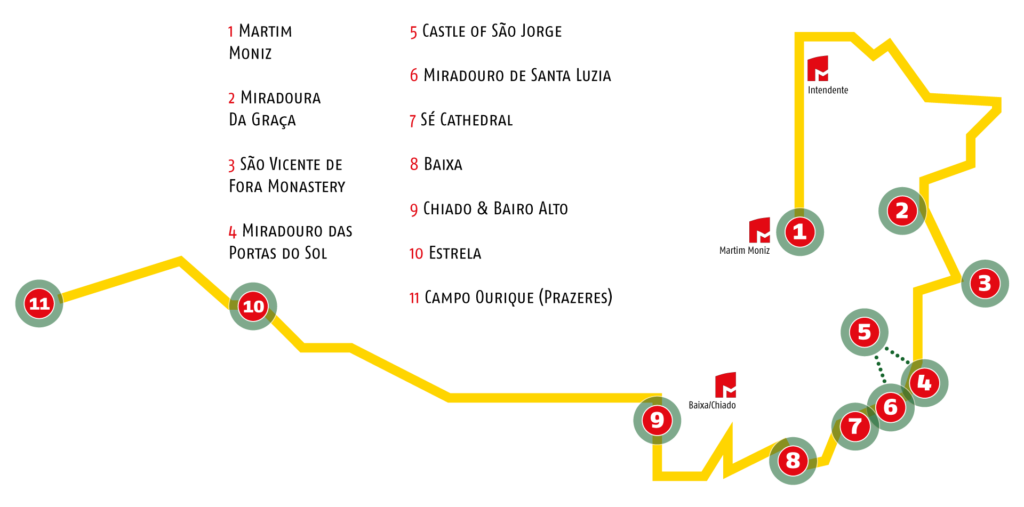
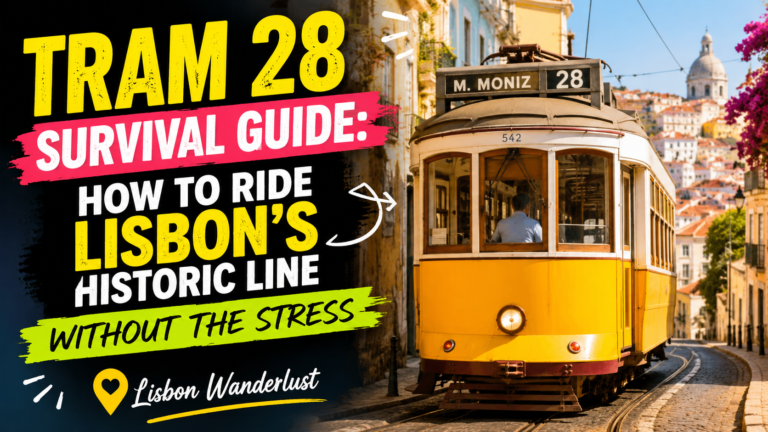
Walk five minutes east to the Martim Moniz square terminus to board the historic E28 wooden tram line. Boarding at this starting station is necessary to secure a seat before the vehicle climbs into the narrow, steep streets of Alfama.
A single ticket purchased directly from the driver inside the vehicle costs €3.30 and must be paid with cash. Using a pre-loaded Navegante card reduces this single journey cost down to €1.90, while a 24-hour transit pass or a Lisboa Card completely covers the ride.
The high density of passengers makes this specific transit line a primary target for pickpocketing operations. Keep backpacks zipped and worn on the front of the body, and secure cell phones inside front pockets rather than loose bags. Do not stand near the exit doors with open bags, as thieves frequently grab items right as the doors open at intermediate stops.
12:00 – 13:30 | São Jorge Castle Exploration
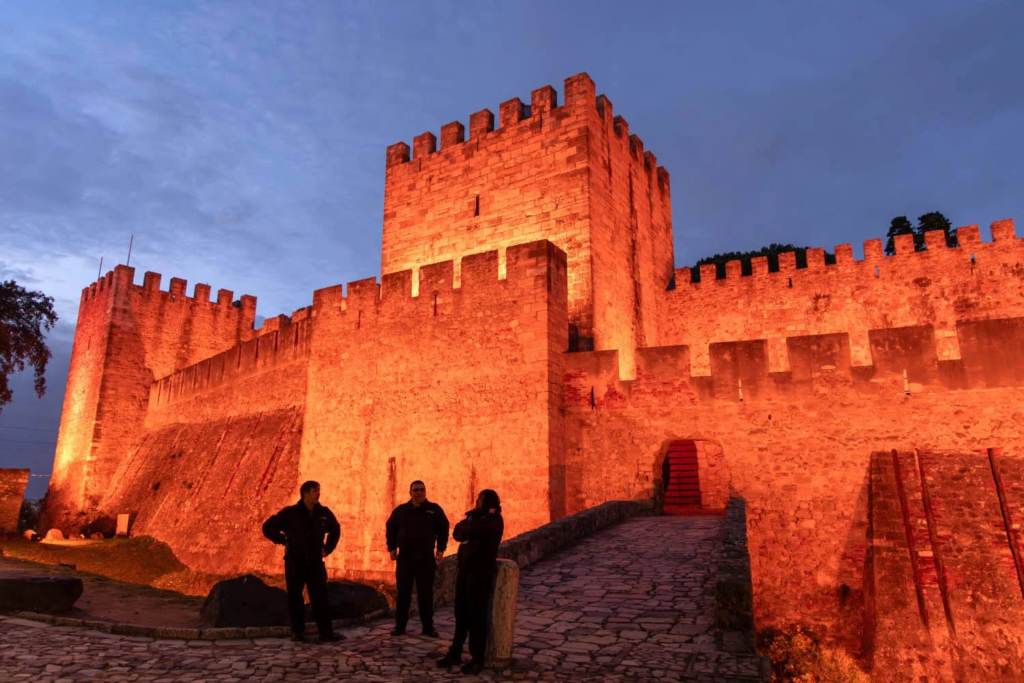
Exit the tram at the Miradouro de Santa Luzia stop and follow the signs uphill for ten minutes to reach the main gate of São Jorge Castle. This 11th-century Moorish fortress sits on the highest hill of the city and contains active archaeological digs alongside eleven defensive towers. Standard adult admission tickets cost €15.00, while youth tickets for ages 13 to 25 cost €8.50, and children under 12 enter free.
Purchasing tickets online via the official website allows visitors to bypass the long on-site ticketing queues entirely and enter through the fast-track lane. Inside the complex, walk to the Ulysses Tower to experience the Camera Obscura, a real-time optical system projecting a 360-degree view of the city. Wear durable shoes, as the internal battlements feature uneven stone pathways without modern safety handrails.
13:30 – 15:00 | Lunch in Alfama
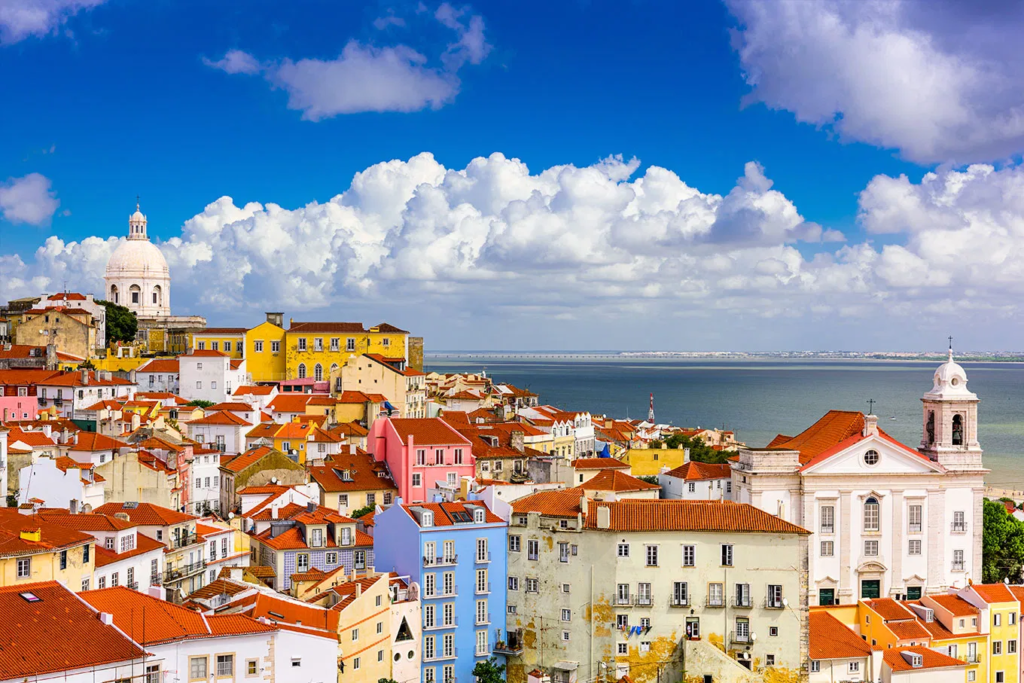
Descend the castle hill into the labyrinth of lower Alfama to find traditional taverns, known locally as tascas. Look for small establishments away from the main tram tracks to avoid high tourist pricing surcharges. A standard lunch menu should range between €10.00 and €15.00 per person, including a main dish and a beverage.
Order regional culinary standards such as Bacalhau à Brás (shredded codfish cooked with eggs, potatoes, and olives) or Sardinhas Assadas (grilled whole sardines). Avoid places that feature aggressive hosts standing outside pulling pedestrians into the doorway.
Be aware that the small appetizers placed on tables beforehand, such as olives, bread, and cheese, are not free and will add €3.00 to €6.00 to the final bill if consumed.
15:00 – 17:00 | Walking Route Through Alfama
Begin a downward walking route through the ancient streets of Alfama, the only neighborhood that survived the 1755 earthquake.
Walk down the steps of Escadinhas de São Miguel to view medieval residential architecture characterized by overhanging upper floors. The geometric layout consists of tight alleyways designed originally for military defense and natural shade cooling.
Stop at the Miradouro das Portas do Sol for an elevated view over the white-washed buildings and red-tiled roofs of the district. Continue walking downward until reaching the Lisbon Cathedral (Sé de Lisboa), a fortress-church built in 1147. The exterior exhibits solid Romanesque construction featuring twin bell towers designed to withstand medieval military sieges.
17:00 Onwards | Evening in Mouraria and Fado Background
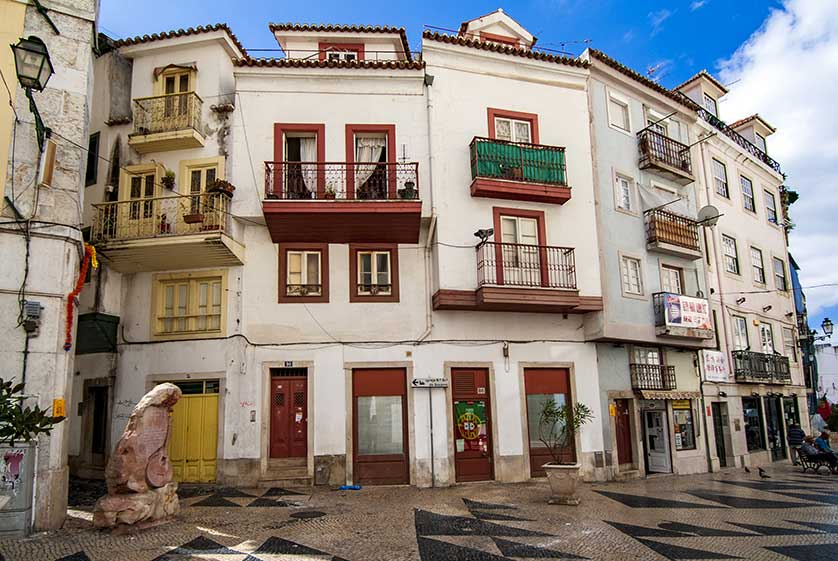
Walk northwest from the cathedral into the neighboring Mouraria district, the historic multi-cultural birthplace of Fado music. Fado is a traditional, melancholy Portuguese musical style performed by a solo singer accompanied by a classical guitar and a twelve-string Portuguese guitar.
True fado houses in this district do not require expensive entry tickets; patrons instead pay a small cover fee or order dinner items.
Select a small tavern along the Rua da Guia for an authentic evening setting. Expect dinner costs to total approximately €20.00 to €30.00 per person for traditional pork or fish stews. Performance segments typically begin after 20:00 and run in 20-minute intervals throughout the night. It is customary to remain completely silent and halt all table service while the musicians are actively performing.
Day 2: The Age of Discovery in Belém
This day moves the itinerary six kilometers west of the city center along the riverbank to Belém. This waterfront district contains the highest density of manual stone carvings and maritime monuments in Lisbon.
08:30 – 09:30 | Transit Logistics from Cais do Sodré to Belém
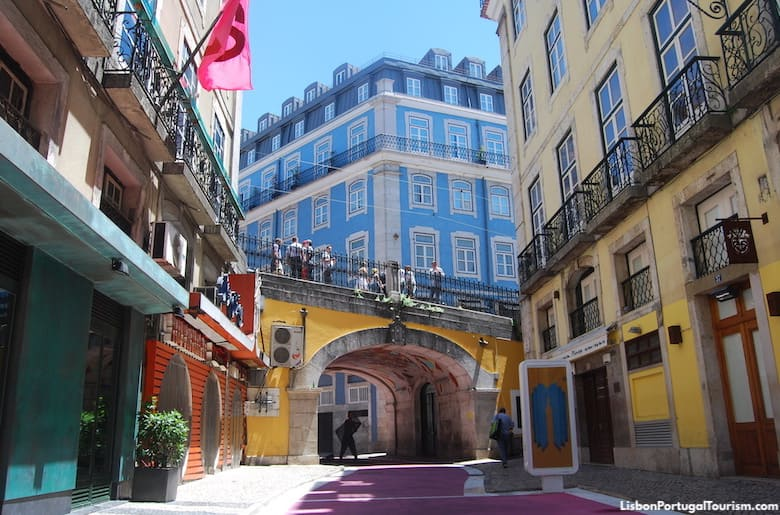
The most efficient transit connection departs from the Cais do Sodré transport hub. Walk to the outdoor tram platforms and locate the boarding lane for Tram 15E, which utilizes modern, high-capacity commuter cars.
A single cash ticket purchased inside the vehicle via the automated terminal costs €3.30. Utilizing a pre-loaded Navegante card under the Zapping system lowers this single fare to €1.72, and the journey is fully covered for Lisboa Card holders.
The tram journey takes 22 to 28 minutes depending on local morning traffic along Avenida da Índia.
Alternatively, the suburban train line heading toward Cascais departs from the adjacent indoor train platforms and stops at Belém station in exactly seven minutes. If using the train, validate the Navegante card at the electronic turnstiles before stepping onto the platform to avoid a €120.00 transit fine.
09:30 – 11:00 | Jerónimos Monastery Verification
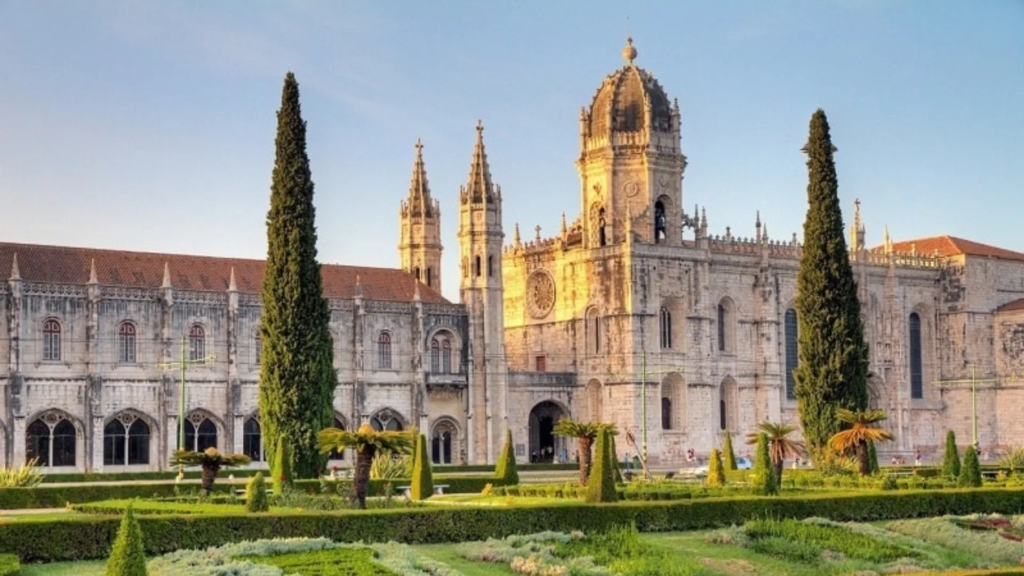
Exit the transit line at the Estação de Belém stop and walk 400 meters west to the main gate of the Jerónimos Monastery.
This 16th-century complex is a prime example of Manueline architecture, featuring detailed limestone carvings of maritime ropes, anchors, and sea creatures. Standard adult admission tickets cost €12.00, while holders of the Lisboa Card enter for free through a dedicated fast-track turnstile.
Tickets must be purchased online prior to arrival, as physical ticket windows at the monument are no longer operational. The monastery opens its gates at 09:30, and entering during this first slot avoids the large tour bus arrivals that peak at 11:00. Walk through the two-story limestone cloisters to observe the intricate vaulted ceilings and structural pillars.
11:00 – 12:30 | Pastéis de Belém Bakery Logistics

Walk 150 meters east from the monastery along Rua de Belém to reach the historic Pastéis de Belém bakery. This establishment has produced the original Portuguese custard tart using a secret recipe from the monastery since 1837. A single pastry costs €1.40, and a traditional box of six tarts costs €8.40.
A long queue regularly forms outside the blue awnings for takeaway orders, often causing delays of 30 to 45 minutes.
Bypass this exterior line by walking directly inside the building, which contains multiple large dining rooms with over 400 seats. Table service is highly efficient, reducing the wait time to under ten minutes while allowing you to eat the pastries warm with cinnamon and powdered sugar.
12:00 – 14:00 | Padrão dos Descobrimentos and Belém Tower
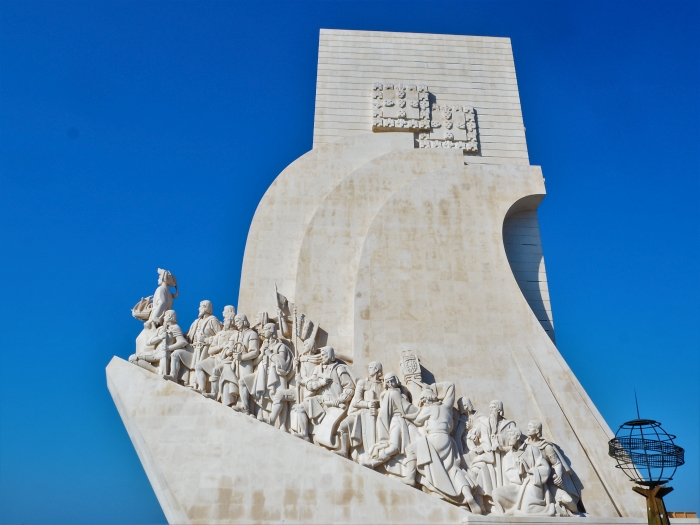
Cross the pedestrian underpass beneath the railway lines to reach the waterfront path along the Tagus River.
Walk five minutes west to the Padrão dos Descobrimentos, a 52-meter-high concrete monument shaped like a ship’s prow. Entry to the interior museum and the elevator climbing to the roof observation deck costs €10.00 for a standard adult ticket.
Continue walking westward along the flat, paved coastal path for 15 minutes to reach the Belém Tower.
This isolated limestone fortress was built inside the river channel in 1519 to defend the mouth of the Tagus. Entry inside the tower requires a pre-booked timed ticket costing €8.00, though the exterior views from the tidal beach provide excellent photographic angles without any fee.
14:00 – 16:00 | Lunch and LX Factory Transition
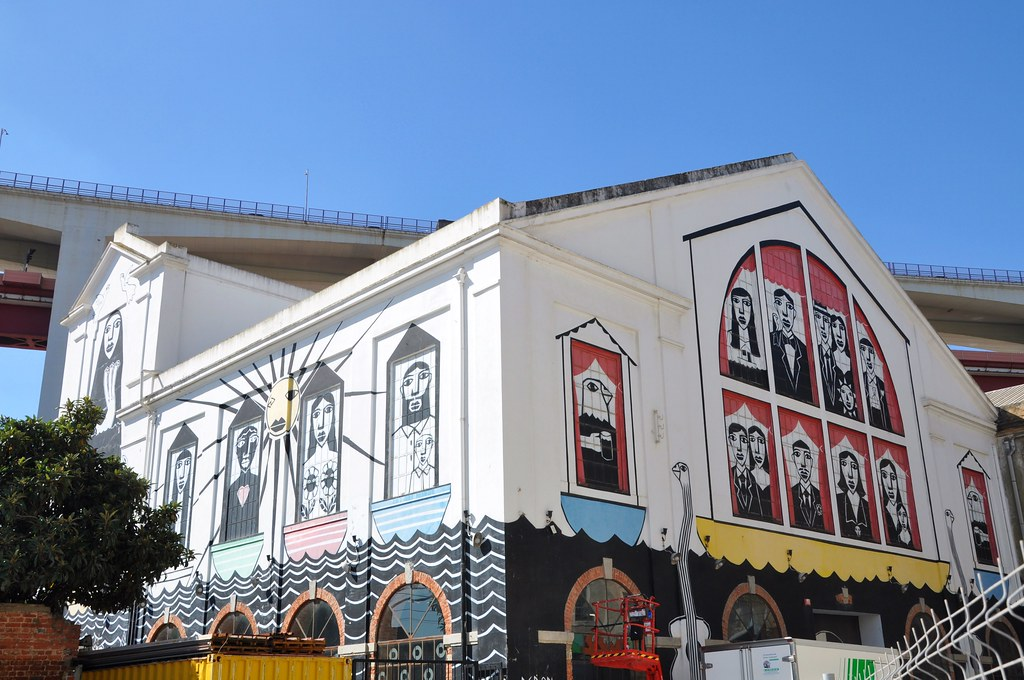
Board Tram 15E heading back east toward the city center and exit at the Estação de Santo Amaro stop directly beneath the 25 de Abril Bridge. Walk five minutes north into the LX Factory, a refurbished 19th-century industrial fabric manufacturing complex. The site now functions as a creative hub filled with independent retail shops, art galleries, and restaurants.
Select from the diverse culinary options inside the main avenue, such as Cantina for wood-fired meat dishes or A Praça for modern Portuguese small plates.
A standard lunch menu in this trendy complex ranges between €15.00 and €25.00 per person. Before leaving, visit the Ler Devagar bookstore to observe the multi-story industrial printing presses preserved inside the main room.
16:00 Onwards | Chiado and Bairro Alto Nightlife Safety
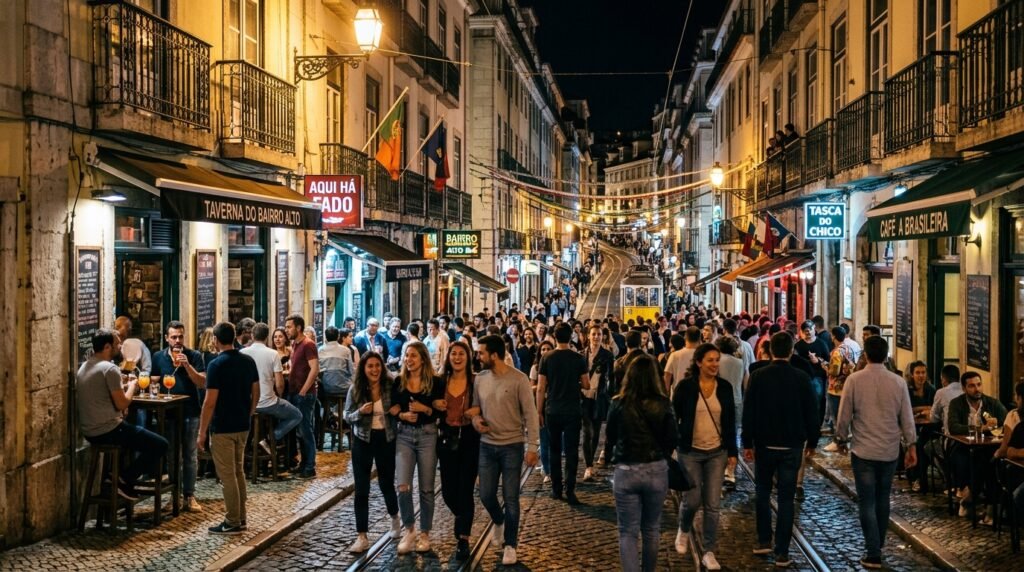
Take the metro or a local bus to the Baixa-Chiado station to explore the upscale shopping streets of the Chiado district.
Walk past the historic Café A Brasileira to view the bronze statue of poet Fernando Pessoa. Nearby, the Elevador de Santa Justa iron elevator connects the lower streets to the higher Carmo Square, though long lines mean looking at the structure from below is often a better use of time.
As evening approaches, walk uphill into the adjacent Bairro Alto neighborhood, which features a grid of over 200 small bars and restaurants. This district changes into a busy nightlife zone after 21:00, with patrons drinking outside on the narrow lanes.
While the area is generally safe, remain alert for pickpockets in crowded alleys and firmly decline the illegal street vendors who frequently offer fake substances to passing tourists.
Day 3: The Essential Sintra Day Trip
This final day shifts focus northwest of Lisbon to the UNESCO World Heritage mountain town of Sintra. The microclimate here is noticeably cooler and wetter than the city center, making weather-appropriate layers essential.
08:00 – 09:00 | Rossio Station to Sintra Train Logistics
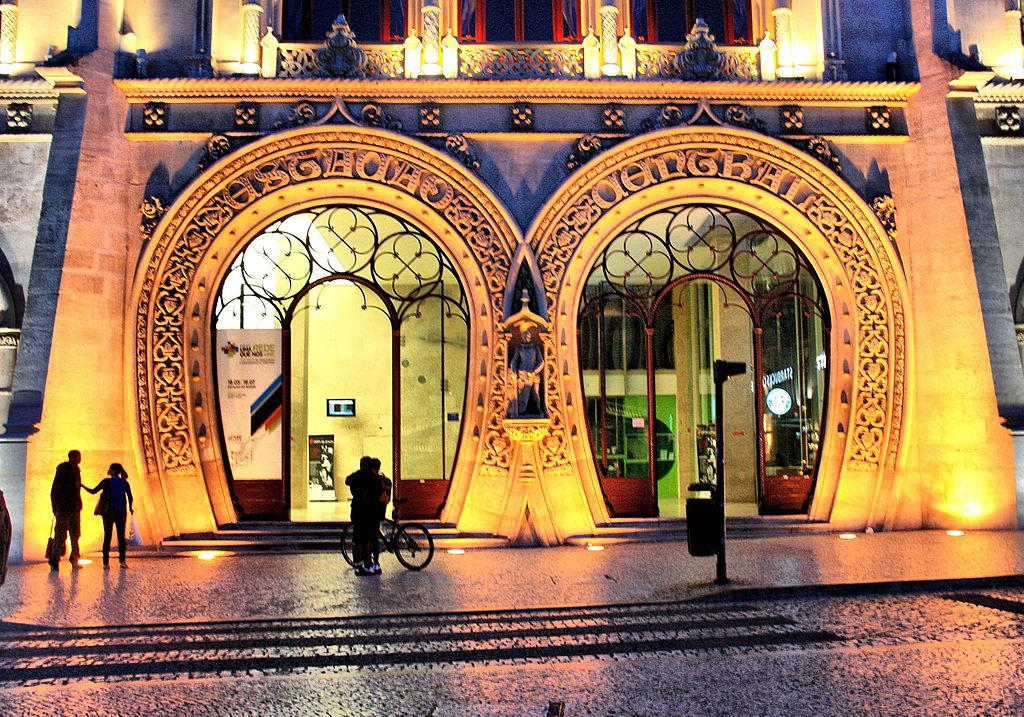
Begin the day at Rossio Railway Station, located in the central plaza of Baixa. Direct commuter trains depart from the upper-level platforms every 15 to 30 minutes throughout the morning. A standard one-way adult ticket costs €2.40 and can be loaded directly onto a reusable Navegante card.
The rail journey takes exactly 40 minutes to cover the 27-kilometer route to the Sintra terminus. Holders of a valid Lisboa Card can scan through the station turnstiles without purchasing extra tickets, as this regional line is fully included. Board a train departing no later than 08:11 to ensure arrival before the major historic monuments open their gates.
09:00 – 11:30 | Pena Palace Navigation and Timed Entry
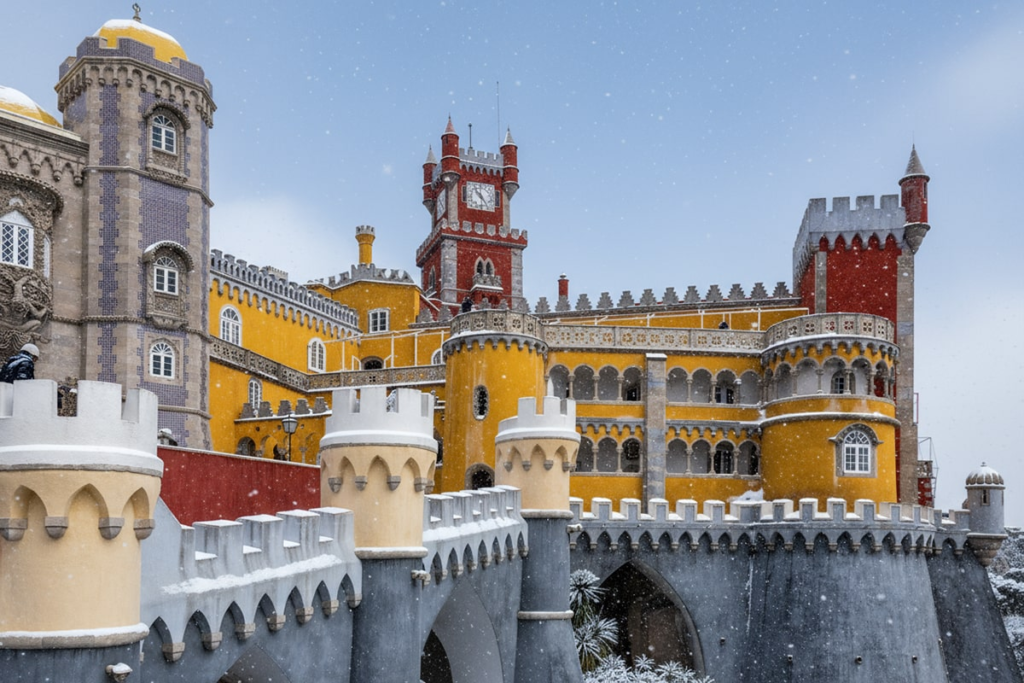
Upon exiting Sintra Station, step immediately to the right to locate the boarding terminal for the Carris Metropolitana Bus 434.
A round-trip ticket for this specialized mountain ring route costs €7.60 and must be purchased from the driver or at the platform kiosk. The bus climbs up steep, narrow switchbacks for 20 minutes to reach the high entrance gates of Pena Palace.
Pena Palace operates under a strict, mandatory online timed-entry system for its interior rooms. Standard adult tickets cost €20.00, and visitors must arrive at the palace building doors exactly at the hour printed on their voucher.
The walk from the main park security gate up to the actual palace takes 15 minutes along a steep uphill path, so factor this transit time into your morning schedule to prevent entry refusal.
11:30 – 14:00 | Quinta da Regaleira Architectural Facts
Board the returning 434 bus down the mountain or take a 25-minute downhill walking trail into the historic center to find Quinta da Regaleira. This early 20th-century estate features extensive neo-Gothic towers, hidden tunnels, and stone structures. Standard adult tickets cost €15.00, while reduced tickets for children aged 6 to 17 cost €10.00.
The primary architectural feature here is the Initiation Well, an inverted 27-meter stone tower descending into the earth via a spiral staircase. This structure features nine distinct gallery levels designed to mimic historical philosophical allegories. Walk to the bottom of the well and follow the unlit underground stone tunnels to exit behind a hidden waterfall feature.
14:00 – 15:30 | Lunch in Sintra Town Center
Walk five minutes east from the estate into the flat pedestrian streets of the Sintra historic core. Traditional restaurants line the main alleys, where standard midday lunch menus cost between €15.00 and €25.00 per person.
Look for establishments serving Queijadas de Sintra, which are small, traditional sweet tarts made from fresh cheese, sugar, and cinnamon.
Visit the historic Piriquita bakery on Rua das Padarias to try Travesseiros, a regional puff pastry stick filled with sweet almond cream. A single fresh pastry costs approximately €1.60 for takeaway orders.
Avoid the large souvenir shops on the main square for dining, as their menus contain higher price markups for identical regional food items.
15:30 – 18:00 | Afternoon Alternative: Moorish Castle vs Monserrate Palace
Travelers must choose between two distinct structural experiences for the late afternoon segment. The Moorish Castle sits on a rocky ridge directly adjacent to Pena Palace and is accessible via the 434 bus route.
Standard entry costs €12.00, allowing visitors to walk along high, medieval granite battlements that offer expansive views of the Atlantic coastline.
Alternatively, Monserrate Palace sits four kilometers west of the center along the quieter Bus 435 transit route. Admission costs €12.00 to view an intimate 19th-century villa combining Gothic, Indian, and Moorish architectural elements.
This site receives roughly 70% fewer daily visitors than the Moorish Castle, providing a highly scannable, quiet environment for mobile photography.
18:00 Onwards | Return to Lisbon and Time Out Market Dinner
Return to Sintra Station to board the commuter rail line heading back to Rossio Station in Lisbon. From Rossio, take the Metro Green Line directly south to the Cais do Sodré terminus.
Walk across the street to the Time Out Market (Mercado da Ribeira), a large historic food hall housing over 40 distinct regional food stalls.
The hall functions on a self-service model where patrons order from independent counters and sit at large central wooden tables. Main dishes from high-end local chefs range between €14.00 and €25.00 per plate.
The market remains open until midnight daily, though arriving before 19:30 or after 21:30 makes finding open seating much easier.
Essential Lisbon Travel Tips & Advanced Tactics
Maximizing efficiency over a three-day period requires strategic adjustments to dining hours, payment methods, and daily navigation habits. Implementing specific logistical rules ensures smooth transitions between distinct neighborhoods.
Navigating the Traditional Dining System and Tipping Metrics
Traditional Portuguese establishments, or tascas, adhere to precise operational schedules. Lunch service typically runs strictly between 12:00 and 15:00, while dinner service commences at 19:30 and concludes around 22:30. Attempting to sit down for a full hot meal at 16:00 will often result in limited cold options or closed kitchens.
Tipping is not deeply embedded in local hospitality culture, as service workers are paid a standard monthly wage.
In casual neighborhood diners, rounding up the bill to the nearest euro or leaving loose change totaling 2% to 5% is acceptable. For mid-range to upscale restaurants, a tip of 5% to 10% is appropriate for high-quality table service, but it is never mandatory.
Currency Realities, Card Acceptance, and ATM Selection
While digital card payment acceptance grew substantially across Europe by 2026, Lisbon still retains structural cash dependencies.
Small family-run bakeries, souvenir stalls, and historic tram lines frequently require cash for transactions under €5.00 or €10.00. Always maintain a physical reserve of €20.00 to €30.00 in small-denomination euro banknotes to avoid transit delays.
When withdrawing euros on-site, use official, indoor bank ATMs branded by major domestic entities like Multibanco, Caixa Geral de Depósitos, or Millennium BCP. Avoid using yellow and blue independent Euronet ATMs located directly on pedestrian corners.
These third-party machines impose high static access fees and use unfavorable dynamic currency conversion rates that increase withdrawal costs by 10% to 15%.
Practical Tactic: Minimizing Crowd Friction at Viewpoints
The steep topography of Lisbon offers numerous public observation terraces, known officially as miradouros. Popular sites like Miradouro de Santa Luzia and Miradouro da Graça experience peak foot traffic density between 16:00 and sunset. To secure unobstructed photographic angles, schedule visits to these open terraces before 09:30.
Alternatively, utilize lesser-known vantage points such as the Miradouro da Senhora do Monte, which sits at a higher elevation in the Graça district. This viewpoint features identical panoramic vistas over the castle and river but experiences roughly 40% lower tour group volume. Utilizing these alternative spaces preserves your schedule and limits exposure to crowded pickpocket corridors.
Conclusion
This factual, hour-by-hour route distributes major historic, maritime, and regional landmarks systematically across three distinct 24-hour cycles. By prioritizing logistical efficiency and structured transit selections, travelers can successfully navigate the city’s complex topography without incurring unnecessary delays or hidden expenses.
A successful execution of this itinerary relies entirely on securing advanced online tickets for high-demand monuments like Pena Palace and Jerónimos Monastery. Combining the financial utility of the Lisboa Card with proper rubber-soled footwear mitigates common logistical challenges faced on the city streets. Use this verified route to maximize your time, manage your physical energy, and experience the cultural infrastructure of Lisbon with absolute precision.