
Azulejo Tile Guide: 6 Spots to See Lisbon’s Most Beautiful Facades
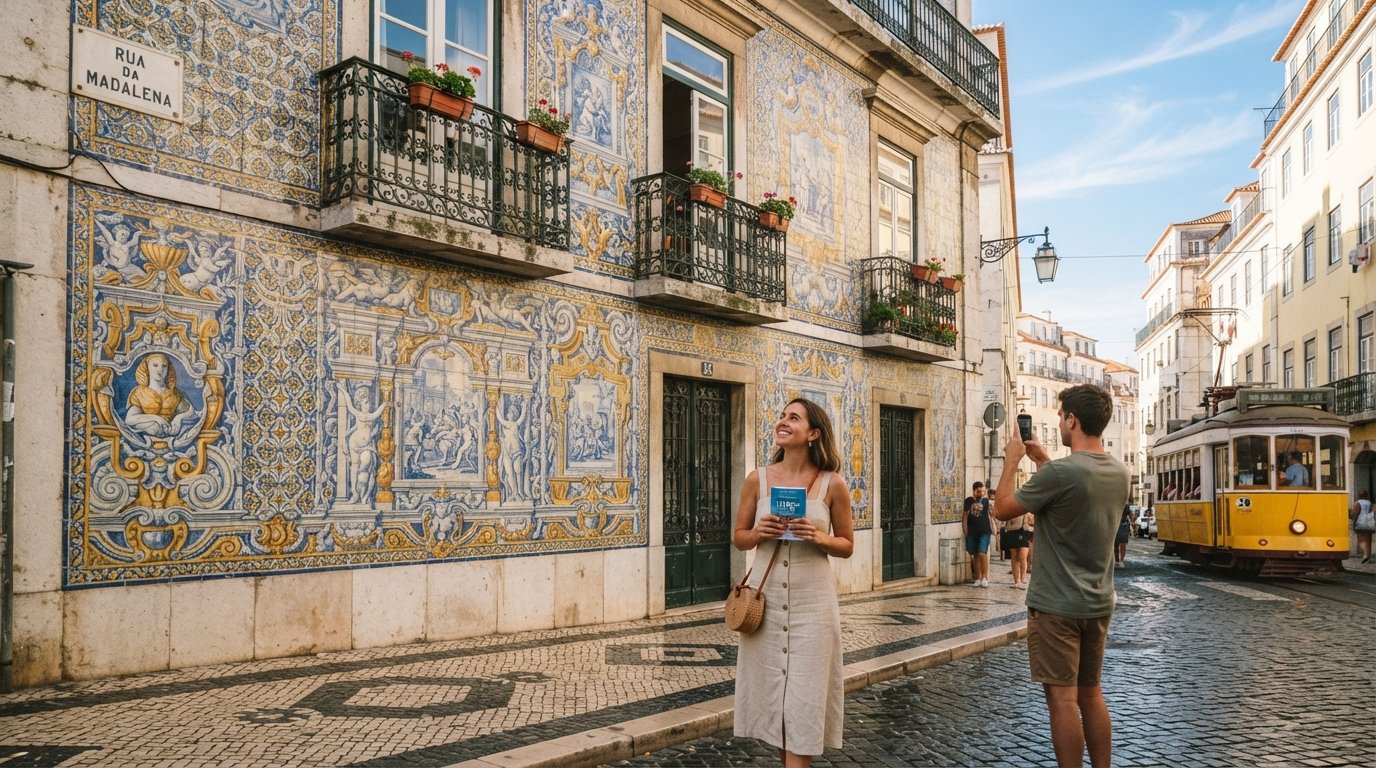
Lisbon azulejo tiles can turn an ordinary walk into a treasure hunt. Blue flowers climb across old homes, painted scenes fill church walls, and bright geometric patterns bring quiet streets to life. Look up for a moment, and an entire building may appear wrapped in ceramic art.
Known as azulejos, Portuguese tiles form an important part of Lisbon’s architecture and cultural history. Some tell religious stories. Others show ships, gardens, animals, or repeating shapes. Many simply add colour and character to homes that might otherwise pass unnoticed.
This guide covers six beautiful places to see azulejos in Lisbon, from famous tile collections to decorated viewpoints and striking street facades. Practical tips will also help with routes, photography, transport, and respectful viewing.
You might be interested in: The Poetic Aesthetic in Lisbon
What Are Azulejos and Why Are They Everywhere in Lisbon?
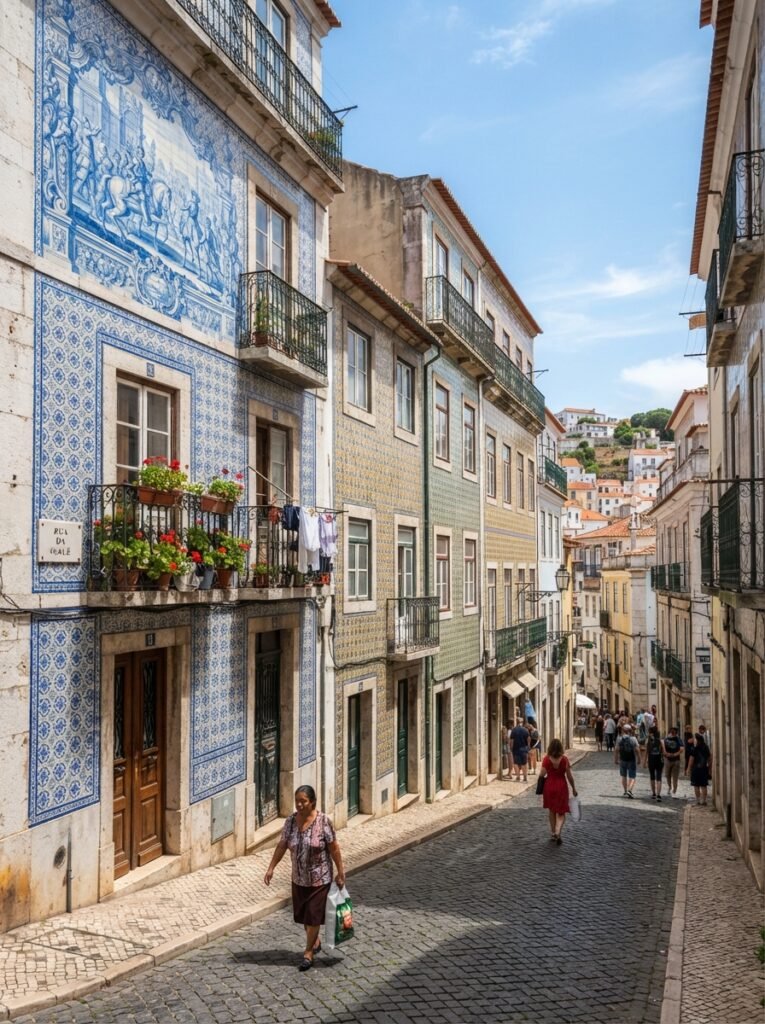
Azulejos are painted or glazed ceramic tiles used to decorate walls, floors, ceilings, churches, palaces, homes, and public spaces. Portugal’s early tile tradition grew through Islamic and Hispano-Moorish influences. King Manuel I helped introduce decorative Spanish tiles after visiting Spain near the end of the 15th century. Portuguese workshops later developed their own techniques, patterns, and storytelling style.
Early designs often used geometric shapes and several colours. During the Baroque period, large blue-and-white panels became popular, partly under Dutch influence. Artists painted religious events, battles, hunting scenes, myths, and moments from daily life. Many panels worked almost like picture books covering an entire wall.
By the 19th century, cheaper patterned tiles moved beyond churches and palaces. Thousands of Lisbon buildings gained colourful exterior coverings, creating many facades visitors recognise today. Tiles added beauty while also providing a durable outer surface suited to large walls.
Every pattern carries a small piece of Lisbon’s story. Some facades look grand and carefully planned; others feel simple, faded, and full of charm. Together, they make Lisbon feel like an open-air tile museum.
Quick Guide to Lisbon’s Best Azulejo Spots
Lisbon’s best azulejos appear in many forms. Some cover entire facades, while others create large picture-like scenes inside churches and palaces.
Best Azulejo Spots in Lisbon
Compare Lisbon’s most photogenic tile locations by area, setting, access, and entrance cost.
| Azulejo Spot | Lisbon Area | Best For | Indoor or Outdoor | Entrance Fee |
|---|---|---|---|---|
| Miradouro de Santa Luzia | Alfama | Tiles with river views | Outdoor | Free |
| Mosteiro de São Vicente de Fora | São Vicente | Large historic tile panels | Indoor | Paid entry |
| Igreja da Graça | Graça | Church interiors and old azulejos | Mostly indoor | Check current access |
| Viúva Lamego Facade | Intendente | Colourful exterior photography | Outdoor | Free |
| Casa do Ferreira das Tabuletas | Chiado | Detailed symbolic facade | Outdoor | Free |
| Palácio Fronteira | Benfica | Palace rooms and tiled gardens | Indoor and outdoor | Paid entry |
Visit outdoor facades early in the morning for softer light and fewer people. Indoor locations often work better around midday.
Important update: Museu Nacional do Azulejo would usually rank among Lisbon’s essential tile attractions. However, it remains temporarily closed for renovation work, so it has not been counted among six places visitors can currently enter. Check its official website for reopening news.
6 Best Places to See Azulejo Tiles in Lisbon

1. Miradouro de Santa Luzia
Miradouro de Santa Luzia offers more than a lovely view over Alfama and the Tagus River. Its shaded terrace features blue-and-white azulejos along walls and built-in seats, creating one of Lisbon’s most photographed tile settings.
Two large panels deserve a closer look. Created by António Quaresma, one shows Praça do Comércio before the 1755 earthquake. Another pictures Christian forces taking Lisbon’s castle from the Moors. Together, they work like windows into Lisbon’s past.
Visit during early morning for softer light and fewer people. Glazed tiles can reflect strong midday sun, making photographs harder. Tram 28E and tram 12E pass near Santa Luzia, although walking from Lisbon Cathedral takes only a few uphill minutes.
Best photo spot: Stand near the tiled terrace benches and frame the blue patterns against Alfama’s red roofs.
Cost: Free and open to the public.
2. Mosteiro de São Vicente de Fora
A short walk from Santa Luzia leads to Mosteiro de São Vicente de Fora, one of the best places to see large historic azulejo panels in Lisbon. Its white stone exterior gives little away. Step inside, however, and long tiled scenes begin to appear across cloisters, stairways, and former monastery rooms.
A major highlight features scenes inspired by the fables of French writer Jean de La Fontaine. Blue-and-white figures show animals, people, and moral tales across dozens of panels. Visitors can also explore decorated cloisters and climb toward the rooftop for wide views over Lisbon and the Tagus.
The monastery stands at Largo de São Vicente, close to Alfama and Feira da Ladra. Tram 28E stops nearby, while Santa Apolónia train and metro station sits downhill.
Allow 60 to 90 minutes for tile panels, rooms, and rooftop views. Opening times change between summer and winter, and entry requires a ticket. Check current details before visiting.
Best viewing tip: Do not rush through the cloisters. Many small details hide inside each painted story.
3. Igreja da Graça
Igreja da Graça rewards anyone willing to tackle Lisbon’s hills. Inside, azulejo panels from the 16th, 17th, and 18th centuries sit beside gilded Rococo altars and detailed religious artwork. Several styles share one space, showing how Portuguese tile design changed over time.
The church stands at Largo da Graça, near Miradouro da Senhora do Monte. Pair both places for an easy cultural and viewpoint stop. Natural light can be limited inside, so keep camera flash switched off and allow a few moments for eyes to adjust.
Visitor tip: Speak quietly, avoid photographing worshippers, and check opening hours before climbing uphill.
4. Viúva Lamego Facade
Few Lisbon tile facades grab attention as quickly as Viúva Lamego’s former factory in Intendente. Blue, green, yellow, and brown figures fill almost every part of its exterior.
Built between 1849 and 1865, the facade was designed by Ferreira das Tabuletas. Its decorative panels also worked as an early form of advertising for the tile business. Today, the building remains open for tile displays and sales, although hours may change.
Find it at Largo do Intendente, close to Intendente Metro station.
Best photo angle: Step across the square to capture the whole facade without tilting the camera too sharply.
5. Casa do Ferreira das Tabuletas
Casa do Ferreira das Tabuletas looks like a giant illustrated storybook. Its warm yellow facade features painted figures representing Earth, Water, Industry, Commerce, Agriculture, and Science. An Eye of Providence appears near the top, surrounded by fruit, leaves, and decorative shapes.
Built around 1864, the house stands at Rua da Trindade 26–34, facing Largo Rafael Bordalo Pinheiro in Chiado. Baixa-Chiado Metro station lies a short walk away.
Viewing costs nothing because every important detail appears outside. Look from across the square first, then move closer to study smaller symbols between windows.
Photography tip: Morning light often reveals more colour and reduces harsh shadows across the facade.
6. Palácio Fronteira
Palácio Fronteira offers Lisbon’s richest full-scale azulejo experience. Gardens, terraces, galleries, fountains, and palace rooms carry 17th-century tile panels showing battles, myths, animals, and noble life. Its collection remains largely in the places where artists first designed it, making every courtyard feel carefully connected.
The palace sits near Monsanto Forest Park and Sete Rios. Jardim Zoológico, on Lisbon Metro’s Blue Line, serves as the nearest station. Bus 770 stops near the entrance. Interior visits require a guided tour, while garden tickets can be purchased separately. Current schedules and prices should be checked before travelling.
Allow: Around 90 minutes for a relaxed palace-and-garden visit.
Best Lisbon Neighborhoods for Finding Tiled Facades
Beautiful Lisbon tile facades appear across the city, but a few neighborhoods make searching much easier.
Alfama offers narrow lanes, old homes, religious panels, and weathered blue-and-white tiles. Rua de São João da Praça, between Lisbon Cathedral and Alfama, contains several decorative panels and tiled architectural details.
Graça mixes traditional apartment buildings with churches, viewpoints, and quieter residential streets. Walk slowly around Largo da Graça and nearby lanes; many details sit above eye level.
Baixa and Chiado work well for grand 19th-century facades. Casa do Ferreira das Tabuletas provides a clear starting point, while surrounding streets reveal repeating floral and geometric patterns. Visit Lisboa specifically recommends Baixa and Chiado for exploring Lisbon’s azulejo heritage.
Intendente brings brighter colours and bold figurative designs, led by the former Viúva Lamego factory.
Remember that many tiled buildings remain private homes. Take photographs from public paths, keep doorways clear, and never touch loose or damaged tiles.
How to Plan an Azulejo Walking Route
A half-day route can connect four strong azulejo stops without crossing the entire city.
Begin at Casa do Ferreira das Tabuletas near Baixa-Chiado. Continue downhill through Baixa toward Lisbon Cathedral, then follow Rua de São João da Praça into Alfama. From there, climb to Miradouro de Santa Luzia before finishing at Mosteiro de São Vicente de Fora.
Lisbon Azulejo Walking Route
Follow this practical route through Chiado, Baixa, Alfama, and São Vicente to see Lisbon’s most memorable tilework.
| Stop | Suggested Time | What to See |
|---|---|---|
| 1 Casa do Ferreira das Tabuletas | 15 minutes | Symbolic yellow-tiled facade |
| 2 Baixa to Lisbon Cathedral | 30–40 minutes | Patterned residential facades |
| 3 Rua de São João da Praça | 20 minutes | Street panels and decorative tiles |
| 4 Miradouro de Santa Luzia | 25 minutes | Historic blue-and-white scenes |
| 5 São Vicente de Fora | 60–90 minutes | Cloisters and story-filled tile panels |
Wear shoes with good grip. Alfama and São Vicente have steep slopes, uneven paving, and polished cobblestones.
Allow three to four hours, including photographs and a short coffee break near Santa Luzia. Baixa-Chiado station provides a convenient starting point, while Alfama’s steep lanes require comfortable shoes.
Travelers who prefer less climbing can use tram 28E for parts of the route; its official stops include Santa Luzia and Graça. Check live service information before travelling because temporary route changes can occur.
Photography Tips for Lisbon’s Tile Facades
Glazed tiles reflect light, so timing matters. Early morning often brings softer light, quieter streets, and fewer parked vehicles. Late afternoon works well for west-facing buildings, while strong midday sun may create white glare across blue-and-white azulejos.
Step across the street when photographing a full facade. Keeping the camera level helps prevent buildings from appearing narrow at the top. Then move closer for flowers, borders, animals, and repeating geometric patterns.
Watch surrounding traffic, especially in Alfama and Graça, where pavements can feel narrow. Never stand in a road for a better angle. Many tiled buildings remain private homes, so keep entrances clear and avoid photographing residents through windows.
How to Protect Lisbon’s Historic Tiles
Old azulejos may look strong, yet cracked tiles can loosen easily. Never touch damaged panels, lean against tiled walls, or remove a fallen piece. Even a loose tile still belongs to its building or owner.
Tile theft has harmed historic facades across Portugal. Avoid buying old tiles when a seller cannot explain where they came from. A suspiciously weathered “antique” may have been removed illegally.
Modern reproductions offer a safer souvenir. They copy traditional colours and patterns without damaging Lisbon’s architectural heritage.
Where to Learn More or Buy Portuguese Tiles
The Museu Nacional do Azulejo normally provides Lisbon’s clearest introduction to Portuguese tile history, with works dating from the 15th century onward. However, the museum remains closed for renovation work. Its official shop has temporarily moved to Palácio Foz near Restauradores, offering items inspired by the museum collection. Check current access before visiting.
For handcrafted tiles, look for established Portuguese makers rather than souvenir stalls selling items with unclear origins. Viúva Lamego, founded in 1849, continues to produce traditional and contemporary tiles using artisanal methods.
Before buying, ask whether a tile is newly made, reproduced from an older pattern, or genuinely antique. Modern pieces often make better travel keepsakes: easier to trace, legal to purchase, and far kinder to Lisbon’s historic facades.
Final Tips for Exploring Lisbon’s Azulejos
Choose stops based on available time. For a quick tile walk, explore Chiado, Alfama, Santa Luzia, and São Vicente. Travelers interested in deeper history should add Palácio Fronteira or visit Museu Nacional do Azulejo after it reopens. The museum remains temporarily closed for renovation, so check its official page before planning a visit.
Wear shoes with good grip because Lisbon’s tiled routes often include steep hills and polished cobblestones. Look above shop signs and balconies, where small tile panels can easily go unnoticed. Most importantly, admire old facades without touching damaged tiles or blocking entrances to private homes.
FAQs About Lisbon Azulejo Tiles
What are Portuguese tiles called?
Portuguese decorative tiles are called azulejos. They may feature geometric patterns, flowers, religious stories, historic events, or scenes from daily life. Lisbon uses them across homes, churches, palaces, gardens, metro stations, and public buildings.
Where can visitors see the most azulejos in Lisbon?
Alfama, Graça, Baixa, Chiado, and Intendente offer many tiled facades within walkable areas. For large historic panels, visit São Vicente de Fora, Miradouro de Santa Luzia, or Palácio Fronteira.
Are Lisbon’s tiled facades free to see?
Most street facades and outdoor panels cost nothing to view. Museums, monasteries, palaces, and some church areas may require paid entry. Always check current prices before visiting.
What time works best for photographing azulejos?
Early morning usually brings soft light and quieter streets. Late afternoon may also work well, depending on which direction a facade faces. Avoid strong midday glare, which can create bright reflections on glazed tiles.
Can travelers buy antique Portuguese tiles?
Buy antique tiles only from established sellers who can prove their origin. Tile theft has damaged historic Lisbon buildings, so modern reproductions offer a safer and more responsible souvenir.
Is the National Tile Museum worth visiting?
Yes. Its collection explains how Portuguese tile art developed across several centuries. However, the museum remains temporarily closed for renovation as of July 2026. Check official reopening information before adding it to an itinerary.