
Where to Stay in Lisbon: 6 Best Neighborhoods & Top Hotel Picks
Choosing the right accommodation is the most critical decision when planning a trip to Lisbon. The ideal area depends entirely on budget, mobility needs, and specific itinerary goals. A wrong choice can lead to exhausting uphill climbs or noisy, sleepless nights.
This comprehensive guide breaks down the top areas based on real geography, transport links, and specific hotel data. The quick comparison table below outlines the core features of each major neighborhood to help narrow down the search immediately.
| Neighborhood | Best For | Pros | Cons | Nearest Metro |
|---|---|---|---|---|
| Baixa | First-time visitors, low mobility travelers | Flat terrain, highly central, easy layout | Touristy, crowded, less local charm | Rossio, Baixa-Chiado (Blue & Green) |
| Chiado | Shopping, dining, culture lovers | Upscale shops, great food, central | Expensive, busy, moderate hills | Baixa-Chiado (Blue & Green) |
| Alfama | History lovers, couples | Traditional charm, views, Fado music | Steep stairs, no cars, hard luggage | Terreiro do Paço, Santa Apolónia (Blue) |
| Bairro Alto | Nightlife, solo travelers | Vibrant bars, central, budget-friendly | Noisy, steep hills, messy mornings | Baixa-Chiado (Green & Blue) |
| Avenida da Liberdade | Luxury, business travelers | Wide boulevards, quiet, upscale hotels | Expensive, less historic, far from river | Avenida, Marquês de Pombal (Blue) |
| Príncipe Real | Trendy travelers, families | Boutiques, parks, relaxed vibe | Uphill walks, limited metro, pricey | Rato (Yellow + 10-min walk) |
Baixa
Best For: First-time visitors, low mobility travelers
Pros: Flat terrain, central, easy layout
Cons: Crowded, touristy
Metro: Rossio, Baixa-Chiado
Chiado
Best For: Shopping & culture lovers
Pros: Upscale shops, great food, central
Cons: Expensive, busy
Metro: Baixa-Chiado
Alfama
Best For: History lovers, couples
Pros: Charm, views, Fado music
Cons: Steep stairs, no cars
Metro: Terreiro do Paço, Santa Apolónia
Bairro Alto
Best For: Nightlife, solo travelers
Pros: Bars, central, budget-friendly
Cons: Noisy, steep hills
Metro: Baixa-Chiado
Avenida da Liberdade
Best For: Luxury & business
Pros: Quiet, upscale, wide streets
Cons: Expensive, less historic
Metro: Avenida, Marquês de Pombal
Príncipe Real
Best For: Trendy travelers, families
Pros: Boutiques, parks, relaxed vibe
Cons: Uphill, limited metro
Metro: Rato (+10 min walk)
Lisbon Logistics & “Know Before You Go”
Arriving at Humberto Delgado Airport (LIS) requires a clear transport plan to reach the city center efficiently. The Lisbon Metro Red Line departs directly from the airport terminal via the Aeroporto station.
A single transit fare costs €1.90, plus a one-time fee of €0.50 for the reusable Navegante ticket card. Alternatively, transit gates support direct contactless bank card payments, which charge a standard €1.92 fare per ride.
Travelers opting for rideshares or official airport taxis can expect to pay between €12 and €20 for a direct ride to central areas like Baixa or Chiado. Heavy traffic during the morning and evening rush hours can significantly extend travel times.
Utilizing the metro network remains the most predictable method to avoid vehicle delays on major central avenues.
The physical geography of Lisbon requires physical preparation, as the city is famous for its steep hills and traditional cobblestone pavements known as calçada portuguesa. These stone streets become highly slippery when wet and create significant resistance for rolling luggage.
Selecting accommodations in historic hillside areas requires travelers to carry bags up steep inclines or outdoor public staircases. Travelers with limited mobility or heavy baggage should prioritize flat neighborhoods or verify that their specific hotel has direct vehicle drop-off access.
Safety in Lisbon is high, and the city ranks as one of the safest European capitals for international travelers. The primary safety concern for visitors is non-violent pickpocketing in crowded tourist zones.
Petty theft occurs regularly on the historic Tram 28 route and inside major transit hubs like Rossio, Cais do Sodré, and Santa Apolónia stations. Keeping bags zipped and avoiding the display of expensive items in crowded areas prevents most incidents.
Deep-Dive Neighborhood Guides & Hotel Picks

1. Baixa (The Historic Downtown)
Baixa forms the central valley of Lisbon, rebuilt in a strict grid layout following the 1755 earthquake. The geographical boundaries stretch from the grand Praça do Comércio on the riverfront up to the bustling squares of Rossio and Figueira.
This neighborhood features completely flat terrain, making it highly accessible for pedestrians who want to avoid steep climbing. The area stays crowded with travelers throughout the day, and street noise from foot traffic remains steady until late evening.
Transit connectivity in Baixa is excellent due to its central positioning. The Green Metro Line serves Rossio and Figueira stations, while the Blue Line stops at Terreiro do Paço and Baixa-Chiado.
Major historic tram routes and local bus lines pass through this central hub regularly. Walking from Baixa to nearby neighborhoods is straightforward because there are no immediate inclines within the grid itself.
The primary target audience for Baixa is first-time visitors who prioritize a central location and easy transit connections. Travelers with mobility issues, heavy luggage, or strollers will benefit significantly from the flat streets.
Anyone seeking a quiet, authentic Portuguese residential neighborhood should avoid staying here. The area functions primarily as a commercial and tourist hub rather than a local living space.
Baixa (The Historic Downtown) – Top Hotel Picks
| Budget | Hotel | Address | Distance to Metro |
|---|---|---|---|
| Budget (< €120) | Hotel Central Baixa | Rua da Assunção 15 | 120m (Rossio) |
| Mid-Range (€120–€250) | My Story Hotel Augusta | Rua de São Nicolau 78 | 250m (Baixa-Chiado) |
| Luxury (> €250) | Pousada de Lisboa | Praça do Comércio 31 | 100m (Terreiro do Paço) |
💡 Tip: Stay near Rossio or Baixa-Chiado metro for the easiest access across Lisbon.
Chiado (Shopping & Culture)
Chiado sits directly west of Baixa on a rising slope that connects the lower downtown with higher districts. The neighborhood boundaries center around the busy Praça Luís de Camões and the fashionable Rua Garrett shopping street.
This area combines historic elegance with modern retail, featuring old bookshops, theaters, and upscale international boutiques. The terrain features moderate inclines, meaning travelers must navigate sloped sidewalks to move between sights.
Transit access is highly efficient due to the centrally located Baixa-Chiado metro station. This crucial hub links both the Blue and Green Metro Lines, allowing direct access to the rest of the city network.
Historic Tram 28 runs directly through the main square of the neighborhood every day. Taxis and rideshare vehicles can access most hotel doors easily, though traffic delays are common on weekends.
This neighborhood suits travelers who enjoy fine dining, cafe culture, and high-end shopping within walking distance of their rooms. It provides a cleaner and more sophisticated atmosphere than the lower downtown grid.
Light sleepers should look closely at window soundproofing, as street musicians and restaurant traffic keep the area active until midnight. Budget-conscious travelers may find fewer affordable options here compared to outer districts.
Chiado (Shopping & Culture) – Top Hotel Picks
| Budget | Hotel | Address | Distance to Metro |
|---|---|---|---|
| Budget (< €120) | Borges Chiado Hotel | Rua Garrett 108 | 80m (Baixa-Chiado Exit) |
| Mid-Range (€120–€250) | Radisson RED Lisbon Chiado | Rua de Bragança 12 | 300m (Baixa-Chiado) |
| Luxury (> €250) | Gran Cruz House Chiado | Rua das Flores 55 | 200m (Baixa-Chiado) |
💡 Tip: Stay close to Baixa-Chiado metro for direct access to both historic and modern Lisbon.
Alfama (The Oldest Quarter)
Alfama is Lisbon’s oldest district, surviving the major earthquake of 1755 with its original layout intact. The neighborhood stretches from the medieval São Jorge Castle down the steep hillside to the banks of the Tagus River.
The terrain consists entirely of narrow, maze-like alleyways, stone arches, and hundreds of steep public staircases. Motorized vehicles cannot enter the deep interior zones of the neighborhood, creating an isolated, village-like micro-climate in the city center.
Transit connectivity within central Alfama is highly limited due to the historic infrastructure. The Blue Metro Line serves the outer edges of the neighborhood via the Santa Apolónia and Terreiro do Paço stations on the flat riverfront.
Historic Tram 28 passes along the upper ridges of the district, though the cars are routinely overcrowded with standing tourists. Travelers staying inside the core alleys must rely on walking up steep slopes or taking small local tuk-tuks to transport their belongings.
The primary target audience for Alfama includes history enthusiasts, couples, and travelers seeking traditional Fado music venues. The neighborhood provides an immersive historic atmosphere that modern developments cannot replicate.
This area is completely unsuitable for individuals traveling with large rolling luggage, strollers, or anyone facing significant mobility limitations. The lack of direct vehicle drop-offs means visitors must routinely carry luggage up multiple flights of stone steps.
Alfama (The Oldest Quarter) – Top Hotel Picks
| Budget | Hotel | Address | Distance to Transit |
|---|---|---|---|
| Budget (< €120) | Hotel Convento do Salvador | Rua do Salvador 116 | 600m (Santa Apolónia) |
| Mid-Range (€120–€250) | Pousada Alfama | Praça do Chafariz de Dentro 1 | 350m (Santa Apolónia) |
| Luxury (> €250) | Santiago de Alfama – Boutique Hotel | Rua de Santiago 10 | 650m (Rossio) |
💡 Tip: Alfama has steep streets—choose a hotel closer to transit if you’re carrying luggage.
Bairro Alto (Nightlife District)
Bairro Alto sits on a high hill directly above central Chiado, defined by a historic grid of long, narrow streets. During daylight hours, the neighborhood remains extremely quiet and functions like a sleepy, traditional working-class village.
After sunset, the area undergoes a complete shift as hundreds of small bars, tascas, and music venues open their doors to thousands of patrons. The crowds routinely spill out onto the outdoor cobblestone sidewalks, keeping the entire district loud until 2:00 AM or later on weekends.
Transit connectivity requires navigating steep geographical slopes to access the main rail networks. The closest underground link is the Baixa-Chiado metro station, which sits at the lower southern boundary of the neighborhood.
Visitors can avoid the steep walk up from the downtown valley by utilizing the historic Ascensor da Glória funicular railway. Vehicles and rideshares face strict evening traffic restrictions, as many internal streets close to non-residential cars to manage nightlife crowds.
The primary target audience includes young travelers, solo backpackers, and groups who want direct access to the city’s main nightlife scene. It offers highly competitive pricing for food, drinks, and social accommodations.
Families, corporate travelers, and light sleepers should completely avoid renting rooms within this specific grid. The thin walls of the historic buildings do not fully block the heavy base frequencies and street shouting generated by the weekend crowds.
Bairro Alto (Nightlife District) – Top Hotel Picks
| Budget | Hotel | Address | Distance to Transit |
|---|---|---|---|
| Budget (< €120) | Safestay Lisbon Bairro Alto | Travessa do Fala-Só 9 | 450m (Baixa-Chiado) |
| Mid-Range (€120–€250) | Hotel Do Chiado | Rua Nova do Almada 114 | 0m (Baixa-Chiado) |
| Luxury (> €250) | The Lumiares Hotel & Spa | Rua do Diário de Notícias 142 | 500m (Rossio via funicular) |
💡 Tip: Bairro Alto gets loud at night—stay nearby (Chiado/Príncipe Real) if you prefer quieter sleep.
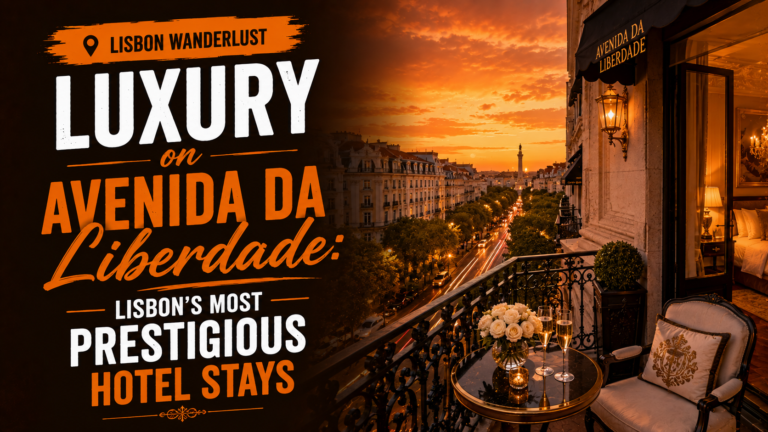
Avenida da Liberdade (Luxury & Business)
Avenida da Liberdade is a broad, 90-meter-wide boulevard designed in the 19th century to mimic the grand avenues of Paris. The avenue stretches from Restauradores Square up a gentle, uniform incline to Marquês de Pombal Square. The terrain here is largely flat and straightforward, featuring wide pavements decorated with traditional black-and-white stone mosaic patterns.
The neighborhood serves as Lisbon’s high-end commercial district, hosting luxury international fashion brands, corporate offices, and upscale hotel chains. At night, the area becomes peaceful and quiet, as there are no rowdy nightlife venues or residential alleyways within the main commercial strip.
Transit connectivity along the avenue is highly efficient and direct. The Metro Blue Line runs straight beneath the boulevard, with dedicated station entrances at Marquês de Pombal, Avenida, and Restauradores.
This line offers quick transportation into the historic downtown valley without requiring any line changes. The wide street layout allows cars, taxis, and rideshare vehicles to drop guests off directly in front of hotel lobbies without facing traffic blocks.
The primary target audience for Avenida da Liberdade consists of luxury travelers, business professionals, and older adults who favor comfort and quiet surroundings. The wide, flat pathways are highly accommodating for strollers and travelers handling bulky luggage sets.
Visitors searching for an authentic, old-world Portuguese atmosphere with small local grocery shops and traditional Fado taverns should look elsewhere. The dining choices along this corridor focus on international cuisine and premium restaurants rather than budget-friendly local eateries.
Avenida da Liberdade (Luxury & Business) – Top Hotel Picks
| Budget | Hotel | Address | Distance to Metro |
|---|---|---|---|
| Budget (< €120) | Hotel ibis Lisboa Liberdade | Rua Barata Salgueiro 53 | 350m (Avenida) |
| Mid-Range (€120–€250) | Heritage Avenida Liberdade Hotel | Avenida da Liberdade 56 | 60m (Restauradores) |
| Luxury (> €250) | Sofitel Lisbon Liberdade | Avenida da Liberdade 127 | 80m (Avenida) |
💡 Tip: Avenida is perfect for quiet, upscale stays with easy metro access to Baixa and Chiado.
Príncipe Real (Trendy & Local)
Príncipe Real sits on the ridge directly north of Bairro Alto, centering around a grand public park filled with historic trees. The neighborhood features a mix of grand 19th-century mansions, independent boutique shops, and upscale dining concepts.
The terrain is largely flat along the main street ridge, but the side streets drop down into steep residential valleys. The neighborhood maintains a calm and sophisticated atmosphere, blending affluent residential life with a trendy commercial scene that clears out by midnight.
Transit connectivity is the primary logistical challenge for visitors staying in Príncipe Real. The neighborhood does not have its own dedicated station within the core underground metro network.
The nearest rail link is the Rato metro station on the Yellow Line, which requires a steep 10-minute uphill walk to reach the central park area. Local bus lines run frequently along the main avenue, but most visitors rely heavily on rideshares or taxis to move between the ridge and the riverfront.
The neighborhood is highly suited for families, slow travelers, and visitors who want to experience a stylish, local residential vibe away from intense tourist crowds. It offers excellent parks, farmers’ markets, and high-quality local cafes.
Travelers who have limited mobility or those who want to step out of their hotel directly onto a major metro line should avoid staying here due to the transit gap.
Príncipe Real (Trendy & Local) – Top Hotel Picks
| Budget | Hotel | Address | Distance to Transit |
|---|---|---|---|
| Budget (< €120) | Amazonia Lisboa Hotel | Travessa da Fábrica das Sedas 22 | 350m (Rato) |
| Mid-Range (€120–€250) | Hotel Príncipe Real | Rua da Alegria 53 | 450m (Avenida) |
| Luxury (> €250) | Memmo Príncipe Real | Rua Dom Pedro V 56J | 650m (Rato) |
💡 Tip: Príncipe Real offers a quieter, local vibe—great if you want to stay near Bairro Alto without the noise.
Practical Troubleshooting & Booking Strategy
When finalising accommodation budgets, travelers must account for the mandatory Lisbon municipal tourist tax. The local government charges a flat rate of €4 per person for each night of a stay.
This regulation applies strictly to all guests aged 13 and older, capping the total fee at a maximum of 7 consecutive nights per person. Accommodation providers collect this tax directly during the check-in or check-out process, and it remains separate from standard digital booking platform fees.
Securing the best room rates requires a structured booking timeline that aligns with seasonal demand changes. Visitors planning trips during the peak summer season from May to September should finalize hotel reservations four to six months in advance.
The shoulder season running from October to April sees reduced crowds, allowing travelers to secure rooms with a shorter two-month booking runway. Planning reservations around these specific windows ensures lower base pricing and prevents travelers from being left with low-quality lodging choices.
Reviewing property details prior to booking prevents unexpected discomfort regarding building infrastructure and climate control. Many boutique hotels inside historic areas like Alfama or Bairro Alto occupy older structures that lack modern elevator systems.
Travelers handling heavy luggage pieces or facing physical limitations must confirm elevator access with the front desk before placing deposits. Additionally, validating the presence of reliable in-room air conditioning systems is critical for visits planned during July and August, when daily outdoor temperatures routinely climb past 30°C.
What is the best area to stay in Lisbon for first timers?
Baixa is widely considered the best area for first-time visitors due to its flat, grid-like layout and highly central geographic location. Staying in Baixa removes the need to navigate the steep, exhausting hills common to other parts of Lisbon during your first few days. The neighborhood provides immediate access to major transport lines, allowing simple journeys to outer historic sites and neighborhoods. It also hosts numerous restaurants, retail stores, and standard services tailored to international arrivals.
Which Lisbon safe neighborhoods are recommended for families?
Avenida da Liberdade and Príncipe Real are the top recommended safe neighborhoods for families traveling with children. Avenida da Liberdade features wide, flat pavements that are easy to navigate with strollers, alongside a peaceful nighttime environment. Príncipe Real offers a slower, trendy residential atmosphere with access to beautiful public parks and green spaces. Both areas maintain low noise levels after midnight while remaining close to central historic attractions.
Where to avoid staying in Lisbon if you prefer a quiet night?
Visitors should completely avoid staying within the core street grid of Bairro Alto if they are light sleepers or traveling with family. While quiet during the daytime, this neighborhood functions as the central nightlife hub of the city, and crowds fill the narrow streets until 2:00 AM or later on weekends. Additionally, lower areas near Cais do Sodré transport station can experience significant noise from late-night bars and clubs.
How convenient is the Lisbon metro map convenience for tourists?
The Lisbon metro network is highly straightforward and easy for tourists to navigate, consisting of just four color-coded lines. The Blue and Green lines are the most useful for leisure travelers, as they connect key historic neighborhoods like Baixa, Chiado, and Avenida da Liberdade. The Red Line runs directly from Humberto Delgado Airport into the network, making arrival transit simple. Most central stations sit within a short 5 to 10-minute walk from major hotels and monuments.
Are family-friendly hotels Lisbon easy to find in historic zones?
Finding family-friendly hotels in deep historic zones like Alfama can be challenging due to the structural limits of older buildings. Many properties in these quarters lack elevators, have narrow stairwells, and cannot accommodate direct vehicle drop-offs for luggage or strollers. For a smoother family stay, look for modern or renovated hotels along Avenida da Liberdade or within the flat Baixa downtown grid.
Conclusion
Selecting where to stay in Lisbon shapes your daily experience of the city’s unique geography, transport, and culture. Travelers seeking flat paths and easy transit links will find Baixa and Avenida da Liberdade to be the most practical options. Those prioritizing historic charm and traditional Fado music will favor the steep, winding lanes of Alfama. Meanwhile, visitors looking for trendy local life or vibrant nightlife will find Príncipe Real or Bairro Alto best suited to their tastes. Matching your accommodation choice to your specific mobility needs and budget ensures an organized, comfortable, and successful stay in the Portuguese capital.