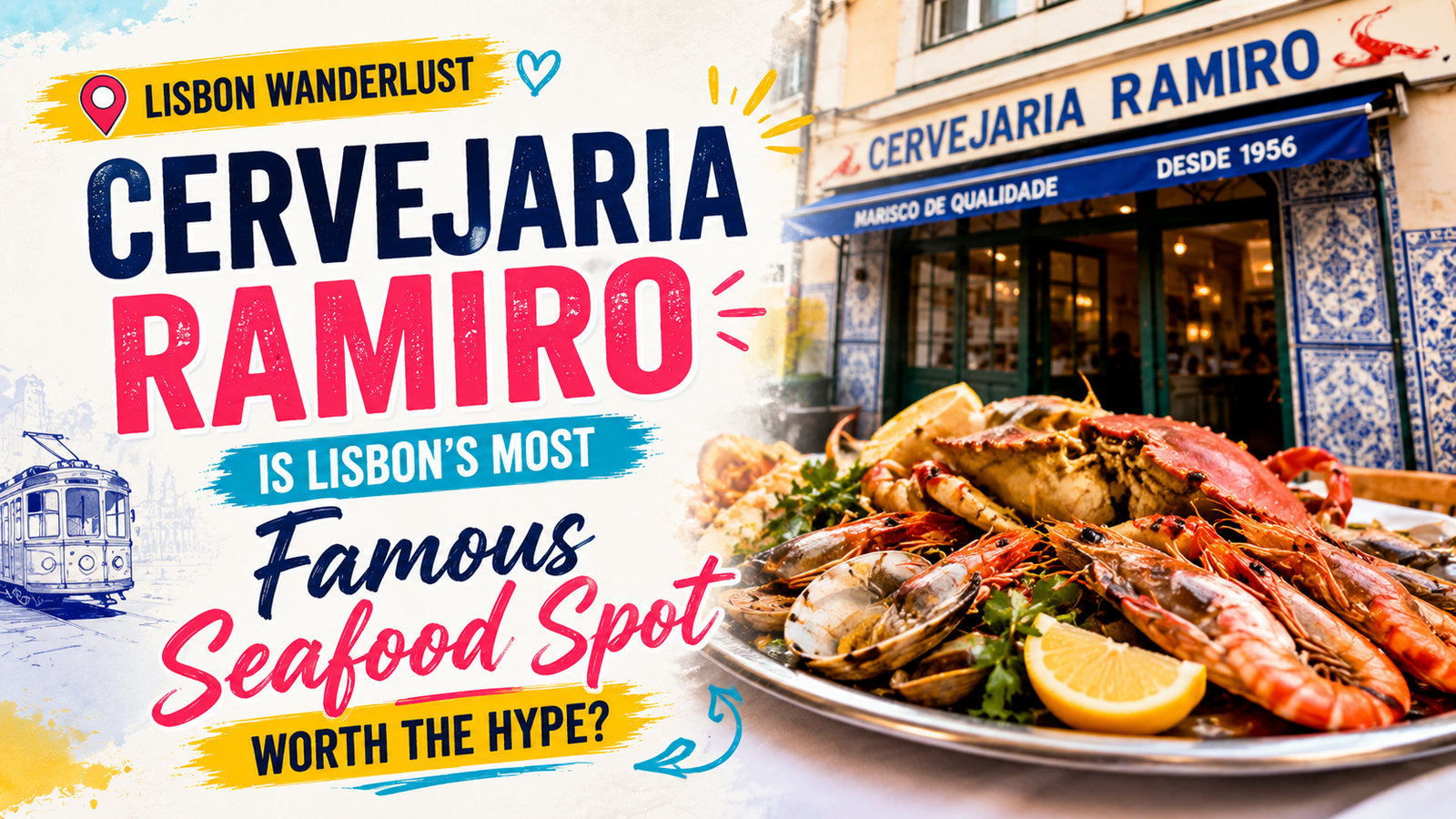
Cervejaria Ramiro: Is Lisbon’s Most Famous Seafood Spot Worth the Hype?
Cervejaria Ramiro remains the most discussed culinary destination in Lisbon, often drawing crowds that wait hours for a table. Determining if the establishment is worth the investment depends on a traveler’s priority for high-quality seafood over a relaxed dining atmosphere.
This guide provides an objective breakdown of the logistics, costs, and menu standards to help visitors make an informed decision.
The restaurant operates on a high-turnover model that prioritizes speed and ingredient freshness over traditional leisure. Patrons should expect a loud, bustling environment where the focus remains strictly on the technical quality of the shellfish.
For those seeking a quiet or romantic evening, the frantic pace of the service staff may be a deterrent. However, for those focused on sourcing the best Atlantic seafood in the city, the reputation of the establishment is backed by consistent sourcing standards.
Key Takeaways & Quick Picks
- • Best Time to Visit: Arrive between 15:00 and 17:30 to avoid the 90-minute peak dinner queue.
- • Entry Strategy: Use the digital kiosk at the door to pull a ticket; monitor your number on the outdoor screens.
- • Pricing Model: Premium items like Lobster and Scarlet Prawns are priced per kilogram, not per plate.
- • The Must-Order: The “Prego” (garlic steak sandwich) is the traditional non-seafood finish to every meal.
- • Atmosphere: Expect a loud, high-energy, and fast-paced environment; it is not suited for quiet fine dining.
- • Pro Tip: Utilize the self-service beer tap outside while waiting in the designated holding area.
The Logistics of Entry (The “Know-Before-You-Go”)
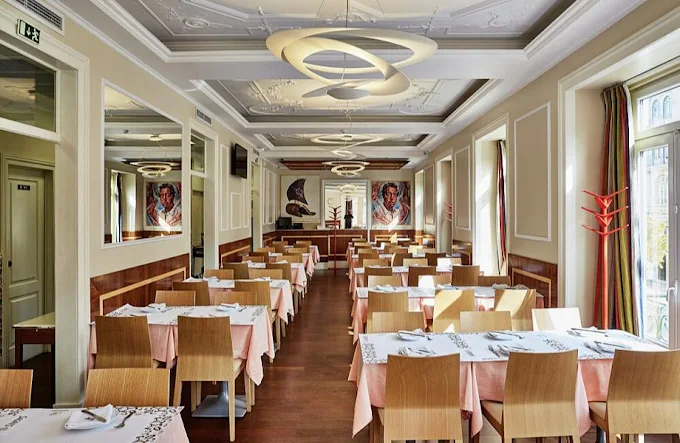
Navigating the entry process at Cervejaria Ramiro requires an understanding of their automated ticketing system. Upon arrival, visitors must locate the digital kiosk near the entrance to pull a numbered ticket.
This ticket places the party in a chronological queue, and progress can be monitored on outdoor screens. During peak hours, wait times frequently exceed ninety minutes, making strategic timing essential for efficiency.
The outdoor waiting area is designed to accommodate the overflow of patrons with a self-service beer tap. Diners can purchase a small beer (imperial) to pass the time while standing on the sidewalk of Avenida Almirante Reis.
This area is often crowded, reflecting the restaurant’s popularity among both tourists and locals. There is no indoor waiting lounge, so visitors should plan for weather conditions accordingly.
To minimize time spent in the queue, arriving during “off-peak” hours is the most effective strategy. The period between 3:00 PM and 5:30 PM typically sees a significant reduction in wait times compared to the dinner rush.
Late-night dining after 10:30 PM also offers a higher probability of immediate seating. Avoid arriving exactly at opening time, as a line often forms thirty minutes prior to the doors unlocking.
Navigating the Menu: Seafood by the Kilo
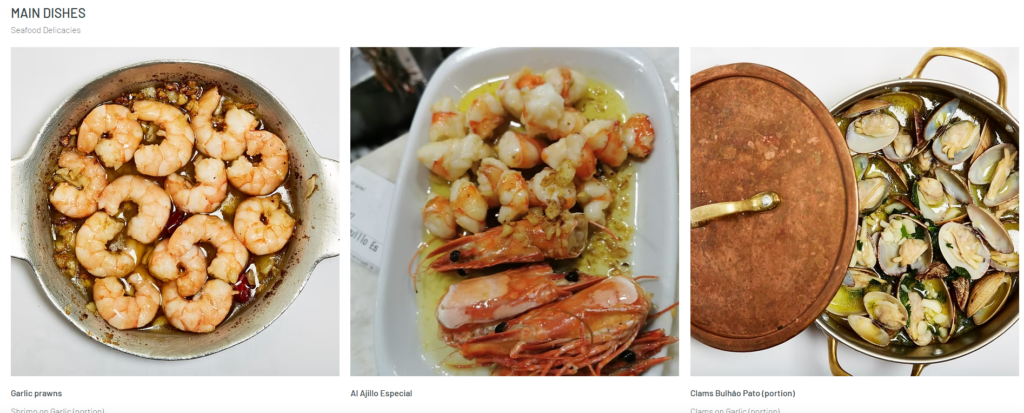
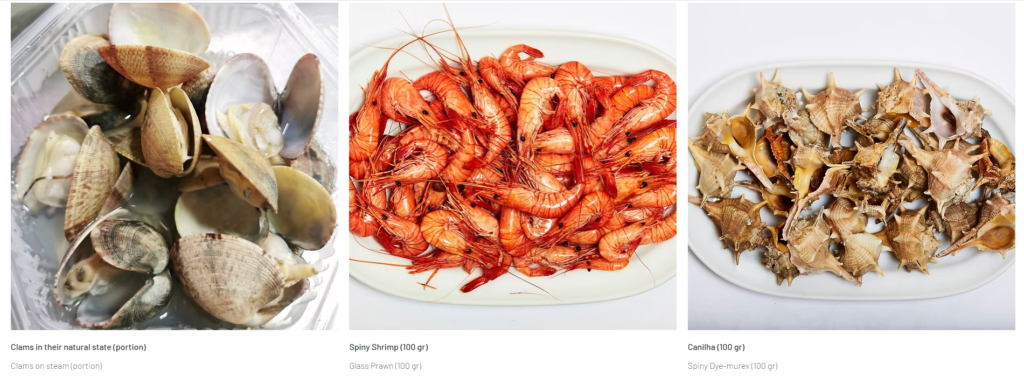
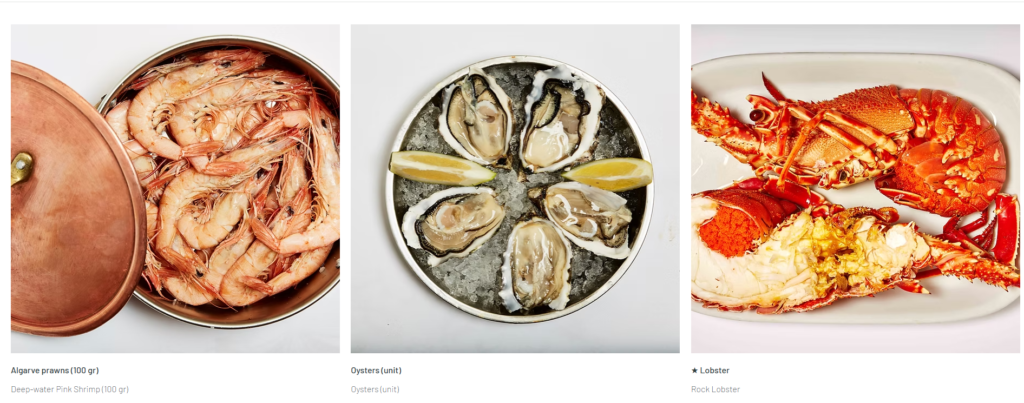
The menu at Ramiro is accessed via digital tablets provided at each table, available in multiple languages for international visitors. It is critical to note that many premium items are priced by weight ($kg$) rather than by a fixed plate price.
It means the final bill can fluctuate significantly based on the size of the specific specimen selected for the meal. Understanding this distinction prevents unexpected financial surprises when the check arrives.
Edible Barnacles, known locally as Percebes, are one of the most technically interesting offerings on the menu. These are harvested from the rocky coastlines of Portugal and taste intensely of the Atlantic Ocean.
They are served chilled and require a specific twisting motion to open the outer skin. As a seasonal product, their availability and price can vary based on sea conditions and harvesting restrictions.
Scarlet Prawns, or Carabineros, represent the high-end tier of the restaurant’s pricing structure. These deep-sea prawns are famous for their large size and the concentrated flavor found within the head. Staff typically serve them grilled with a simple dusting of sea salt to preserve the natural sweetness. While expensive, they are often cited as the benchmark for quality at this specific marisqueira.
The Garlic Prawns (Gambas à Aguillo) serve as a standard benchmark for the kitchen’s hot preparations. These are served sizzling in a ceramic dish filled with high-quality olive oil, sliced garlic, and chili. The prawns are consistently deveined and cooked to a precise snap. This dish is usually the first to arrive and sets the tone for the meal’s technical execution.
Unique to Portuguese seafood culture, the meal traditionally concludes with a Prego. This is a thin, garlic-marinated steak sandwich served on a crusty roll with mustard or piri-piri sauce. Despite the preceding seafood courses, the Prego is considered the “dessert” of a true Ramiro experience. It provides a savory finish that balances the briny flavors of the shellfish consumed earlier.
Technical Dining Mechanics
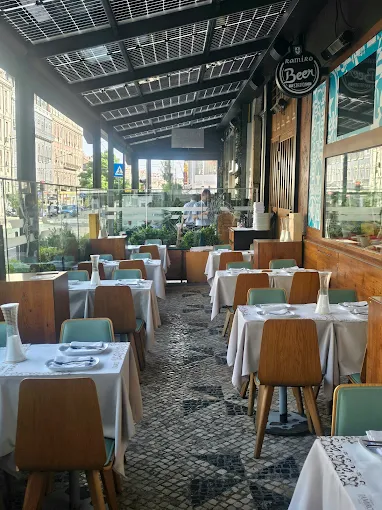
The atmosphere at Cervejaria Ramiro is characterized by a high-decibel, industrial efficiency that defines the traditional Portuguese marisqueira experience. Diners are seated in close proximity, often at communal tables, creating a high-energy environment that may feel chaotic to those accustomed to quiet fine dining.
Service is famously rapid, as waiters move with practiced speed to accommodate the constant flow of new arrivals. This brisk pace is a functional necessity of the restaurant’s high-turnover business model.
A signature element of the dining experience involves the use of a small wooden board and a plastic hammer. These tools are provided immediately upon the arrival of larger crustaceans, such as brown crab or lobster, to facilitate the cracking of thick shells.
Diners are expected to perform this task themselves, which adds a tactile and unpretentious element to the meal. The process is loud and messy, contributing to the unrefined but authentic maritime character of the establishment.
The bread service, known as Pão com Manteiga, is a mandatory accompaniment rather than an optional side. This thick, toasted bread is heavily buttered and served warm, specifically designed for mopping up the garlic-infused oils and seafood juices from the plates.
As of 2026, the bread service is typically charged at a nominal fee per basket, appearing automatically on the final bill. While it is tempting to consume large quantities, experienced diners advise pacing the bread intake to leave room for the weight-based seafood courses.
Location & Neighborhood Connectivity
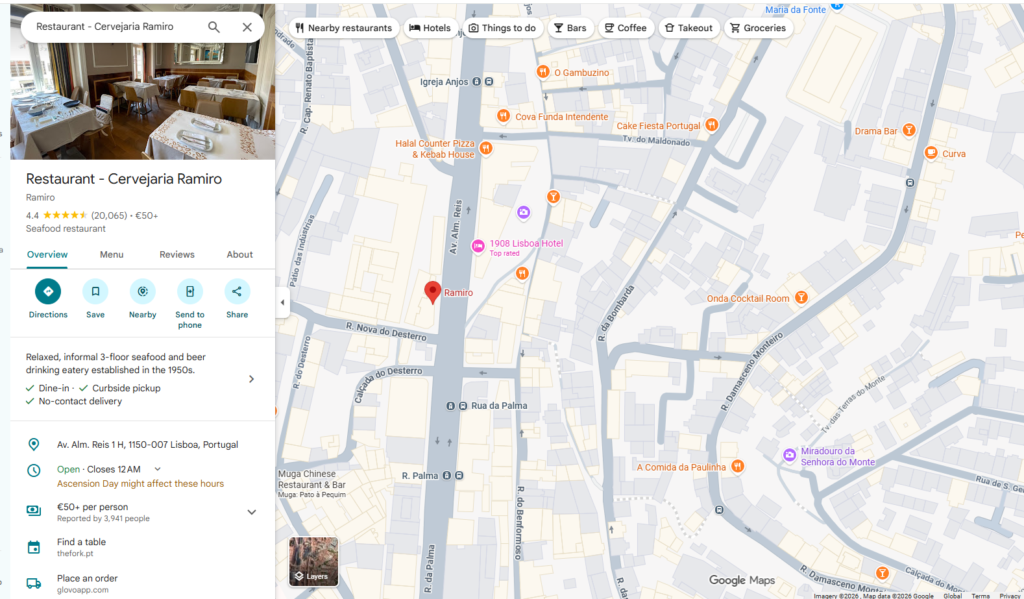
Cervejaria Ramiro is situated at Avenida Almirante Reis 1, positioned on a major thoroughfare that connects the historic center to the northern residential districts. The most efficient way to reach the restaurant is via the Lisbon Metro Green Line, exiting at the Intendente station.
From the station exit, the restaurant is a short, two-minute walk heading south. Travelers staying near Rossio or Baixa can also reach the location on foot within fifteen to twenty minutes by walking uphill through Martim Moniz.
The surrounding neighborhood, Martim Moniz and Intendente, is one of Lisbon’s most multicultural hubs, known for its diverse commercial offerings and global food scene. While the area has undergone significant revitalization in recent years, it retains a gritty, urban atmosphere compared to the more polished tourist zones like Chiado.
During the day, the area is bustling with commuters and shoppers, making it perfectly safe for standard navigation. At night, visitors should stick to the main well-lit boulevards and remain aware of their surroundings, as is standard in any major city center.
For those arriving by taxi or rideshare services like Uber or Bolt, the drop-off point is directly in front of the restaurant’s illuminated signage. Traffic on Almirante Reis can be heavy during the afternoon rush, so guests with tight schedules should account for potential delays.
The restaurant’s proximity to the historic Tram 28 route also allows for a scenic transit option, though the tram is often too crowded for those aiming for a specific arrival window.
Price Analysis & Budgeting
Budgeting for a meal at Ramiro requires a shift from fixed-price thinking to market-rate calculations. A “Budget-Conscious” meal for two typically ranges from €50 to €70 and focuses on items with stable prices, such as garlic prawns, clams, and the steak sandwich.
By avoiding the highest-priced crustaceans sold by the kilo, it is possible to experience the quality of the kitchen without a triple-digit bill. House wine and local beers are also priced affordably, keeping the beverage portion of the cost low.
A “High-End” experience, involving premium selections like Carabineros (Scarlet Prawns) or a whole lobster, will significantly increase the total. For these items, prices are calculated based on the weight of the specific animal, which means a single large specimen can cost between €30 and €60 on its own.
A full feast for two including these luxury items, several appetizers, and a bottle of mid-range wine can easily exceed €150. It is advisable to ask the waiter for the estimated weight and price of a specific item before the kitchen begins preparation.
When compared to other European capitals, the value proposition at Ramiro remains high despite recent price increases. Similar quality seafood in London or Paris would likely cost 40% to 60% more than the rates found here.
The restaurant provides a transparent breakdown on the final receipt, listing the price per kilo ($kg$) alongside the exact weight of each dish served. Tipping is not mandatory in Portugal but rounding up or leaving 5-10% is considered a standard gesture for good service.
Alternatives for the “Non-Waiters”
If the digital queue at Ramiro exceeds two hours, several nearby establishments offer comparable quality with less logistical friction. A Marisqueira do Lis, located just 250 meters further up the same street, is the most direct alternative.
It provides an almost identical menu of fresh shellfish and steak sandwiches in a slightly more traditional, less tourist-heavy setting. Many locals prefer this spot for its shorter wait times and equally rigorous standards for seafood freshness.
For those in the downtown area who prefer a more modern setting, Sea Me – Peixaria Moderna in Chiado offers a contemporary twist on the marisqueira concept. This venue combines a traditional fish market with a sushi bar and a refined dining room, catering to a more upscale crowd. While the prices are generally higher than at Ramiro, the ability to book a table in advance makes it a superior choice for those on a strict schedule.
Another central option is Marisqueira Azul, which has locations in the Time Out Market and Praça do Comércio. This brand focuses on high-quality classics like grilled tiger prawns and stuffed crab, served in accessible, central locations. While it lacks the historic, bustling atmosphere of the Almirante Reis location, it provides a consistent and high-quality seafood experience for visitors who want to avoid the trek to Intendente.
Ingredient Sourcing and Seasonality
The technical superiority of the seafood at Ramiro is rooted in a rigorous daily sourcing protocol that prioritizes the cold waters of the Atlantic. Portugal’s coastline, characterized by high oxygen levels and rocky terrain, produces shellfish with a distinct mineral profile and firm texture.
The restaurant maintains direct relationships with local fishermen and suppliers in the Algarve and the Alentejo coast to ensure a constant supply. This supply chain is visible to the public through the large, saltwater tanks located near the entrance, where live lobsters and crabs are kept in optimal conditions.
Seasonality plays a critical role in the availability of specific menu items, particularly the Percebes (Goose Barnacles). These are typically at their peak during the spring and summer months when the tides allow harvesters to reach the dangerous rock faces where they grow.
During the winter, rough seas often prevent harvesting, leading to a temporary absence from the menu or a significant increase in market price. Diners should consult the “Market Specials” section of the digital tablet to see which items are at their seasonal prime during their visit.
Beyond local Portuguese waters, the restaurant also sources specific delicacies from deeper Atlantic trenches, such as the Carabineros. These deep-sea prawns require specialized deep-water trawling and are prized for their high fat content and intense red pigmentation.
Because these are wild-caught rather than farmed, their size and availability can be inconsistent from week to week. This reliance on wild-caught stock is a primary reason why the establishment does not offer a fixed-price menu, as the kitchen adjusts to what the ocean provides each morning.
Strategic Timing for Maximum Efficiency
To achieve a seamless dining experience at Cervejaria Ramiro, understanding the rhythm of the local dining culture is essential. Most locals in Lisbon do not dine until after 8:30 PM, creating a massive surge in the queue between 8:00 PM and 10:00 PM.
Travelers who adjust their schedule to eat an “early” dinner at 6:30 PM will often find wait times reduced to under twenty minutes. This window also ensures that the widest variety of daily specials remains in stock before popular items sell out.
Lunch service, which begins at 12:00 PM, offers another tactical advantage for those looking to avoid the evening chaos. While the atmosphere is slightly less frenetic during the day, the quality of the seafood and the full menu remain identical to the dinner service. On weekdays, the lunch crowd consists of a mix of business professionals and informed tourists, usually resulting in a manageable queue.
The restaurant remains open throughout the afternoon, providing a rare continuous service model in a city where many kitchens close between 3:00 PM and 7:00 PM.
Weekend dining, particularly on Sundays, presents the most significant logistical challenge as many other local eateries are closed. On these days, the queue can begin to form as early as 11:30 AM, thirty minutes before the doors officially open.
For those visiting on a weekend, the late-afternoon strategy (between 3:00 PM and 5:00 PM) is the only reliable way to avoid a wait that exceeds two hours. Planning the day’s itinerary around these specific windows can save several hours of standing on the sidewalk of Avenida Almirante Reis.
Final Assessment: Hype vs. Reality
When evaluating whether Cervejaria Ramiro is worth the hype, one must distinguish between the quality of the product and the nature of the service. From a strictly culinary perspective, the restaurant consistently delivers some of the highest-grade shellfish in Southern Europe.
The sheer volume of turnover ensures that nothing sits in the kitchen for long, resulting in a level of freshness that is difficult for smaller competitors to match. For the seafood enthusiast, the technical execution of the grilling and steaming is objectively excellent.
However, the “hype” often fails to mention the high-stress environment and the lack of traditional hospitality. This is not a venue for a celebratory multi-course meal where one lingers over wine for hours; it is a high-speed engine of consumption.
The staff are professional and efficient, but their goal is to move the queue forward, which can feel impersonal to those expecting a warm, traditional Portuguese welcome. The value of the experience depends entirely on the visitor’s willingness to trade comfort for exceptional ingredient quality.
Ultimately, Cervejaria Ramiro is a destination that rewards the prepared traveler who understands the rules of the house. By navigating the digital queue system, timing the visit during off-peak hours, and understanding weight-based pricing, diners can enjoy a world-class meal.
While Lisbon offers many other excellent marisqueiras, Ramiro remains a benchmark for a reason. Its combination of historic significance, rigorous sourcing, and high-energy atmosphere makes it a unique, albeit chaotic, pillar of the Portuguese capital’s food identity.